
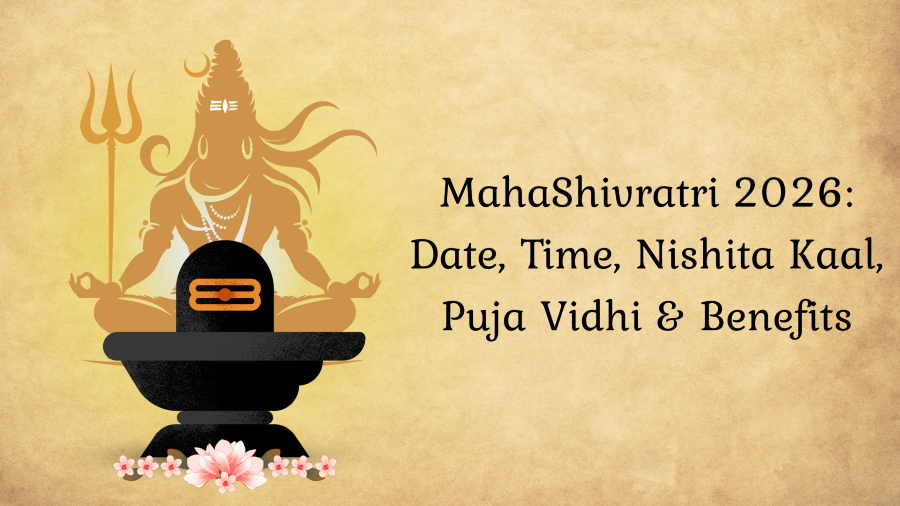
Maha Shivratri 2027 falls on Saturday, 6 March 2027, with the midnight Nishita Kaal worship in the early hours of 7 March. This guide explains the date, the four prahars of the night, the puja vidhi and the meaning of the festival.
Maha Shivratri is one of the most sacred festivals dedicated to Lord Shiva, the symbol of transformation, inner peace and divine consciousness. Unlike most Hindu festivals, it is observed through the night, representing the victory of awareness over ignorance. Knowing the correct timings and following the traditional puja vidhi helps devotees observe the great night with understanding.
What Is the Meaning of Maha Shivratri?
The name comes from the Sanskrit Maha (great), Shiva and Ratri (night): “the great night of Shiva”. It is observed on the Chaturdashi (fourteenth lunar day) of the Krishna Paksha in the month of Phalguna in the North Indian calendar — the same night is called Magha in the South Indian calendar, so both regions celebrate on the same day.
Several traditions explain the festival: it marks the wedding of Shiva and Parvati; the night Shiva performed the Tandava, the dance of creation and dissolution; and, in the Linga Purana, the appearance of Shiva as an endless pillar of light, the Jyotirlinga. Across all of them, the night is a time to set aside distraction and turn inward.
When Is Maha Shivratri in 2027?
Maha Shivratri 2027 will be observed on Saturday, 6 March 2027. The previous Maha Shivratri was on Sunday, 15 February 2026; because the festival follows the lunar calendar, its date moves by ten or eleven days each Gregorian year.
| Event | Date & Time (IST) |
| Maha Shivratri 2027 | Saturday, 6 March 2027 |
| Nishita Kaal Puja | Approx. 12:07 AM to 12:57 AM, 7 March 2027 |
| Parana (breaking the fast) | After sunrise on 7 March 2027 |
Tithi, prahar and parana timings depend on your location’s sunrise and sunset. Please confirm exact timings in your local Panchang.

What Is Nishita Kaal and Why Do the Four Prahars Matter?
Nishita Kaal is the midnight period of Maha Shivratri, traditionally regarded as the most auspicious time for Shiva puja. Devotees perform abhishek, chant mantras and meditate during this window. Many also keep a Maha Shivratri vrat (fast) through the day and night.
The night is divided into four prahars of roughly three hours each, from sunset to sunrise. Traditionally a separate abhishek is offered in each prahar:
- First prahar (from sunset): the observance begins with purification and the first abhishek, often with water and milk.
- Second prahar (late evening): abhishek and mantra chanting continue, often with curd.
- Third prahar (around midnight): includes Nishita Kaal, the most important worship of the night, often with ghee.
- Fourth prahar (pre-dawn): the final abhishek, often with honey, closing with aarti at dawn.
Offerings used in each prahar vary between traditions and families.
How Do You Perform Maha Shivratri Puja Vidhi?
- Preparation: Clean the worship area and place a Shivling or image of Lord Shiva.
- Abhishek: Bathe the Shivling with water, milk, curd, honey and ghee. See our guide to Rudrabhishek on Maha Shivratri for the full procedure and samagri.
- Bilva leaves: Offer bel (bilva) leaves, considered especially dear to Shiva, along with white flowers and dhatura.
- Mantra and meditation: Chant Om Namah Shivaya or the Maha Mrityunjaya Mantra, especially during Nishita Kaal.
- Katha and aarti: Listen to the Maha Shivratri vrat katha and close with the Maha Shivratri aarti.
Why Do Devotees Observe Maha Shivratri?
Devotees describe many spiritual benefits from observing the night with devotion. These come from faith and tradition rather than scientific claims:
- Spiritual awakening: The night-long vigil is a discipline of awareness and inner reflection.
- Peace of mind: Many find the meditation and chanting of the night deeply calming.
- Removal of obstacles: Devotees pray for Shiva to remove obstacles and negative influences.
- Shiva’s blessings: Devotees believe prayers offered on this night bring Shiva’s grace and protection.
Read more about Lord Shiva and the story of Shiva and Parvati’s marriage behind the festival.
Conclusion
Maha Shivratri is more than a festival; it is a night of devotion and inner stillness. Keeping the vigil through the four prahars, worshipping at Nishita Kaal and following the traditional puja vidhi, devotees seek Shiva’s grace and a deeper understanding of the great night.
May Lord Shiva bless you with wisdom, strength and inner harmony this Maha Shivratri.
Om Namah Shivaya 🔱
Frequently Asked Questions About Maha Shivratri
-
When is Maha Shivratri in 2027?
Maha Shivratri 2027 falls on Saturday, 6 March 2027, with the midnight Nishita Kaal worship at approximately 12:07 AM to 12:57 AM IST on 7 March. The previous Maha Shivratri was on 15 February 2026; because the festival follows the lunar calendar, its date shifts by ten or eleven days each year.
-
What is Maha Shivratri and why is it celebrated?
Maha Shivratri, the great night of Shiva, is a Hindu festival dedicated to Lord Shiva, observed with fasting and an all-night vigil. Tradition links it to the wedding of Shiva and Parvati, to the night Shiva danced the Tandava, and, in the Linga Purana, to his appearance as an infinite pillar of light, the Jyotirlinga.
-
In which Hindu month does Maha Shivratri fall?
Maha Shivratri falls on the Chaturdashi, the fourteenth lunar day, of the Krishna Paksha of Phalguna in the North Indian calendar, usually in February or March. The South Indian calendar names the same month Magha, so both regions celebrate Maha Shivratri on the same night.
-
What is Nishita Kaal on Maha Shivratri?
Nishita Kaal is the midnight period of Maha Shivratri, traditionally regarded as the most auspicious time for Shiva puja, when devotees perform abhishek, chant mantras and meditate. In 2027 it falls at approximately 12:07 AM to 12:57 AM IST on 7 March, though exact timings vary with location.
-
What are the four prahars of Maha Shivratri?
The night of Maha Shivratri is divided into four prahars of about three hours each, from sunset to sunrise, and traditionally a separate abhishek is offered in each. The third prahar, around midnight, is considered the most auspicious because it contains Nishita Kaal.
-
How is Maha Shivratri puja performed?
Maha Shivratri puja is performed by bathing the Shivling with water, milk, curd, honey and ghee, offering bel leaves, white flowers and dhatura, chanting Om Namah Shivaya or the Maha Mrityunjaya Mantra, listening to the vrat katha, and closing with aarti, often repeated in each prahar of the night.
-
Why are bel leaves offered on Maha Shivratri?
Bel or bilva leaves are offered to Lord Shiva because the Shiva Purana praises the bilva tree as especially dear to him, and its three-lobed leaf is traditionally linked with his trident and three eyes. On Maha Shivratri devotees place bel leaves on the Shivling during abhishek.
-
How do devotees fast on Maha Shivratri?
Devotees keep the Maha Shivratri fast from sunrise, eating only fruit, milk or permitted fasting foods, or observing a stricter fast, and break it with parana after sunrise the next morning. Tradition does not expect strict fasting from children, the elderly, pregnant women or anyone who is unwell.
-
Can Maha Shivratri puja be done at home?
Yes. Maha Shivratri puja can be performed at home before a Shivling or an image of Lord Shiva, with water, milk, bel leaves and flowers, following the four-prahar abhishek or simply worshipping at Nishita Kaal. Sincere devotion is considered more important than an elaborate ritual.
-
What are the spiritual benefits of Maha Shivratri?
Devotees traditionally observe Maha Shivratri for spiritual awakening, peace of mind, the removal of obstacles and Shiva’s blessings, and many find the night-long vigil of chanting and meditation deeply calming. These are devotional benefits drawn from faith and tradition rather than medical or scientific claims.