
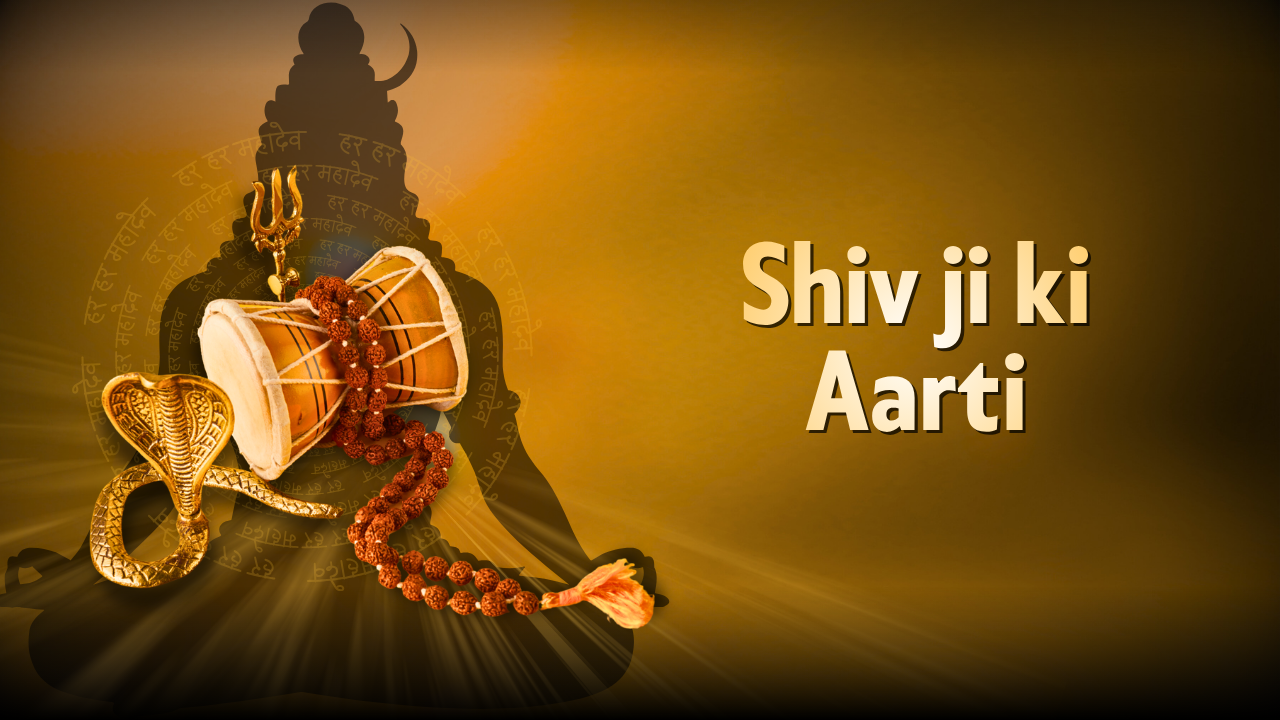
The complete lyrics of Shiv Ji Ki Aarti, Om Jai Shiv Omkara, with the meaning of each verse, the traditional way to perform it, and the best times to sing it. 🕉️
Shiv Ji Ki Aarti is a devotional hymn sung in praise of Lord Shiva while waving a lamp before his image or Shivling. Its most popular form, Om Jai Shiv Omkara, praises Shiva as Omkara — the embodiment of the sacred syllable Om — and describes Brahma, Vishnu and Shiva as three forms of one supreme reality.
For devotees, the aarti is a way to express gratitude, set aside ego and seek Shiva’s guidance. Understanding the meaning of the words lets the prayer be sung with attention rather than by rote. To learn more about Shiva himself, see who Lord Shiva is.
Shiv Ji Ki Aarti Lyrics (Om Jai Shiv Omkara)
Om Jai Shiv Omkara,
Swami Jai Shiv Omkara,
Brahma, Vishnu, Sadashiv,
Ardhangi Dhara.
Om Jai Shiv Omkara…
Ekanan Chaturanan,
Panchanan Raje,
Hansasan Garudasan,
Vrishvahan Saje.
Om Jai Shiv Omkara…
Do Bhuj, Chaar Chaturbhuj,
Dashbhuj Ati Sohe,
Teeno Roop Nirakhte,
Tribhuvan Jan Mohe.
Om Jai Shiv Omkara…
Akshamala Vanmala,
Mundmala Dhari,
Tripurari Kansari,
Kar Mala Dhari.
Om Jai Shiv Omkara…
Shvetambar Pitambar,
Baghambar Ange,
Sanakadik Brahmadik,
Bhootadik Sange.
Om Jai Shiv Omkara…
Kar Mein Shreshth Kamandal,
Chakra Trishul Dharta,
Jagkarta Jagharta,
Jag Palan Karta.
Om Jai Shiv Omkara…
Brahma Vishnu Sadashiv,
Janat Aviveka,
Pranavakshar Mein Shobhit,
Ye Teenon Eka.
Om Jai Shiv Omkara…
Many versions close with a further verse naming Shivanand Swami, traditionally regarded as the composer of this aarti. Wording varies slightly between households and temples.
What Is the Meaning of Shiv Ji Ki Aarti?
- Om Jai Shiv Omkara… Ardhangi Dhara: Victory to Shiva, the lord who is Om itself — one with Brahma and Vishnu, and who holds Parvati as half of his own body, as in his Ardhanarishwara form.
- Ekanan Chaturanan Panchanan: The one-faced Vishnu, the four-faced Brahma and the five-faced Shiva, seated on their mounts — the swan of Brahma, Garuda of Vishnu and the bull of Shiva.
- Do Bhuj, Chaar Chaturbhuj, Dashbhuj: Their two, four and ten arms; seeing these three forms, the people of the three worlds are enchanted.
- Akshamala Vanmala Mundmala: The rudraksha rosary, the forest-flower garland and the garland of skulls — the adornments of the three forms.
- Shvetambar Pitambar Baghambar: White, yellow and tiger-skin garments, attended by the sages Sanaka and Brahma and by Shiva’s host of spirits (bhootas).
- Kamandal, Chakra, Trishul: The water pot, discus and trident — the lord who creates, destroys and sustains the world.
- Brahma Vishnu Sadashiv, Janat Aviveka: The undiscerning think Brahma, Vishnu and Shiva are separate, but in the sacred syllable Om the three are one — the aarti’s central teaching.

Why Do Devotees Sing Shiv Ji Ki Aarti?
Devotees describe many benefits from singing the aarti regularly. These come from faith and personal experience rather than scientific study:
- Freedom from negativity: Devotees find that regular aarti clears the mind of negative thoughts.
- Inner peace: Many find the rhythm of the aarti calming at the start or end of the day.
- Spiritual connection: It deepens devotion and the bond with Lord Shiva.
- Strength in difficulty: Devotees seek Shiva’s help, as the destroyer of evil, in overcoming life’s challenges.
- Focus and clarity: Singing with attention steadies the mind.
- A sense of protection: Devotees believe the aarti invites Shiva’s protection over the household.
How to Perform Shiv Ji Ki Aarti (Step-by-Step Guide)
Whether performed daily or on special occasions like Mondays and Maha Shivratri, the aarti is a simple ritual that can be done at home.
1. Prepare the Sacred Space
Choose a clean and peaceful (शांत) place in your home. Place a Shivling or an image of Lord Shiva on a clean altar. You can decorate the space with flowers and keep puja items ready.
2. Light a Diya and Incense Sticks
Light a ghee diya (lamp) and incense sticks (agarbatti). This symbolizes the removal of darkness, inviting divine light into your surroundings.
3. Offer Flowers and Water to the Shivling
Offer fresh flowers, Bel Patra (बेलपत्र), and water or milk to the Shivling. These offerings are considered highly auspicious and pleasing to Lord Shiva.
4. Chant “Om Namah Shivaya”
Before starting the Shiv Ji Ki Aarti, chant “Om Namah Shivaya” a few times to calm your mind.
5. Sing Shiv Ji Ki Aarti with Devotion
Sing Om Jai Shiv Omkara while waving the lamp in clockwise circles before the Shivling, keeping the meaning of the words in mind.
6. Ring a Bell During Aarti
Gently ring a bell while performing the aarti. The sound is traditionally believed to purify the space and helps focus attention during worship.
7. Conclude with Prayer and Gratitude
After the aarti, pass your hands over the flame and touch your eyes to receive its blessing. Fold your hands and thank Lord Shiva for his grace.
Best Time to Sing Shiv Ji Ki Aarti
- Early morning (Brahma Muhurat): The quiet hours before dawn, traditionally considered ideal for worship.
- Evening (sunset): The most common time for household aarti.
- Mondays (Somvar): The day dedicated to Lord Shiva, especially the Mondays of the month of Shravan.
- Maha Shivratri: Devotees fast and keep an all-night vigil, often performing aarti in each of the night’s four prahars.
Conclusion
Shiv Ji Ki Aarti is more than a devotional song: it is a compact statement of Shaiva devotion, praising Shiva as one with Brahma and Vishnu in the sacred syllable Om. Sung with attention to its meaning, in the morning or at dusk, it becomes a daily moment of focus and devotion to Lord Shiva.
Watch and listen to Om Jai Shiv Omkara Aarti
Frequently Asked Questions About Shiv Ji Ki Aarti
What is Shiv Ji Ki Aarti?
Shiv Ji Ki Aarti is a Hindi devotional hymn to Lord Shiva sung while waving a lamp, and its most popular form begins Om Jai Shiv Omkara. The aarti praises Shiva as Omkara, the embodiment of the sacred syllable Om, and describes Brahma, Vishnu and Shiva as three forms of one supreme reality.
Who wrote Om Jai Shiv Omkara?
Om Jai Shiv Omkara is traditionally attributed to Shivanand Swami, who is named in the closing verse sung in many versions of the aarti. Little is known of him historically, and the aarti has been passed down in slightly different wordings across North Indian households and temples.
What does Om Jai Shiv Omkara mean?
Om Jai Shiv Omkara means victory to Shiva, the lord who is Omkara, the sacred sound Om. The opening lines also praise Shiva as one with Brahma and Vishnu, and as Ardhangi Dhara, the lord who holds Parvati as half of his own body, recalling his Ardhanarishwara form.
What is the meaning of the last verse of Shiv Ji Ki Aarti?
The last verse, Brahma Vishnu Sadashiv janat aviveka, pranavakshar mein shobhit ye teenon eka, means that the undiscerning think Brahma, Vishnu and Shiva are separate, but in the sacred syllable Om the three are one. It states the aarti’s central theme: the unity of creator, preserver and destroyer.
What does Ekanan Chaturanan Panchanan mean?
The line Ekanan chaturanan panchanan raje refers to the one-faced Vishnu, the four-faced Brahma and the five-faced Shiva, and the next line names their mounts: the swan of Brahma, Garuda of Vishnu and the bull Nandi of Shiva. The aarti presents all three as forms of the one lord.
When is the best time to sing Shiv Ji Ki Aarti?
Shiv Ji Ki Aarti is traditionally sung in the morning and at dusk, and is especially important on Mondays, the day dedicated to Shiva, throughout the monsoon month of Shravan, and on Maha Shivratri, when devotees keep an all-night vigil and often perform aarti in each of the night’s four prahars.
How do you perform Shiv Ji Ki Aarti at home?
To perform Shiv Ji Ki Aarti at home, offer water or milk, bel leaves and flowers to a Shivling or image of Shiva, light a ghee lamp and incense, chant Om Namah Shivaya a few times, then sing Om Jai Shiv Omkara while waving the lamp in clockwise circles and ringing a bell.
Why are bel leaves offered to Lord Shiva?
Bel or bilva leaves are offered to Lord Shiva because the Shiva Purana praises the bilva tree as especially dear to him, and its three-lobed leaf is traditionally linked with his trident and his three eyes. Devotees place the leaves on the Shivling, usually with the smooth side facing up.
Why is Monday dedicated to Lord Shiva?
Monday, Somvar, is dedicated to Lord Shiva because it is the day of Soma, the moon, which Shiva wears as a crescent on his head as Chandrashekhar. Devotees fast and sing Shiv Ji Ki Aarti on Mondays, especially on the Mondays of the month of Shravan, known as Shravan Somvar.
What are the benefits of singing Shiv Ji Ki Aarti?
Devotees traditionally sing Shiv Ji Ki Aarti for peace of mind, protection, the removal of obstacles and a deeper connection with Lord Shiva, and many find it calming at the start or end of the day. These are devotional benefits drawn from faith and personal experience rather than medical or scientific claims.