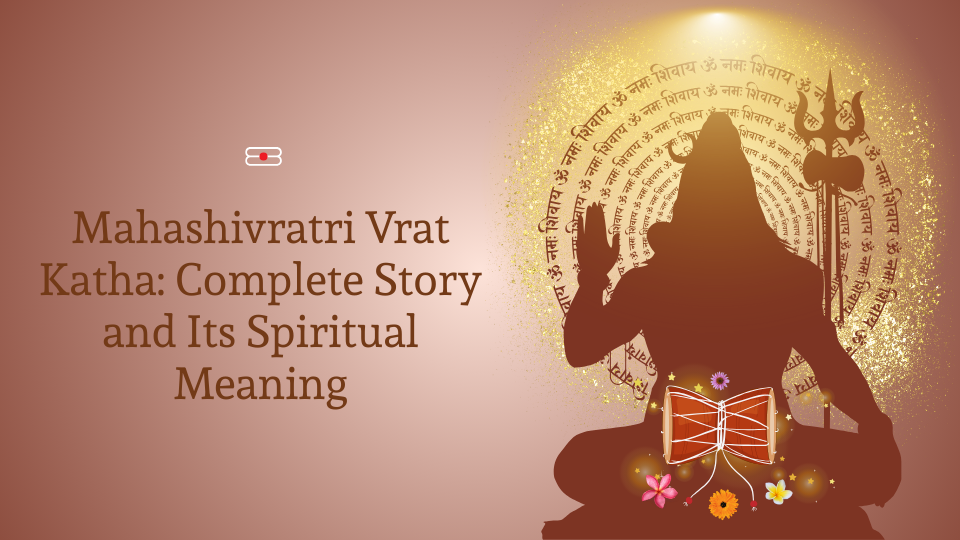
The Maha Shivratri Vrat Katha is the story recited during Maha Shivratri worship: the tale of a hunter who kept the vrat without knowing it, alongside the story of Parvati’s devotion to Shiva. This page tells both stories and explains their meaning.
Maha Shivratri is one of the most sacred festivals in Hinduism, dedicated to Lord Shiva. The Maha Shivratri Vrat Katha is read or heard during the night’s worship, because it explains why the fast, the vigil and the offering of bel leaves matter. For the 2027 date and puja timings, see our Maha Shivratri guide.
What Is the Story of the Hunter in the Maha Shivratri Vrat Katha?
The best-known katha tells of a poor hunter, called Lubdhak in popular retellings; a version of the story in the Shiva Purana names him Gurudruha. Unable to repay a debt, he was held captive through a day without food and released only in the evening — the day of Maha Shivratri, though he did not know it.
Hungry, he went into the forest to hunt and climbed a bel tree beside a pond to wait for animals, taking a pot of water with him. Through the night he stayed awake. To clear his view he kept plucking bel leaves and letting them fall, and water from his pot dripped down — onto a Shivling hidden beneath the tree. Without intending it, he had fasted, kept the vigil and offered bel leaves and water to Shiva.
In each prahar of the night a deer came to the pond. Each time the hunter raised his bow, the deer pleaded to be allowed to return to her family first, promising to come back. Moved, he let each one go. At dawn the whole deer family returned together to keep their word. Seeing their honesty, the hunter’s heart changed completely, and he spared them all. Shiva appeared and blessed him with liberation.
The story teaches that sincere devotion, even unknowing, is accepted by Shiva — and that compassion is itself a form of worship.
What Is the Story of Shiva and Parvati?
The second story recited on Maha Shivratri is Parvati’s penance. The daughter of Himavan, king of the mountains, Parvati left royal comforts to perform severe austerity in the forest, seeking Shiva as her husband. Her unwavering devotion, patience and self-discipline finally won Shiva’s acceptance, and they were married. Popular tradition holds that this divine wedding is celebrated on the night of Maha Shivratri.

This is why many married women keep the Maha Shivratri vrat praying for marital harmony, and why unmarried devotees pray for a good life partner. Read the full story of Shiva and Parvati’s marriage.
What Is the Spiritual Meaning of the Vrat Katha?
Shiva symbolises detachment and pure consciousness; Parvati represents devotion, discipline and divine energy (Shakti). Their union expresses the balance between worldly life and spiritual life. The hunter’s story adds that the practices of the night — fasting, staying awake and offering bel leaves — carry their power through the devotion behind them, and that a changed heart matters more than ritual perfection.
Why Is Fasting Part of the Katha?
In the hunter’s story, the fast, the night vigil and the offering of bel leaves and water are exactly the practices devotees keep on Maha Shivratri today. The katha is therefore both a story and an explanation of the vrat. See our guide to fasting for Maha Shivratri for the rules and foods.
What Lessons Does the Maha Shivratri Vrat Katha Teach?
- Devotion over ritual: Shiva accepted the hunter’s unknowing worship.
- Compassion: sparing the deer was the turning point of his transformation.
- Keeping one’s word: the deer’s honesty changed the hunter’s heart.
- Perseverance: Parvati’s penance shows the power of patience and discipline.
“Watch and listen to the complete Maha Shivratri Vrat Katha“
When Should the Vrat Katha Be Read?
The katha is traditionally read or heard during the Maha Shivratri puja, often in the evening before the night’s vigil or during one of the four prahars, and followed by the Maha Shivratri aarti.
Conclusion
The Maha Shivratri Vrat Katha brings together two stories — a hunter’s unknowing devotion and Parvati’s determined penance — that explain why devotees fast, stay awake and offer bel leaves on the great night of Shiva. Heard with attention, it turns the rituals of the night into acts of understanding.
Om Namah Shivaya 🔱
Frequently Asked Questions
-
What is the Maha Shivratri Vrat Katha?
The Maha Shivratri Vrat Katha is the story recited during Maha Shivratri worship, most often the tale of a hunter who unknowingly kept the fast, the night vigil and the offering of bel leaves to a hidden Shivling, and was blessed by Shiva. It is usually recited together with the story of Parvati’s penance to win Shiva.
-
Who is Lubdhak in the Maha Shivratri Vrat Katha?
Lubdhak is the hunter of the Maha Shivratri Vrat Katha, who spent Shivratri night awake in a bel tree, dropping bel leaves and water onto a hidden Shivling. When a deer family kept its promise to return to him, he spared them, and Shiva granted him liberation. A Shiva Purana version names him Gurudruha.
-
Why is the Maha Shivratri Vrat Katha important?
The Maha Shivratri Vrat Katha is important because it explains the meaning of the festival’s practices: the hunter’s story shows fasting, the night vigil and the offering of bel leaves and water being accepted by Shiva, even when done unknowingly. Hearing it during puja is traditionally considered part of the vrat.
-
What is the story of Shiva and Parvati on Maha Shivratri?
Parvati, daughter of Himavan, king of the mountains, performed severe penance in the forest to win Lord Shiva as her husband, and her devotion finally won his acceptance and their marriage. Popular tradition holds that this divine wedding is celebrated on the night of Maha Shivratri.
-
Why do women keep the Maha Shivratri vrat?
Many married women keep the Maha Shivratri vrat praying for marital harmony and their husband’s wellbeing, inspired by Parvati’s devotion to Shiva, while unmarried devotees pray for a good life partner. The vrat is equally kept by men and by devotees of every age seeking Shiva’s blessings.
-
When should the Maha Shivratri Vrat Katha be read?
The Maha Shivratri Vrat Katha is traditionally read or heard during the Maha Shivratri puja, often in the evening before the night vigil or during one of the four prahars, and is followed by aarti. In 2027 Maha Shivratri falls on Saturday, 6 March.
-
Is fasting compulsory on Maha Shivratri?
No. Fasting is traditional on Maha Shivratri, but tradition values devotion above strict rules, and the hunter’s story itself shows Shiva accepting unintended worship. Children, the elderly, pregnant women and anyone unwell can keep a light fast or simply observe the worship and vigil.
-
What is the main lesson of the Maha Shivratri Vrat Katha?
The main lesson of the Maha Shivratri Vrat Katha is that sincere devotion and compassion matter more than ritual perfection: the hunter was blessed for worship he did not intend, and transformed by sparing the deer. Parvati’s story adds the value of patience, discipline and perseverance.