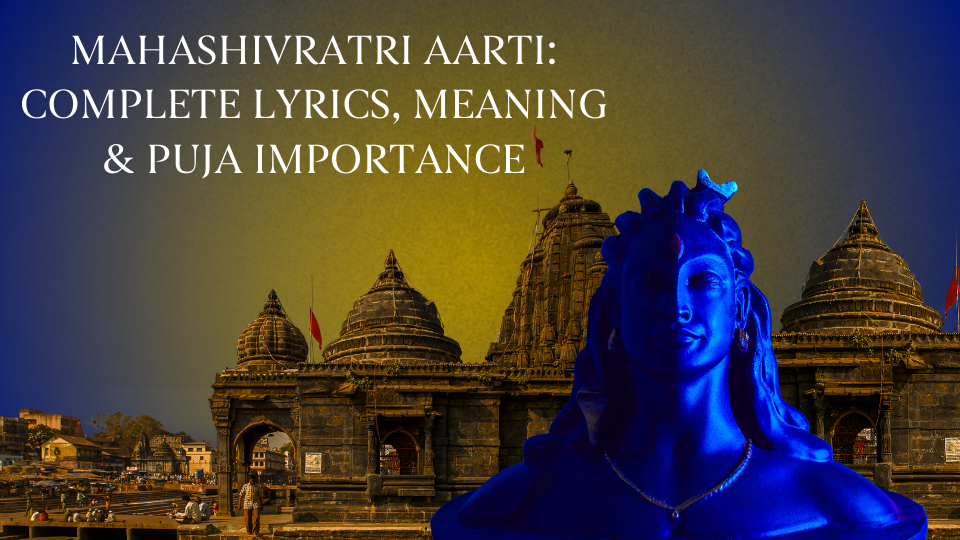
The complete lyrics of the aarti sung on Maha Shivratri, Om Jai Shiv Omkara, with its meaning, when it is sung during the night’s four prahars, and how to perform it at home.
Maha Shivratri is one of the most spiritually significant festivals in Hinduism, dedicated to Lord Shiva. Among the rituals of this sacred night, the Maha Shivratri aarti closes each round of worship: after every abhishek, devotees wave a lamp before the Shivling and sing Om Jai Shiv Omkara. In 2027 Maha Shivratri falls on Saturday, 6 March — see our Maha Shivratri guide for timings.
What Is the Maha Shivratri Aarti?
The aarti sung on Maha Shivratri is the same Shiva aarti used in daily worship — Om Jai Shiv Omkara, traditionally attributed to Shivanand Swami. What sets the night apart is how often it is sung: many devotees perform it at the end of each of the four prahars of the night, and above all at Nishita Kaal, the midnight worship, and again at dawn when the vigil ends.
What Are the Complete Lyrics of the Maha Shivratri Aarti?
Om Jai Shiv Omkara,
Swami Jai Shiv Omkara,
Brahma, Vishnu, Sadashiv,
Ardhangi Dhara.
Om Jai Shiv Omkara…
Ekanan Chaturanan,
Panchanan Raje,
Hansasan Garudasan,
Vrishvahan Saje.
Om Jai Shiv Omkara…
Do Bhuj, Chaar Chaturbhuj,
Dashbhuj Ati Sohe,
Teeno Roop Nirakhte,
Tribhuvan Jan Mohe.
Om Jai Shiv Omkara…
Akshamala Vanmala,
Mundmala Dhari,
Tripurari Kansari,
Kar Mala Dhari.
Om Jai Shiv Omkara…
Shvetambar Pitambar,
Baghambar Ange,
Sanakadik Brahmadik,
Bhootadik Sange.
Om Jai Shiv Omkara…
Kar Mein Shreshth Kamandal,
Chakra Trishul Dharta,
Jagkarta Jagharta,
Jag Palan Karta.
Om Jai Shiv Omkara…
Brahma Vishnu Sadashiv,
Janat Aviveka,
Pranavakshar Mein Shobhit,
Ye Teenon Eka.
Om Jai Shiv Omkara…
Many versions close with a further verse naming Shivanand Swami. Wording varies slightly between households and temples.
Watch and listen to this Maha Shivratri aarti, “Om Jai Shiv Omkara“
What Does the Maha Shivratri Aarti Mean?
The aarti praises Shiva as Omkara, the embodiment of the sacred syllable Om. Its middle verses describe the one-faced Vishnu, four-faced Brahma and five-faced Shiva, with their mounts — swan, Garuda and bull — their arms, garlands and garments. The final verse gives its central teaching: the undiscerning think Brahma, Vishnu and Shiva are separate, but in Om the three are one. For a verse-by-verse explanation, see Shiv Ji Ki Aarti with meaning.
When Is the Aarti Sung on Maha Shivratri Night?
- After each prahar’s abhishek: the night is divided into four prahars, and many devotees close each round of worship with aarti.
- At Nishita Kaal: the midnight worship, considered the most auspicious of the night — in 2027, approximately 12:07 to 12:57 AM on 7 March.
- At dawn: a final aarti closes the vigil before parana, the breaking of the fast.

How Do You Perform the Maha Shivratri Aarti at Home?
- Complete the abhishek of the Shivling with water, milk and other offerings.
- Offer bel leaves, white flowers and incense.
- Light a ghee lamp or camphor on the aarti plate.
- Sing Om Jai Shiv Omkara while waving the lamp in clockwise circles, ringing a bell.
- Pass your hands over the flame, touch your eyes, and offer a prayer of gratitude.
No priest is needed; the aarti can be performed by anyone with devotion. Devotees keeping the Maha Shivratri fast often sing it at the close of each prahar through the night.
Why Do Devotees Sing the Aarti on Maha Shivratri?
Waving a lamp symbolises the removal of darkness by divine light — fitting for a festival kept through the night. Devotees describe the aarti as bringing peace, focus and a sense of Shiva’s presence, and singing it together unites families and temple congregations in shared worship. These are devotional experiences rather than scientific claims.
Conclusion
On Maha Shivratri, Om Jai Shiv Omkara marks the rhythm of the night — closing each prahar, crowning the midnight worship and ending the vigil at dawn. Sung with understanding of its meaning, it expresses the festival’s heart: the unity of the divine in the sacred syllable Om.
Om Namah Shivaya 🔱
Frequently Asked Questions
Which aarti is sung on Maha Shivratri?
The aarti sung on Maha Shivratri is Om Jai Shiv Omkara, the most popular Hindi aarti of Lord Shiva, traditionally attributed to Shivanand Swami. It praises Shiva as Omkara, the embodiment of the sacred syllable Om, and describes Brahma, Vishnu and Shiva as three forms of one supreme reality.
When is the aarti performed on Maha Shivratri night?
On Maha Shivratri many devotees perform aarti at the close of each of the four prahars of the night, especially at Nishita Kaal, the midnight worship, and once more at dawn before breaking the fast. In 2027 Nishita Kaal falls at approximately 12:07 to 12:57 AM IST on 7 March.
What does the Maha Shivratri aarti mean?
Om Jai Shiv Omkara praises Shiva as the lord who is Om itself and describes the one-faced Vishnu, four-faced Brahma and five-faced Shiva with their mounts, arms and garments. Its final verse teaches that the undiscerning see the three gods as separate, but in the sacred syllable Om they are one.
How many verses does Om Jai Shiv Omkara have?
Om Jai Shiv Omkara is usually sung with seven verses, each followed by the refrain Om Jai Shiv Omkara, and many versions add a closing verse naming Shivanand Swami, traditionally regarded as its composer. Wording varies slightly between households and temples.
How do you perform the Maha Shivratri aarti at home?
To perform the Maha Shivratri aarti at home, first complete the abhishek of the Shivling and offer bel leaves and flowers, then light a ghee lamp or camphor and sing Om Jai Shiv Omkara while waving it in clockwise circles and ringing a bell. Finally, pass your hands over the flame and touch your eyes.
Can the Maha Shivratri aarti be performed without a priest?
Yes. The Maha Shivratri aarti can be performed by any devotee at home without a priest, before a Shivling or an image of Lord Shiva. Tradition values sincere devotion above ritual perfection, and families commonly sing it together through the night’s worship.
Is fasting necessary to perform the Maha Shivratri aarti?
No. Fasting is traditional on Maha Shivratri but is not required to perform the aarti. Children, the elderly, pregnant women and anyone who is unwell can take part fully in the worship and aarti without keeping a strict fast.
What are the benefits of singing the Maha Shivratri aarti?
Devotees traditionally sing the Maha Shivratri aarti for peace of mind, protection and a deeper connection with Lord Shiva, and many find that closing each prahar with aarti helps sustain focus through the night-long vigil. These are devotional benefits drawn from faith rather than medical or scientific claims.