
Amer (Amber) Fort is a hilltop palace-fort about 11 to 12 km from Jaipur, Rajasthan, begun by Raja Man Singh I of the Kachwaha dynasty and completed in its palace core around 1599, then enlarged by Mirza Raja Jai Singh I in the 17th century. Built of red sandstone and marble, it is famous for the Sheesh Mahal, Ganesh Pol and Sukh Niwas, and UNESCO listed it in 2013 among the Hill Forts of Rajasthan.
Updated 12 October 2026. Ticket prices, opening hours, show timings and elephant-ride rules change often and sources disagree, so confirm everything with the Rajasthan tourism or Department of Archaeology and Museums notice at the ticket counter before you travel.
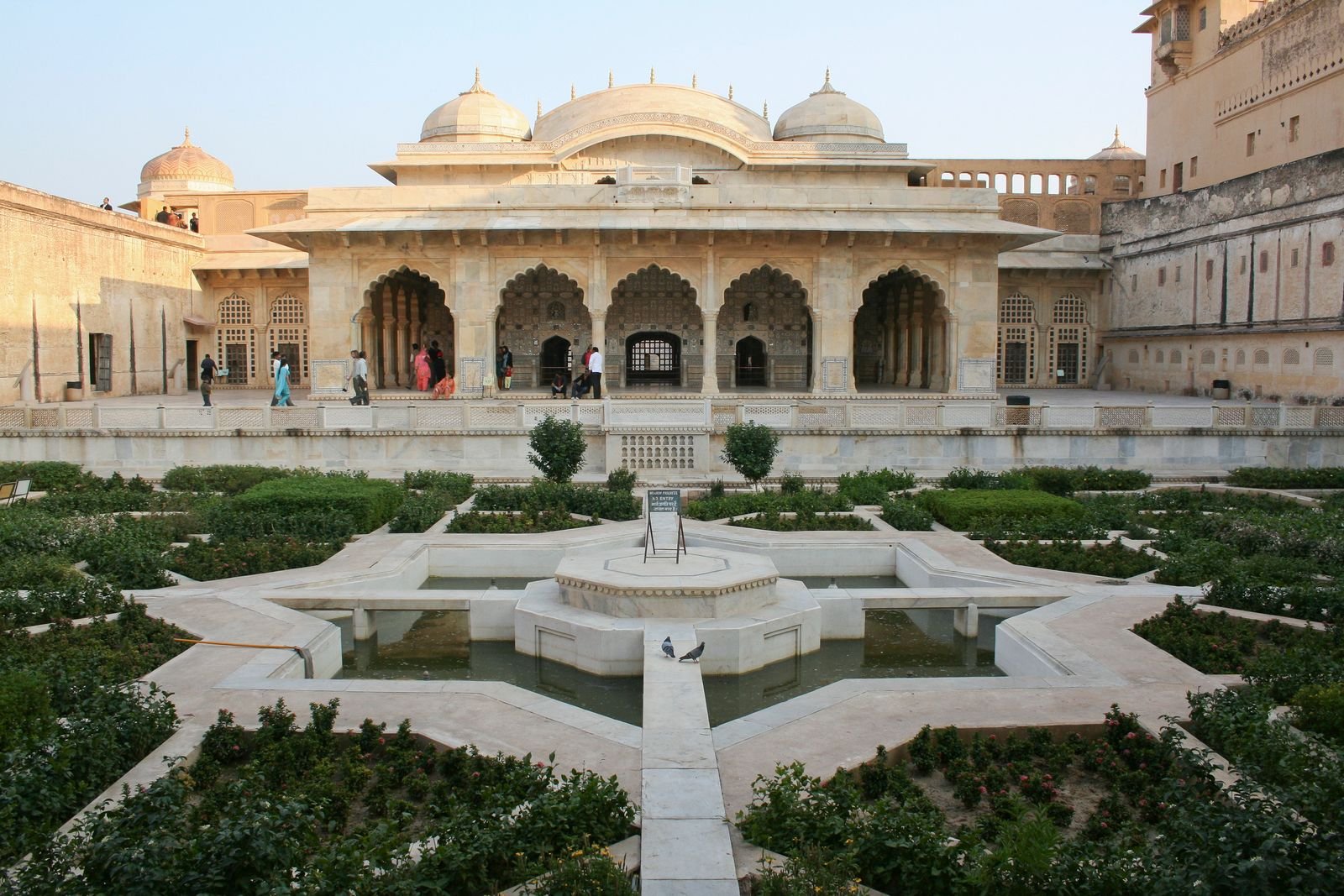
Amer Fort at a glance
| Fact | Detail |
|---|---|
| Location | Amer (Amber), about 11 to 12 km from Jaipur city, Rajasthan |
| Founded by | Raja Man Singh I, from about 1592; palace section completed around 1599 (sources differ slightly) |
| Expanded by | Mirza Raja Jai Singh I and later Kachwaha rulers over roughly 150 years |
| Style | Rajput architecture with Mughal influence, in red sandstone and marble |
| UNESCO status | Part of the Hill Forts of Rajasthan, inscribed 2013 under criteria (ii) and (iii) |
| Key sights | Suraj Pol, Diwan-i-Aam, Ganesh Pol, Sheesh Mahal, Sukh Niwas, Shila Devi temple |
| Best time to visit | November to February; go early in the morning |
| Tickets and timings | Reported at about Rs 200 for Indians and Rs 1,000 for foreigners; confirm officially |
Who built Amer Fort, and when?
Raja Man Singh I began the fort, and its palace section is usually dated to 1599, although some accounts place the start of work in 1592. Man Singh was a leading general under the Mughal emperor Akbar, and his grandson Mirza Raja Jai Singh I (who ruled from 1621 to 1667) added major buildings and gardens in the 17th century. Later Kachwaha rulers kept building for about 150 years.
The hill was not empty before them. The region, then called Dhundhar, was held by Meena chiefs until the Kachwaha prince Dulha Rai took control, and the Kachwahas ruled from Amer until Sawai Jai Singh II moved the capital to the new city of Jaipur in 1727. For the wider story of the emperors Man Singh served, see our guide to the famous emperors of India.
Why is Amer Fort a UNESCO World Heritage Site?
Amer is one of six forts inscribed as the Hill Forts of Rajasthan in 2013, alongside Chittorgarh, Kumbhalgarh, Ranthambore, Gagron and Jaisalmer. UNESCO recognised the group under criteria (ii) and (iii), for the exchange of Rajput ideas in fort planning, art and architecture, and as an expression of Rajput feudal and cultural traditions. UNESCO describes Amer as representing a 17th-century phase in which a shared Rajput-Mughal court style developed, visible in the buildings and gardens of Jai Singh I.
UNESCO also notes a conservation problem: the original exterior plaster has been replaced, which has meant some loss of historic material and patina. If you are comparing Rajasthan’s great hill forts, our guides to Chittorgarh Fort and the top 10 forts of India are good companions, and the complete list of India’s UNESCO sites shows how the group fits into the national tally.
How is Amer Fort laid out?
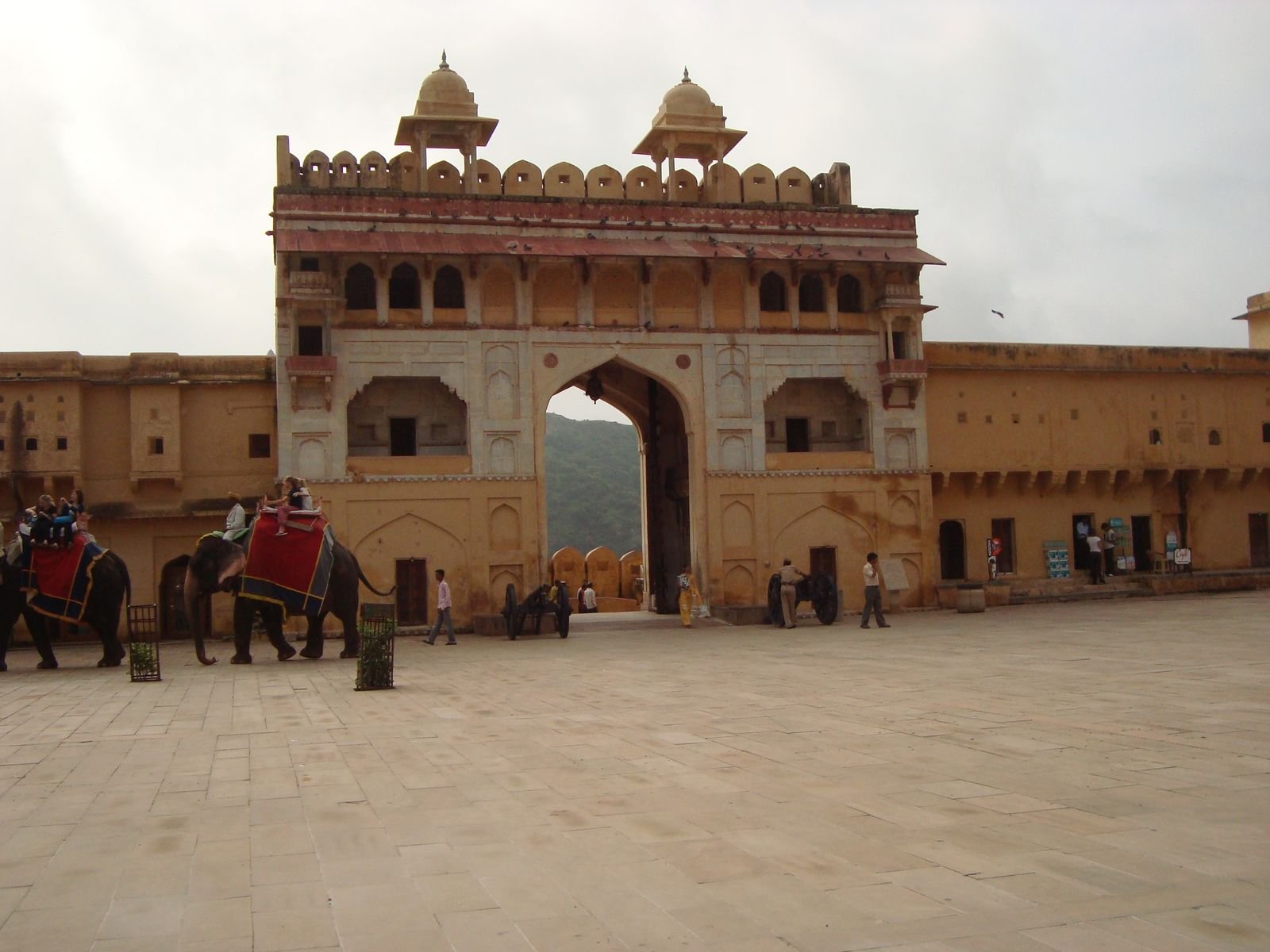
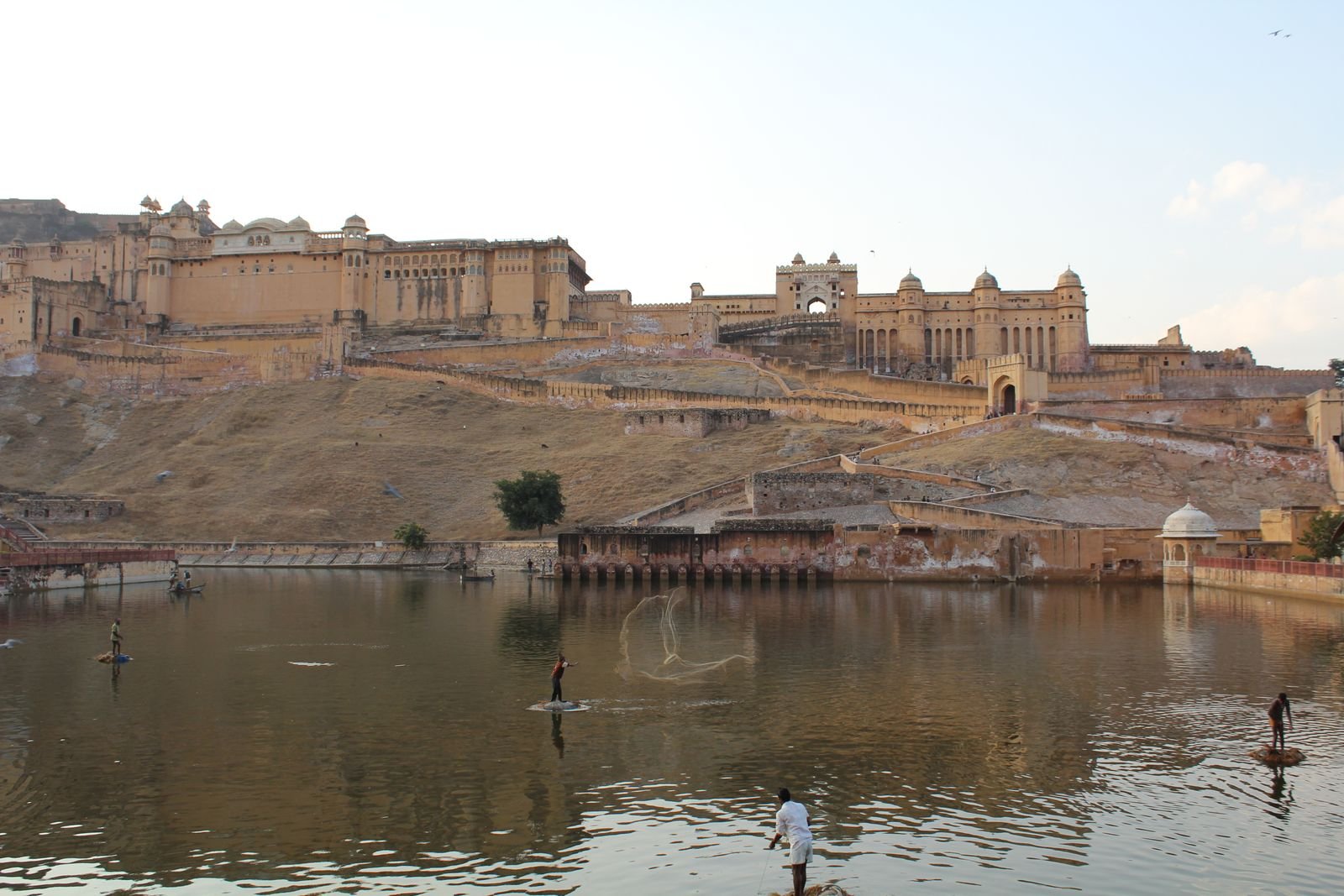
The fort climbs a hillside in four levels, each organised around a courtyard, and you move from public spaces at the bottom to private royal quarters at the top. Visitors usually enter through the Suraj Pol (Sun Gate), then step into the first courtyard where the ceremonial functions took place. The palace faces Maota Lake below, which was the main water source for the complex.
In broad terms, the lower level holds the ceremonial courtyard, the next level holds the Diwan-i-Aam and the Ganesh Pol gateway, and the upper levels hold the private palaces: the Sheesh Mahal (also called Jai Mandir), Sukh Niwas, the Diwan-i-Khas (Hall of Private Audience) and the garden between them.
Guidebooks label the courtyards differently, so rely on the signs on site. The Shila (Sila) Devi temple near the entrance is dedicated to a form of the goddess Durga and is traditionally linked to Man Singh’s campaign in Bengal in 1604. Worship there continues, so dress modestly and follow the rules posted at the shrine.
What is the Diwan-i-Aam at Amer Fort?
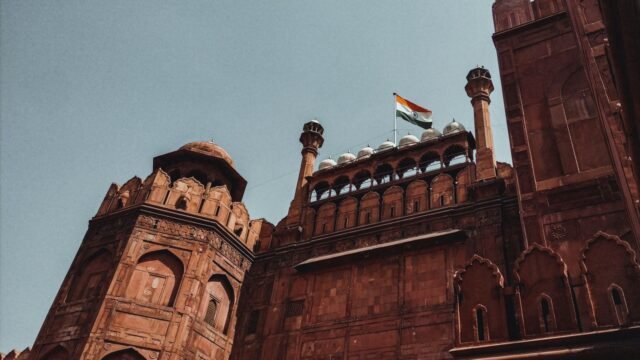
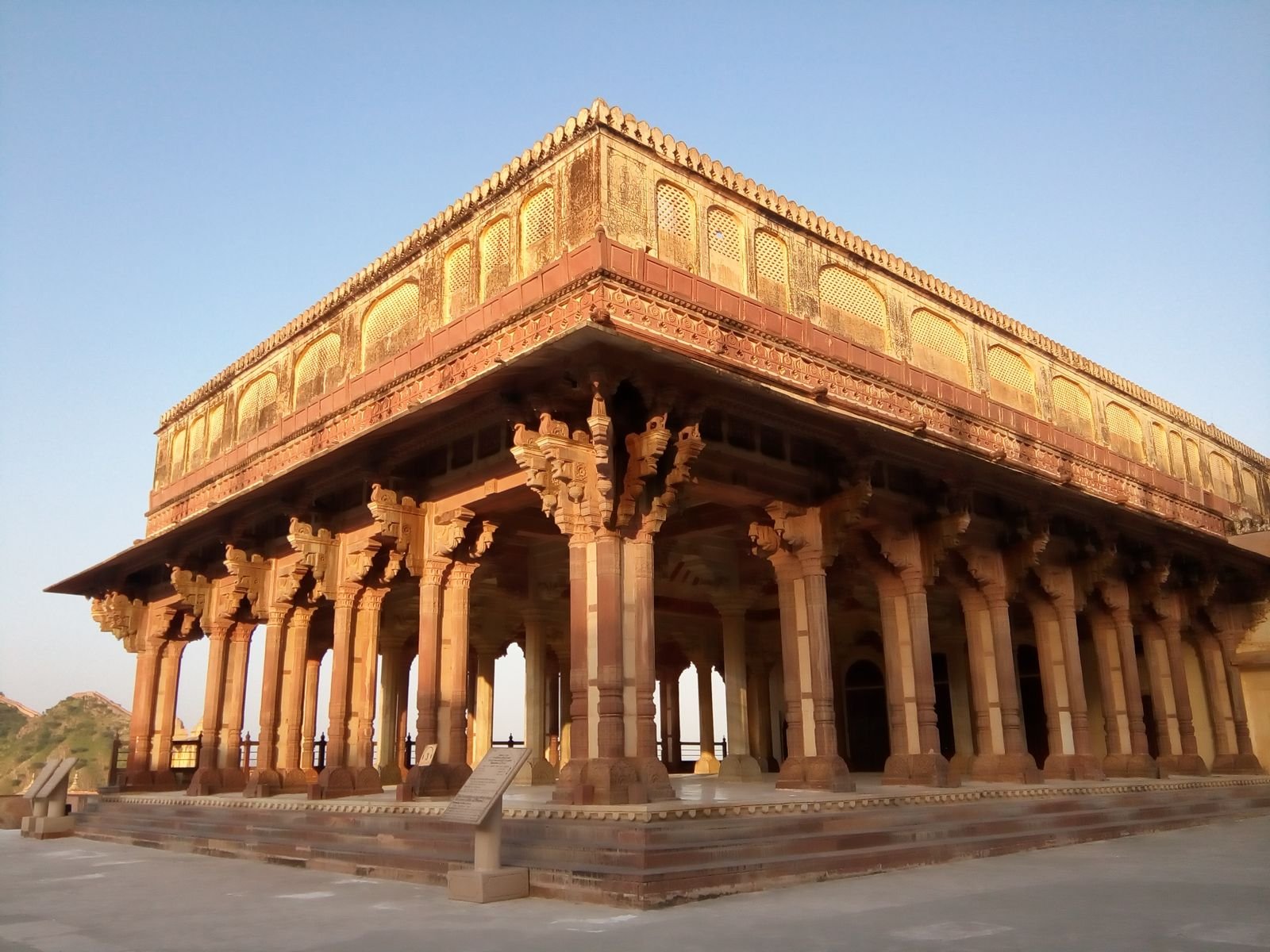
The Diwan-i-Aam is the Hall of Public Audience, an open pillared hall where the Kachwaha ruler received petitioners and held public court. A public hall like this separated everyday administration from the private palace beyond it, a pattern also seen in Mughal forts such as the Red Fort in Delhi.
What is the Ganesh Pol?
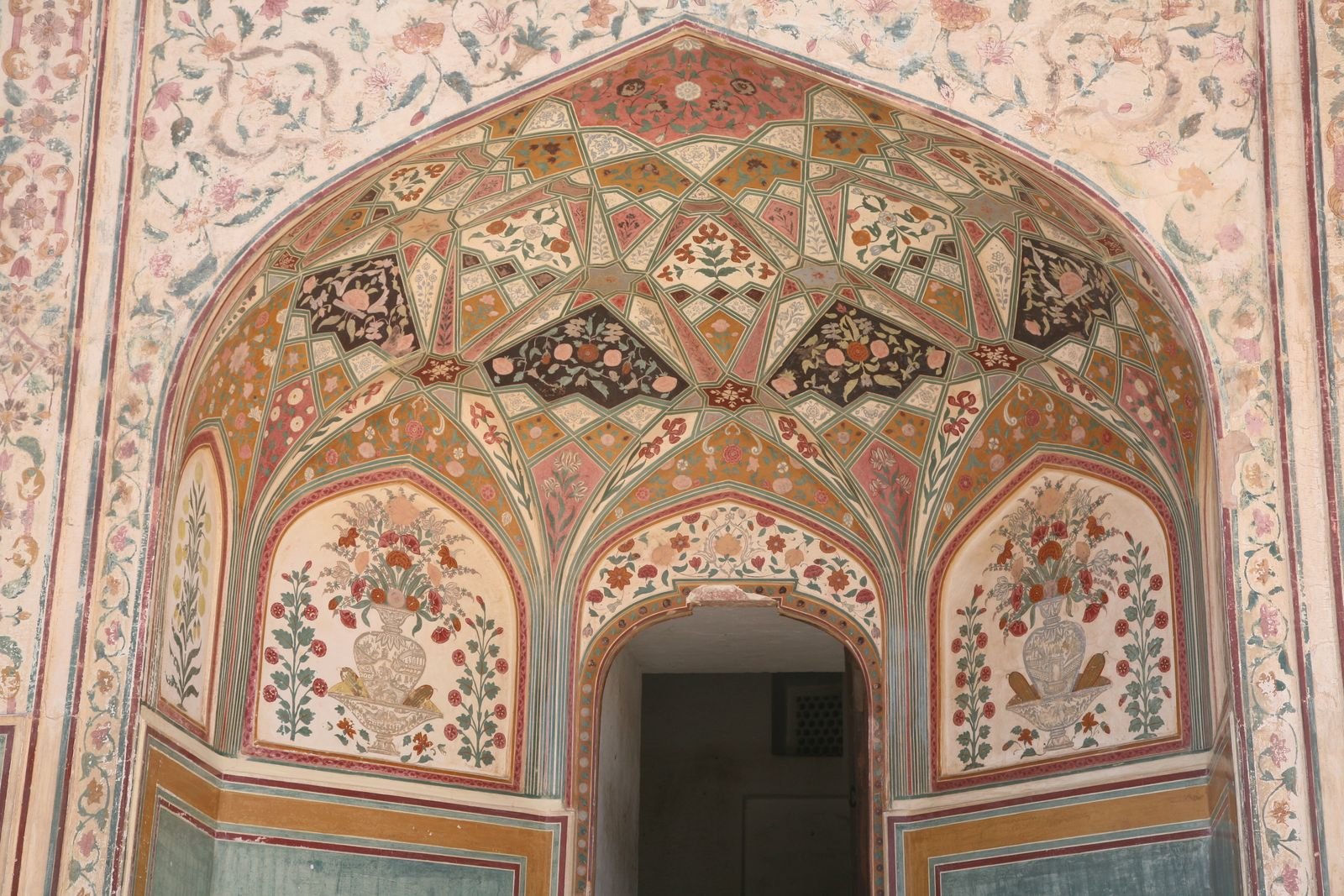
The Ganesh Pol is the richly decorated gateway that leads from the public courtyards into the private palaces. It is usually described as one of the finest parts of the fort, with frescoes and latticed windows; the name refers to Ganesha. Passing through it marks the moment you step from the public face of the dynasty into the royal household.
Why is the Sheesh Mahal so famous?
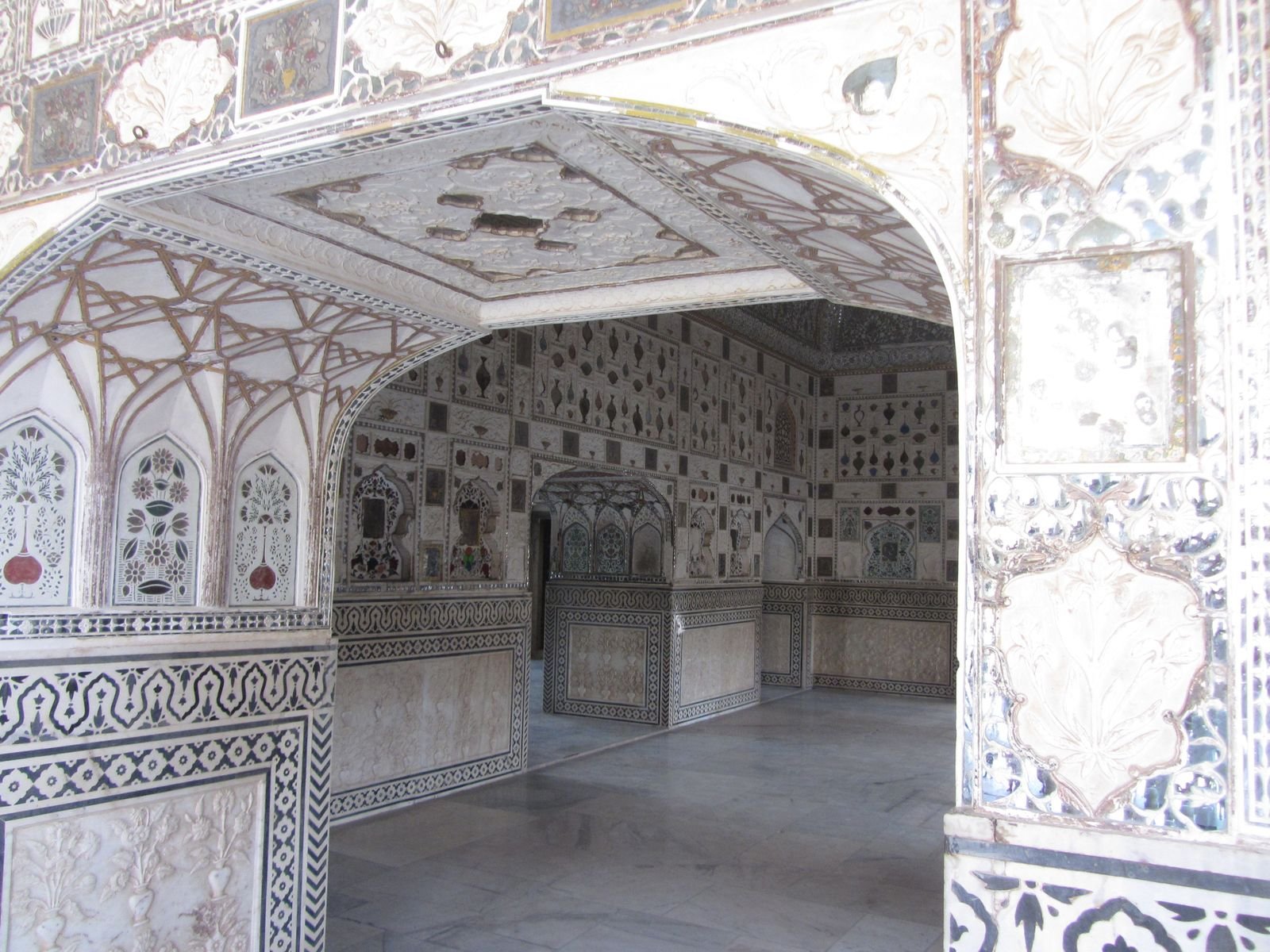
The Sheesh Mahal, or Mirror Palace, is the best known part of Amer Fort, a hall (also called Jai Mandir) whose walls and ceilings are inlaid with small pieces of mirror and coloured glass. Guides often say that a single flame makes the ceiling glitter like stars; treat that as a popular visitor story rather than a documented court practice.
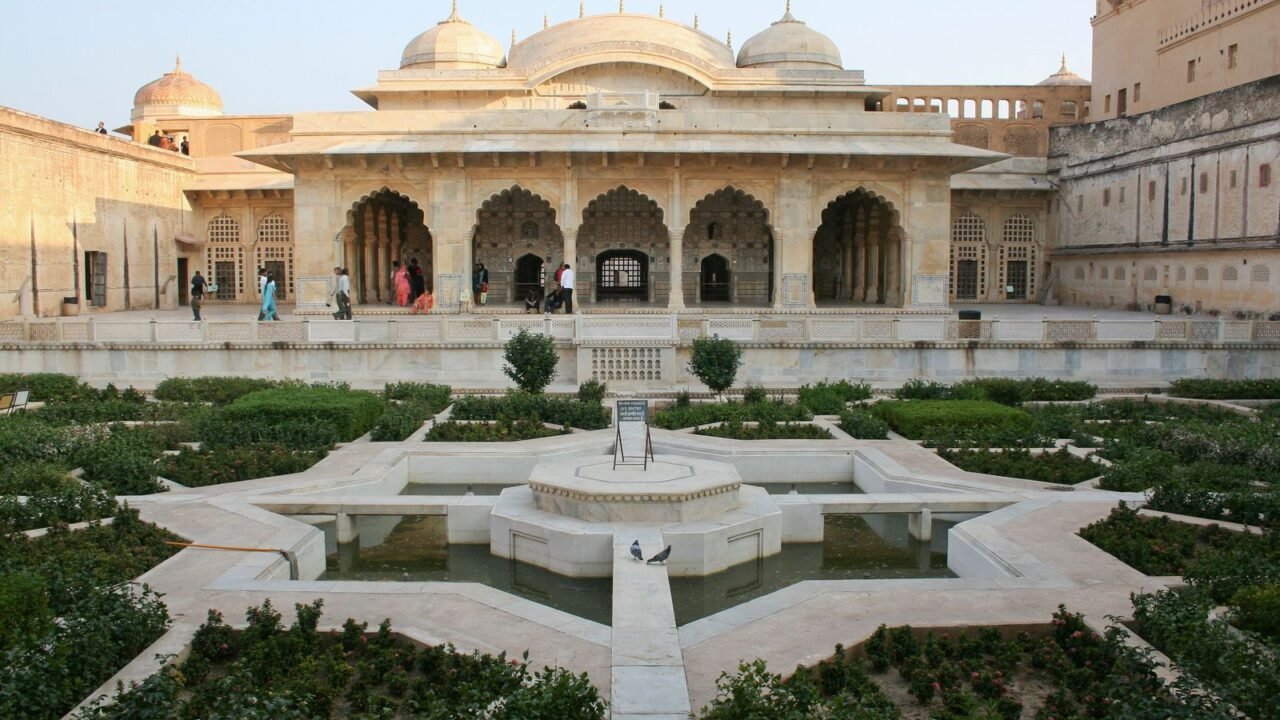
The Sheesh Mahal is the lower part of a two-storey structure: the Jas Mandir sits on top of it. Together with the garden and water channels, they show how the palace was designed to be comfortable in a harsh climate. If the royal interiors interest you, the top 10 royal palaces of India puts Amer next to other great residences.
What is Sukh Niwas?
Sukh Niwas, the Hall of Pleasure, faces the Sheesh Mahal across a garden laid out in the Mughal charbagh style. The hall is described as cooled by water channels, a way of easing the summer heat. Together with the charbagh garden, it is a good example of the Rajput-Mughal blend that UNESCO highlights.
How are Amer, Jaigarh and Nahargarh connected?
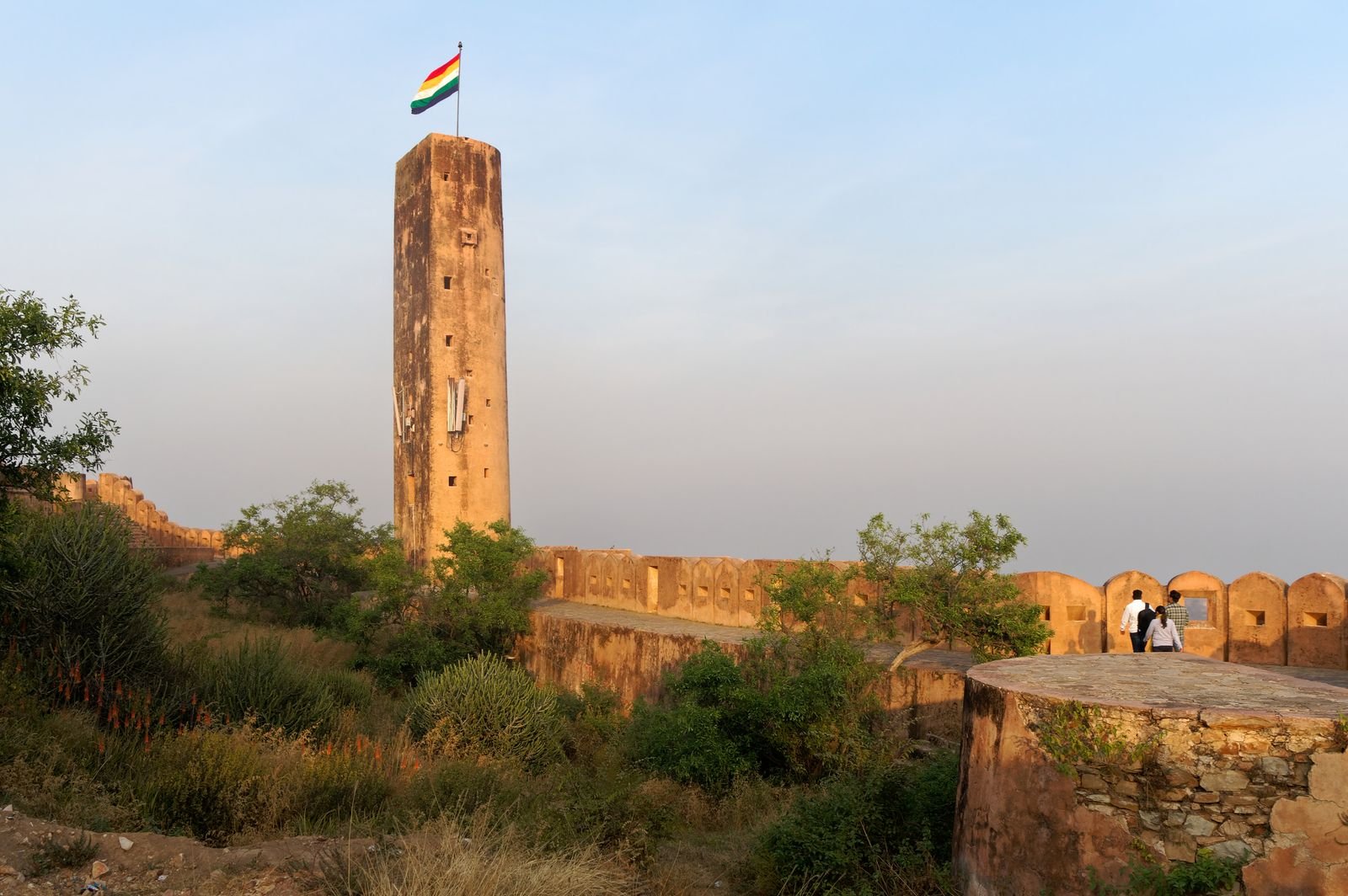
The three forts form a defensive ring on the Aravalli ridge above Jaipur. Jaigarh Fort stands about 400 m above Amer and is said to have been begun in the 11th century by Raja Kakil Dev, with later additions by Sawai Jai Singh II. Amer and Jaigarh are reported to be linked by underground passages and are often treated as one complex; one passage is described as a wartime escape route, though visitors should not assume a route is open.
Jaigarh is best known for the Jaivana cannon, built under Sawai Jai Singh II and completed in 1720. It was reported as the world’s largest cannon on wheels, with a barrel of about 6.15 m, a weight of around 50 tonnes, and no record of use in battle. Nahargarh, originally called Sudershangarh, was built mainly in 1734 by Sawai Jai Singh II as a retreat; its walls once extended over the hills to join Jaigarh, and today it is known for views over Jaipur and the Madhavendra Palace frescoes.
Watch: Amer Fort on film
These three videos show the palace, its setting and the neighbouring Jaipur forts. They come from independent travel and documentary channels, so use them for atmosphere and check practical details against official sources.
How do you visit Amer Fort?
Plan on two to three hours for the palace, longer with Jaigarh or Nahargarh. Arrive early: one 2026 visitor guide advises reaching the fort by about 7 am, before crowds build up after 9:30 am. Fees and hours are revised from time to time, so verify them before you go.
- Getting there. The fort is about 11 to 12 km from central Jaipur. City buses run from areas such as Ajmeri Gate and Badi Chaupar, taxis and app cabs are widely used, and private cars can park near Maota Lake. One guide gives the bus fare as roughly Rs 20 to 40, but treat all fares as approximate.
- Tickets. One 2026 guide reports about Rs 200 for Indian visitors and Rs 1,000 for foreign visitors, with a separate composite ticket for several Jaipur monuments. Other sources quote different figures, so confirm at the counter.
- Timings. Published hours differ. One 2026 guide lists 7 am to 9 pm daily with closure on Holi, while other listings give shorter daytime hours. Check the official board.
- Light and sound show. An evening show is held at the fort, with English and Hindi sessions reported at about 7:30 pm and 8 pm. Prices and schedules change with the season and weather, so confirm before planning dinner around it.
- Best time. November to February is the most comfortable. April to June is very hot, and the monsoon months bring crowds and wet stone.
What should you know about the elephant rides?
Elephant rides up the ramp to the main gate have long been a tourist attraction at Amer, but they are controversial. PETA India has argued in court filings and statements that some of the elephants used were not registered with the Animal Welfare Board of India and were overloaded on hilly terrain; these are claims by the organisation, and the matter has been before the Rajasthan High Court and the Supreme Court. Rules and daily limits have changed over time, and whether rides are currently running should be checked locally.
Many guides and welfare groups suggest skipping them. The alternatives are to climb the ramp on foot or take a jeep, which one source puts at roughly Rs 500 to 800 round trip to the rear gate (confirm the fare). Jeeps are widely described as the more ethical option.
How does Amer compare with other heritage sites?
Amer is the best place in India to see how Rajput and Mughal courts shaped each other. For the Mughal side of that story, the Taj Mahal and the Red Fort show the imperial style that Rajput patrons adapted, while Chittorgarh shows an older and more martial Rajput tradition. For a very different sculptural heritage, our Khajuraho temples guide covers the Chandela monuments of central India.
Sources used for this article: UNESCO World Heritage Centre’s entry for the Hill Forts of Rajasthan (list 247), Wikipedia articles on Amer Fort, Jaigarh Fort, Nahargarh Fort and Jai Singh I, a 2026 visitor guide from Thrilling Travel for tickets, timings and show details, and PETA India’s 2018 press release for elephant-ride claims. Where sources disagree on dates, timings and prices, the text gives ranges or says to confirm officially. Photographs are used under Creative Commons licences with credit shown beneath each picture.
Frequently asked questions
-
Where is Amer Fort located?
Amer Fort is in the town of Amer (Amber), about 11 to 12 km from Jaipur city in Rajasthan.
-
Who built Amer Fort?
Raja Man Singh I began it, with the palace section completed around 1599. Mirza Raja Jai Singh I and later Kachwaha rulers expanded it.
-
Is Amer Fort a UNESCO World Heritage Site?
Yes. It is part of the Hill Forts of Rajasthan, inscribed in 2013 under criteria (ii) and (iii) with five other forts.
-
What is the Sheesh Mahal at Amer Fort?
It is the Mirror Palace, also called Jai Mandir, a hall inlaid with small pieces of mirror and coloured glass.
-
How is Amer Fort connected to Jaigarh and Nahargarh?
The three forts form a ring on the Aravalli ridge. Jaigarh stands about 400 m above Amer and is reported to be linked by underground passages, while Nahargarh was built in 1734.
-
What are the Amer Fort ticket prices and timings?
One 2026 guide reports about Rs 200 for Indians and Rs 1,000 for foreigners, with an evening show held separately. Published hours and prices differ, so confirm at the ticket counter.
-
What is the best time to visit Amer Fort?
November to February is the most comfortable. Arrive early in the morning to avoid heat and crowds.