
India’s best-known folk and regional painting traditions include Madhubani from Bihar, Warli from Maharashtra, Pattachitra from Odisha and West Bengal, Gond from Madhya Pradesh, Kalamkari from Andhra Pradesh and Telangana, Pichwai from Rajasthan and Tanjore from Tamil Nadu. Each uses its own materials, motifs and stories, and many are protected as heritage crafts.
Updated 12 October 2026. Dates, origin stories and artist names in folk art are often passed down orally and are told differently by different sources; the text says so where it matters. Check with a trusted seller or cooperative before buying handmade work.
Indian folk paintings at a glance
| Style | Region | Known for |
|---|---|---|
| Madhubani | Mithila region, Bihar | Bold lines, bright colours, no empty space |
| Warli | Maharashtra (Thane and Palghar region) | White stick figures on an earthy background |
| Pattachitra | Odisha and West Bengal | Painted cloth scrolls with mythological stories |
| Gond | Madhya Pradesh | Patterns of dots and lines filling animals and trees |
| Kalamkari | Andhra Pradesh and Telangana | Hand-painted or block-printed natural-dye textiles |
| Pichwai | Nathdwara, Rajasthan | Large cloth hangings behind Shrinathji |
| Tanjore | Thanjavur, Tamil Nadu | Gold-leaf and gem-inlaid devotional panels |
What are Indian folk paintings?
Folk paintings are traditional art forms made by communities and families, usually from local materials, to decorate homes, mark festivals and tell stories. They differ from the courtly miniature paintings and the ancient cave art of sites such as Ajanta, which you can read about in our Ajanta and Ellora caves guide. A folk painting is rarely signed in the Western sense. The skill belongs to a community, and styles are handed from parent to child. Many are still made today, and some have become collectors’ items sold in galleries across the world.
These arts have a close relation to other traditions of the home and the festival. Floor designs such as the ones described in our guide to rangoli and kolam share motifs and ideas with wall painting, and folk dance and music, explained in the guides to Garba and Dandiya, often appear as themes in the pictures.
What is Madhubani painting?
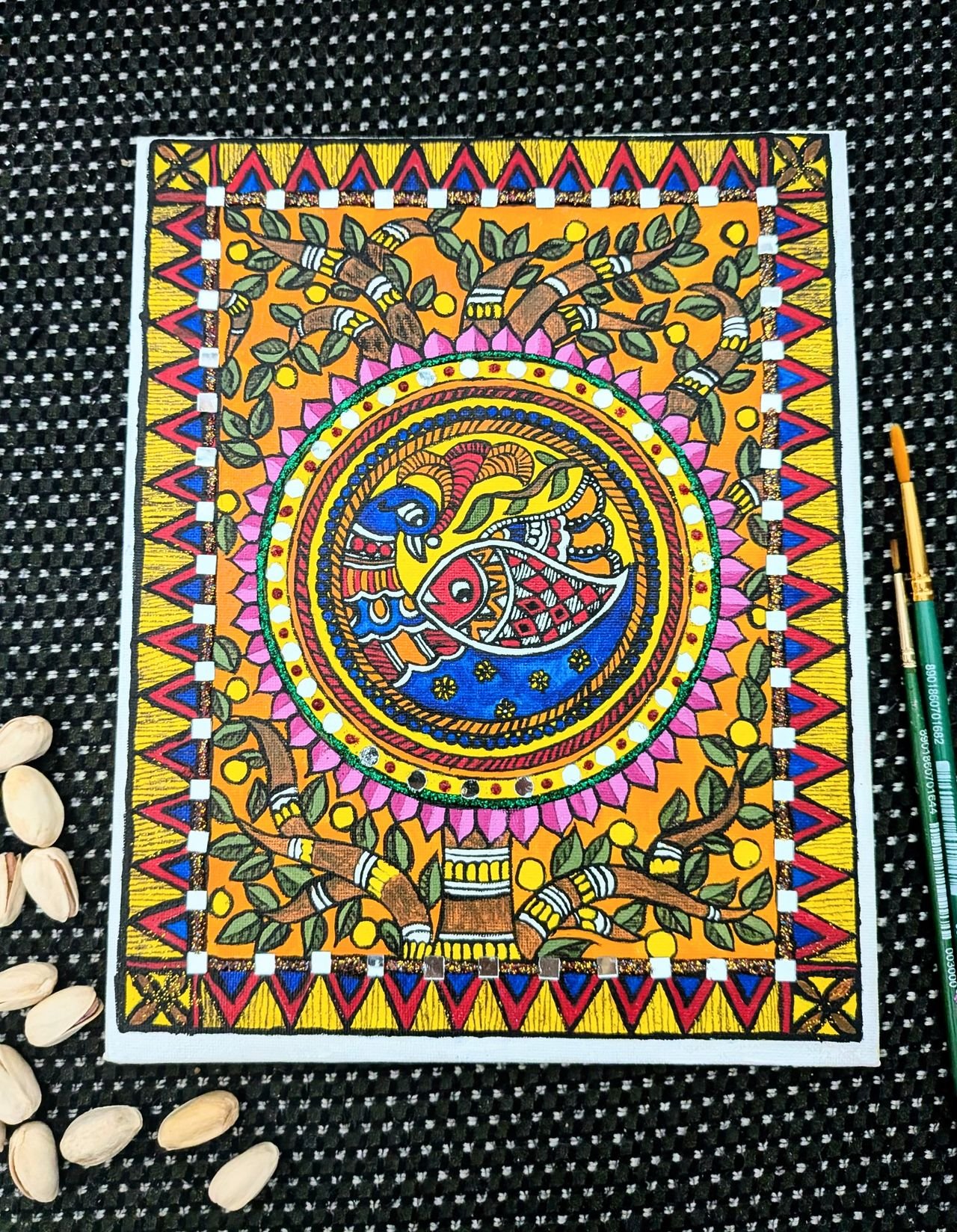
Madhubani, also called Mithila painting, comes from the Mithila region of Bihar and nearby parts of Nepal. Women traditionally painted it on freshly plastered walls of the home for weddings and festivals, and the art later moved on to paper and cloth. It is known for strong outlines, bright natural and later synthetic colours, and a horror vacui, a refusal to leave any part of the surface empty. Typical themes include scenes from the Ramayana and the life of Krishna, the sun and moon, fish, peacocks and lotus flowers, which are symbols of luck and fertility. A widely told account says outsiders first noticed the wall art after an earthquake in 1934, when a British officer saw the paintings on damaged houses; the story is popular, though you should treat the details with care.
What is Warli painting?
Warli art belongs to the Warli tribe of western Maharashtra, in the Thane and Palghar areas. It is among the simplest of Indian paintings: white rice-paste paint on a red-brown mud wall, using only a circle, a triangle and a square. Circles stand for the sun and moon, triangles for mountains and trees, and squares for sacred enclosures. Human figures are drawn as two triangles joined at the tip, and groups of figures dance in circles around a central spiral. Scenes show farming, hunting, weddings and festivals. The best known Warli artist, Jivya Soma Mashe, helped bring the art to the attention of a wider audience from the 1970s.

What is Pattachitra?
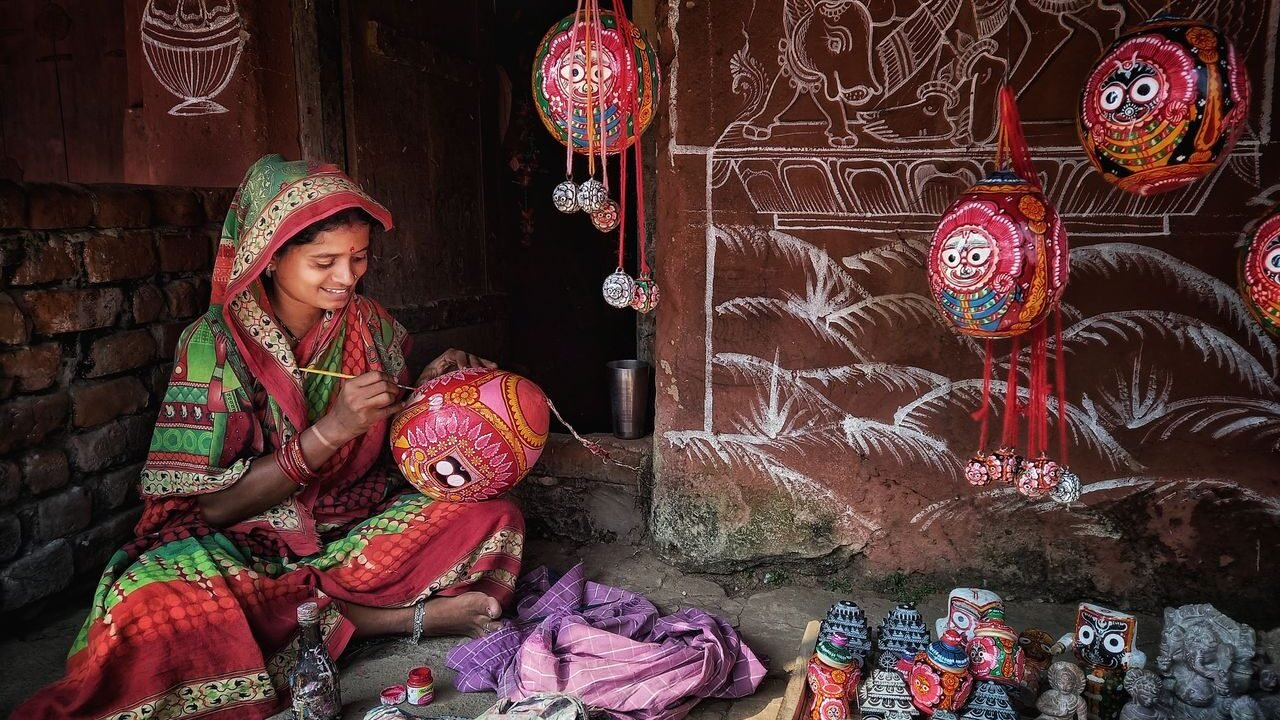
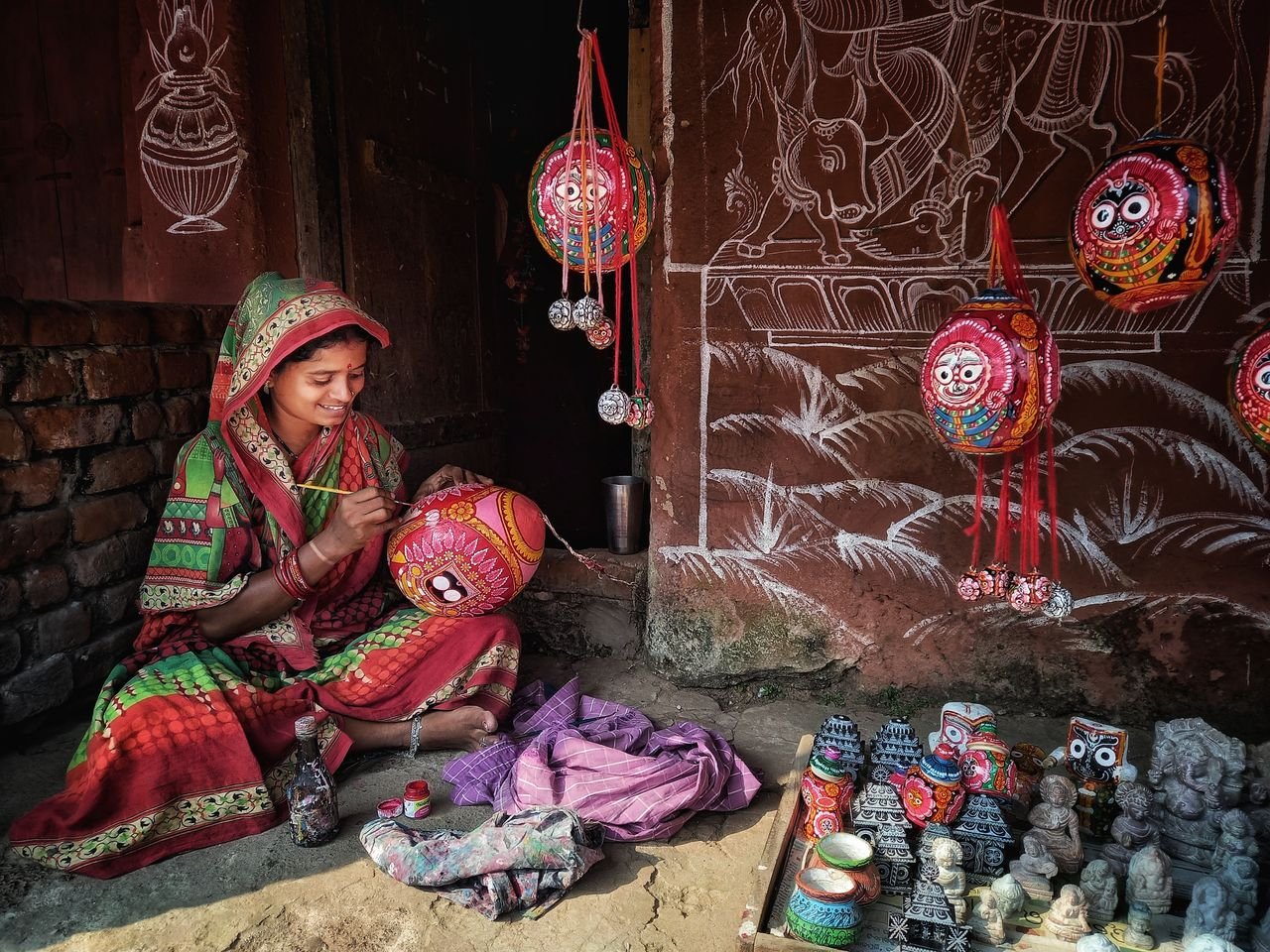
Pattachitra, from the Sanskrit words for cloth (patta) and picture (chitra), is the traditional painted cloth art of Odisha and West Bengal. In Odisha, artists known as chitrakars work in villages such as Raghurajpur near Puri, painting scenes of Jagannath, Krishna and episodes from the epics on cloth coated with a paste of tamarind seed and chalk. The colours come from natural sources such as lamp black, minerals and plants, and the figures have large eyes and fine outlines. Palm-leaf versions are also made. Many of these works are associated with the worship of Jagannath at Puri, and the same artistic region produced the sculpture at the Konark Sun Temple.
What is Gond art?
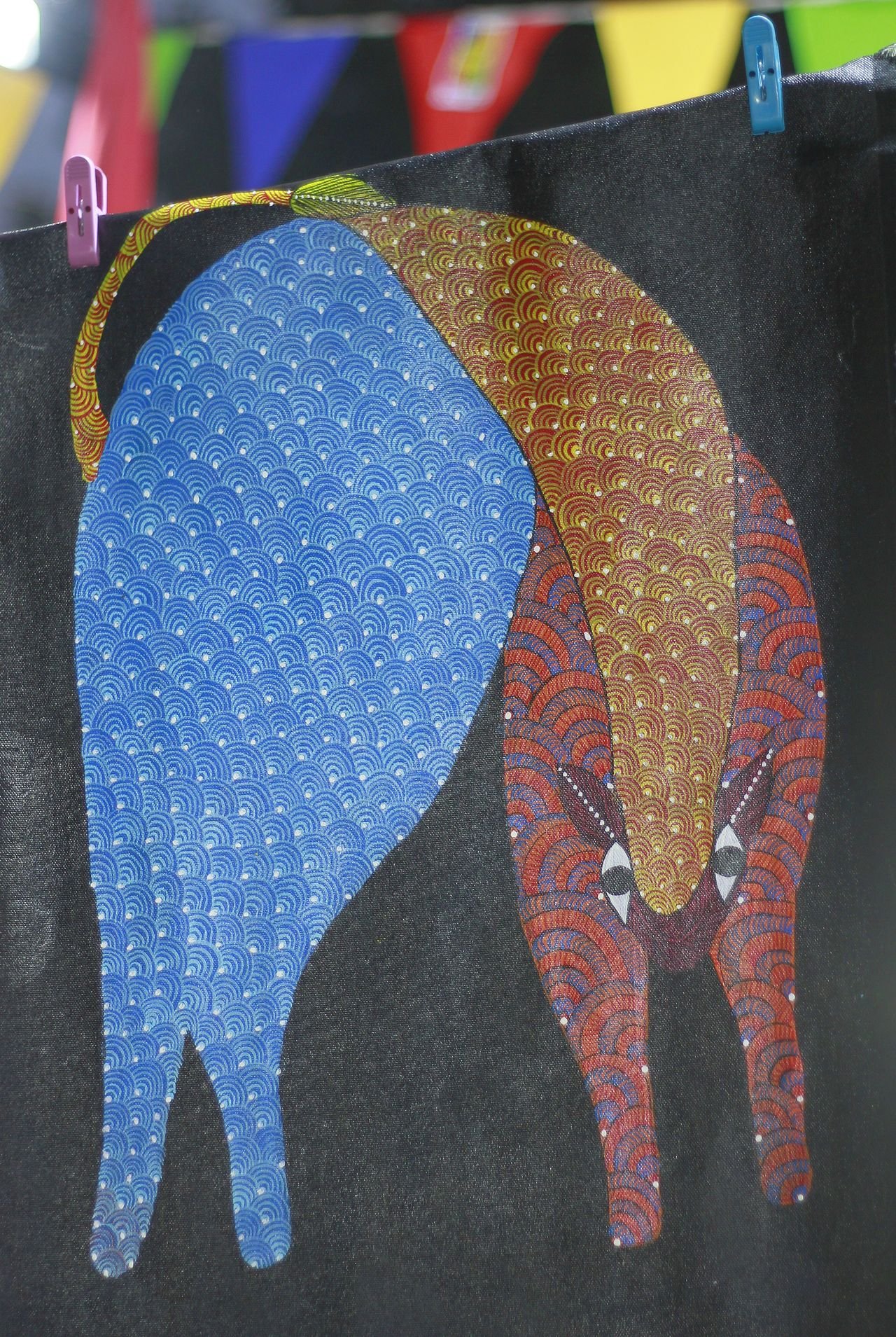
Gond art comes from the Gond people of central India, particularly Madhya Pradesh. Gond artists fill the outlines of animals, birds and trees with dense patterns of dots, dashes and lines, creating a sense of movement. The tradition holds that every living thing has a spirit, and images are believed to bring good fortune. The painter Jangarh Singh Shyam, who began to paint on paper and canvas in the 1980s, is credited with taking the art into the modern art world; many younger Gond artists have followed.
What is Kalamkari?
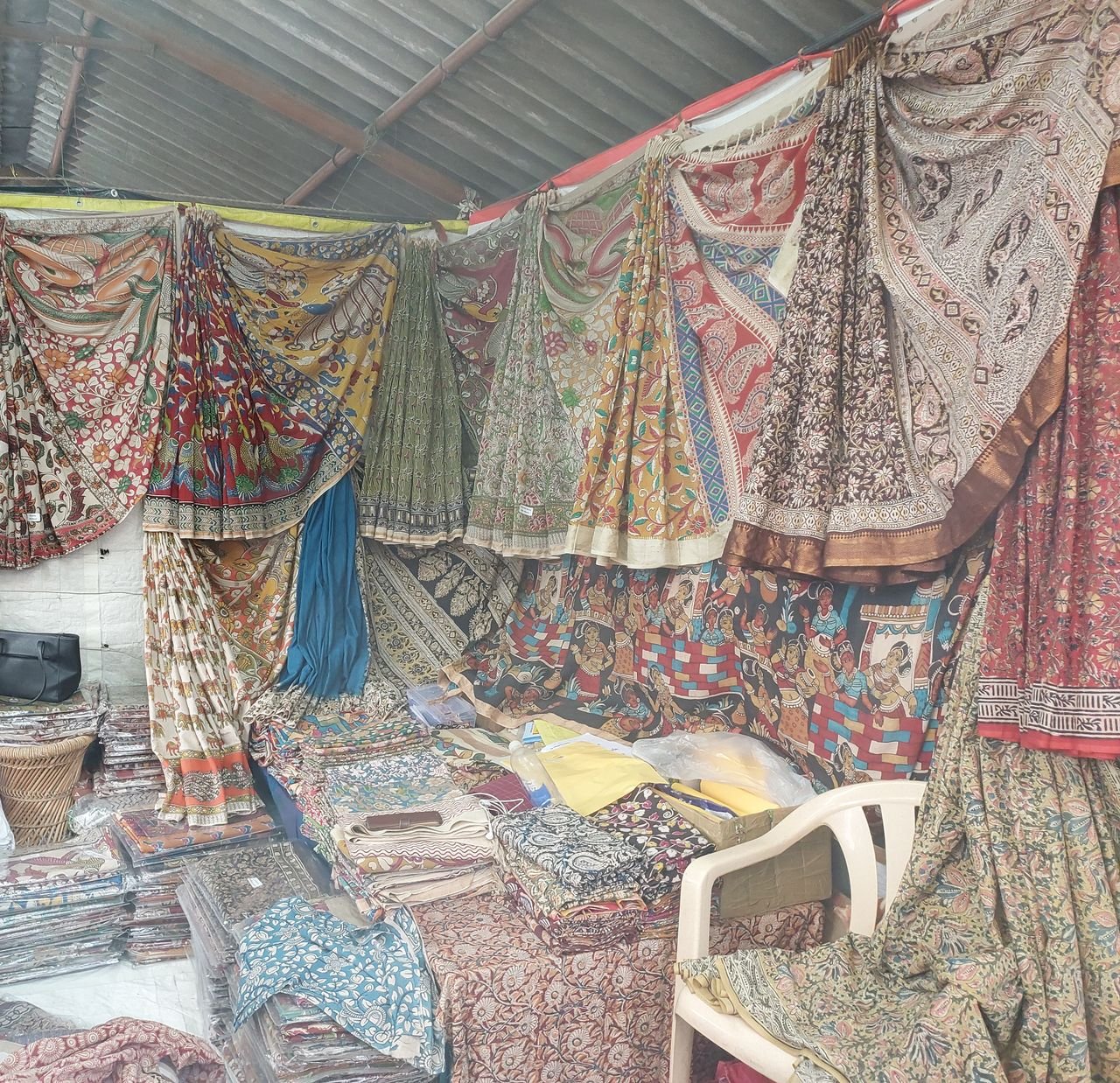
Kalamkari means “pen work,” and it is the art of painting or printing designs on cotton cloth using natural dyes. Two main styles exist in Andhra Pradesh and Telangana. In Srikalahasti, artists draw freehand with a bamboo pen (kalam) dipped in a dye made from jaggery and iron, and then fill in colours; in Machilipatnam, designs are printed with carved wooden blocks. Natural dyes come from plants such as indigo and madder, and the cloth goes through many washings, a slow process that can take weeks. Kalamkari is used for sarees, wall hangings and temple cloths depicting scenes from the epics.
What is Pichwai painting?
Pichwai paintings are large cloth hangings made for the temple of Shrinathji at Nathdwara in Rajasthan, a form of Krishna worshipped as a child. They hang behind the image of the deity and change with the season and festival, showing the cows, lotuses and dancing gopis of Krishna’s life. Painted on cloth with mineral pigments and sometimes gold, they are among the most elaborate of Indian devotional paintings. The tradition developed in the 17th and 18th centuries according to most accounts, after the image of Shrinathji was brought to Nathdwara. Rajasthan’s rich heritage, including its forts, is described in our guides to Chittorgarh Fort and the royal palaces of India.

What is Tanjore painting?
Tanjore (Thanjavur) painting is a classical South Indian style, better described as a regional devotional tradition than a tribal folk art. It originated under local rulers of the Thanjavur region, and developed in the 16th to 18th centuries. Panels are painted on wood with a base of chalk and glue, and the figures are decorated with gold leaf, semi-precious stones and glass pieces that give the surface a raised, glowing quality. The subjects are mostly gods such as Krishna, Ganesha and Rama. It has Geographical Indication protection. The Vinayaka panel below shows the characteristic gold and rich colour.

Watch: three folk art traditions at work
These three videos show the artists at work. The first follows Madhubani art, the second is a documentary on the Warli people, and the third visits the Pattachitra village of Raghurajpur in Odisha. They are third-party videos, and their views are those of their makers.
How are these paintings connected to music and dance?
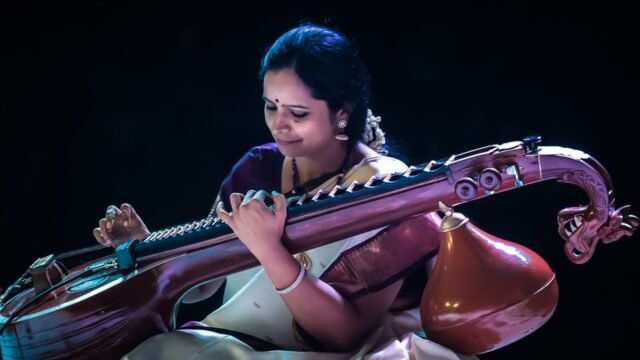
Indian art forms often share a single vocabulary of stories and emotions. The moods that dancers express, described in our guide to Navarasa, the nine rasas, are also the moods a painter tries to convey in a face or a gesture. Krishna’s flute, which is the subject of many Pichwai and Pattachitra scenes, is the instrument described in the bansuri guide, and the veena in Saraswati’s hands, explained in our veena guide, is a favourite subject of Tanjore paintings. For a wider look at the performing arts, read about India’s classical dance forms and the musicians in famous Indian classical musicians.
Are these art forms still alive today?
Most are, though they face pressures. Mass-produced prints undercut handmade work, natural dyes and pigments take time and skill, and young people in artist families sometimes choose other careers. At the same time, awards, museum shows, online sales and design collaborations have created new markets, and many artists now work on paper and canvas as well as on walls and cloth. Government schemes, cooperatives and non-profit groups train new artists and help them sell directly. For a visitor, the best way to support the tradition is simple: learn the story behind a work, pay a fair price and credit the artist by name.
How can you buy genuine folk art?
Handmade folk art is slow to make, so very cheap pieces are often machine printed. Buy from government emporiums, artist cooperatives, craft fairs or directly from artists’ villages, and ask how the work is made. Look for signs of handwork, such as slight irregularity in the lines, natural pigments and cloth or paper that matches the tradition. Many styles carry a Geographical Indication tag, which helps identify genuine regional products. Buying directly supports the families who keep the tradition alive, and visits to centres such as Raghurajpur or the Mithila villages let you see the process first hand.
Sources used for this article: general reference works and the Wikipedia articles on Madhubani painting, Warli painting, Pattachitra, Gond art, Kalamkari, Pichwai and Tanjore painting. Origin stories, dates and artists’ names in folk art are told differently by different sources, and the text says so where it matters. Photographs are used under Creative Commons licences or CC0, with credit shown beneath each picture.
Frequently asked questions
-
What are the main folk paintings of India?
Madhubani, Warli, Pattachitra, Gond, Kalamkari, Pichwai and Tanjore are among the best known.
-
Where does Madhubani painting come from?
It comes from the Mithila region of Bihar and nearby parts of Nepal, and was traditionally painted on the walls of homes by women.
-
What is Warli art made with?
White rice paste on a red-brown mud wall, using circles, triangles and squares to draw people and nature.
-
What does Pattachitra mean?
Patta means cloth and chitra means picture, so Pattachitra is a painted cloth picture, a tradition of Odisha and West Bengal.
-
What is the difference between Kalamkari and block printing?
Kalamkari means pen work: Srikalahasti artists draw freehand with a bamboo pen, while Machilipatnam artists print with carved wooden blocks. Both use natural dyes.
-
What is a Pichwai painting?
A Pichwai is a large cloth painting hung behind the image of Shrinathji at Nathdwara in Rajasthan, changing with the season and festival.
-
How can I tell if a folk painting is genuine?
Buy from cooperatives, government emporiums or artists directly, look for signs of handwork and natural pigments, and check for Geographical Indication tags.