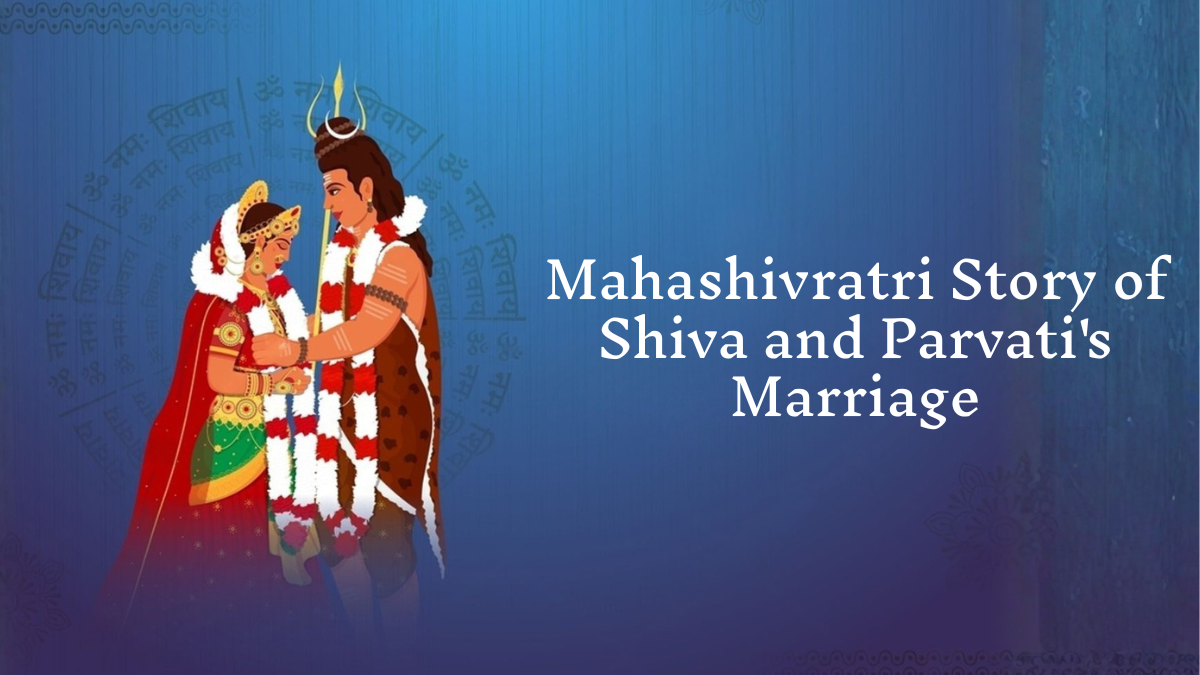
The story of Shiva and Parvati’s marriage, as told in the Shiva Purana and in Kalidasa’s Kumarasambhava: Sati’s death and rebirth as Parvati, the burning of Kamadeva, Parvati’s penance, Shiva’s test, and the divine wedding that tradition links with Maha Shivratri.
The story of Lord Shiva and Goddess Parvati’s marriage is one of the most beloved narratives in Hindu tradition, and popular belief holds that their wedding is celebrated on the night of Maha Shivratri. Its fullest tellings are in the Rudra Samhita of the Shiva Purana and in the 5th-century poet Kalidasa’s Kumarasambhava, “the birth of Kumara”. Maha Shivratri 2027 falls on Saturday, 6 March — see our Maha Shivratri guide.
Who Was Parvati Before Her Birth? The Story of Sati
Shiva’s first wife was Sati, daughter of the king Daksha. Daksha disapproved of Shiva, the ash-covered ascetic, and held a great sacrifice to which he invited every god except Shiva. Sati went uninvited and, humiliated by her father’s insults to her husband, gave up her body in the sacrificial fire. Grief-stricken, Shiva withdrew into deep meditation, detached from the world.
Sati was reborn as Parvati, “daughter of the mountain”, born to Himavan, king of the Himalayas, and Queen Mena. The sage Narada foretold that she would one day marry Shiva.
Why Did the Gods Need Shiva to Marry?
The demon Tarakasura had won a boon that he could be killed only by a son of Shiva — confident that the grieving, meditating Shiva would never marry. As Taraka terrorised the heavens, the gods needed Shiva to wed. They sent Kamadeva, the god of love, to stir Shiva from meditation. When Kama’s flower-arrow struck, Shiva opened his third eye and burned Kama to ashes.
What Was Parvati’s Tapasya?
Realising that Shiva could not be won through beauty or desire, Parvati left the palace for the forest to win him through tapasya (penance). She meditated through summer heat and winter cold, living first on fruit, then only on leaves, and finally giving up even leaves — which is why she is called Aparna, “she who took not even a leaf”.

How Did Shiva Test Parvati?
Shiva came to her in disguise as a young ascetic and tried to dissuade her, mocking Shiva as a homeless wanderer who wore snakes and lived among cremation grounds. Parvati defended Shiva and refused to listen, and her unshakeable devotion won him. Shiva revealed himself and accepted her. The Saptarishi, the seven sages, then carried the marriage proposal to her father, Himavan.
What Happened at the Wedding of Shiva and Parvati?
Shiva arrived for the wedding as he truly was: smeared with ash, wearing serpents, riding his bull Nandi, and followed by a wild procession of ghosts, goblins and spirits — his ganas. Queen Mena was so shocked that, in the Shiva Purana’s telling, she fainted and refused the match, until Shiva appeared in a radiant, beautiful form. The gods, sages and celestial beings gathered, and Shiva and Parvati were married. From their union was born Kartikeya, who defeated Tarakasura; their other son is Ganesha.
What Is the Spiritual Meaning of the Story?
Shiva represents pure consciousness and detachment; Parvati represents Shakti — divine energy, devotion and discipline. Their union symbolises the balance of stillness and action, renunciation and worldly life. The story teaches that what desire (Kama) could not achieve, patient devotion and self-discipline did: Shiva burned Kama, but accepted Parvati’s tapasya.
Watch and listen to the complete story of Shiva and Parvati’s marriage
Why Is This Story Remembered on Maha Shivratri?
Popular tradition celebrates Maha Shivratri as the night of Shiva and Parvati’s wedding, and many temples re-enact the marriage. Married women keep the Maha Shivratri fast praying for marital harmony, inspired by Parvati’s devotion, while unmarried devotees pray for a good life partner. The story is often heard alongside the hunter’s tale in the Maha Shivratri vrat katha.
Conclusion
From Sati’s sacrifice to Parvati’s penance and the unconventional wedding procession, the story of Shiva and Parvati is one of devotion that endures across lifetimes. Remembered on Maha Shivratri, it reminds devotees that patient faith and self-discipline achieve what desire alone cannot.
Om Namah Shivaya 🔱
Frequently Asked Questions
What is the story of Shiva and Parvati’s marriage?
Parvati, the reborn Sati and daughter of Himavan, king of the Himalayas, performed severe penance to win Lord Shiva, who had withdrawn into meditation after Sati’s death. After testing her devotion in disguise, Shiva accepted her and they were married. The story is told in the Shiva Purana and in Kalidasa’s Kumarasambhava.
Did Shiva and Parvati marry on Maha Shivratri?
Popular tradition celebrates Maha Shivratri as the night of Shiva and Parvati’s wedding, and many temples re-enact the marriage on this night. Other traditions explain the festival differently, linking it to Shiva’s Tandava dance or to his appearance as an infinite pillar of light, the Jyotirlinga, described in the Linga Purana.
Who was Sati, and how is she connected to Parvati?
Sati was Shiva’s first wife, the daughter of King Daksha. When Daksha insulted Shiva by excluding him from a great sacrifice, Sati gave up her body in the sacrificial fire. She was reborn as Parvati, daughter of Himavan and Mena, and married Shiva again after her penance.
Why did the gods want Shiva to marry Parvati?
The gods wanted Shiva to marry because the demon Tarakasura held a boon that only a son of Shiva could kill him. Their son Kartikeya, born after the marriage, later defeated Tarakasura. Kalidasa’s Kumarasambhava, whose title means the birth of Kumara, is built around this story.
Why did Shiva burn Kamadeva?
The gods sent Kamadeva, the god of love, to break Shiva’s meditation so that he would fall in love with Parvati. When Kama’s flower-arrow struck, Shiva opened his third eye and burned him to ashes. The episode teaches that Shiva could not be won through desire, only through Parvati’s devotion.
Why is Parvati called Aparna?
Parvati is called Aparna, meaning she who took not even a leaf, because during her penance to win Shiva she lived first on fruit, then only on leaves, and finally gave up eating even leaves. The name honours the severity of her tapasya and her determination.
How did Shiva test Parvati’s devotion?
Shiva came to Parvati disguised as a young ascetic and tried to talk her out of marrying Shiva, mocking him as a homeless wanderer who wore snakes and lived in cremation grounds. Parvati defended Shiva and refused to waver, and her steadfast devotion led Shiva to reveal himself and accept her.
Why do married women fast on Maha Shivratri?
Many married women keep the Maha Shivratri fast praying for marital harmony and their husband’s wellbeing, inspired by Parvati’s devotion to Shiva, while unmarried devotees pray for a good life partner. The vrat is equally observed by men and by devotees of every age.