
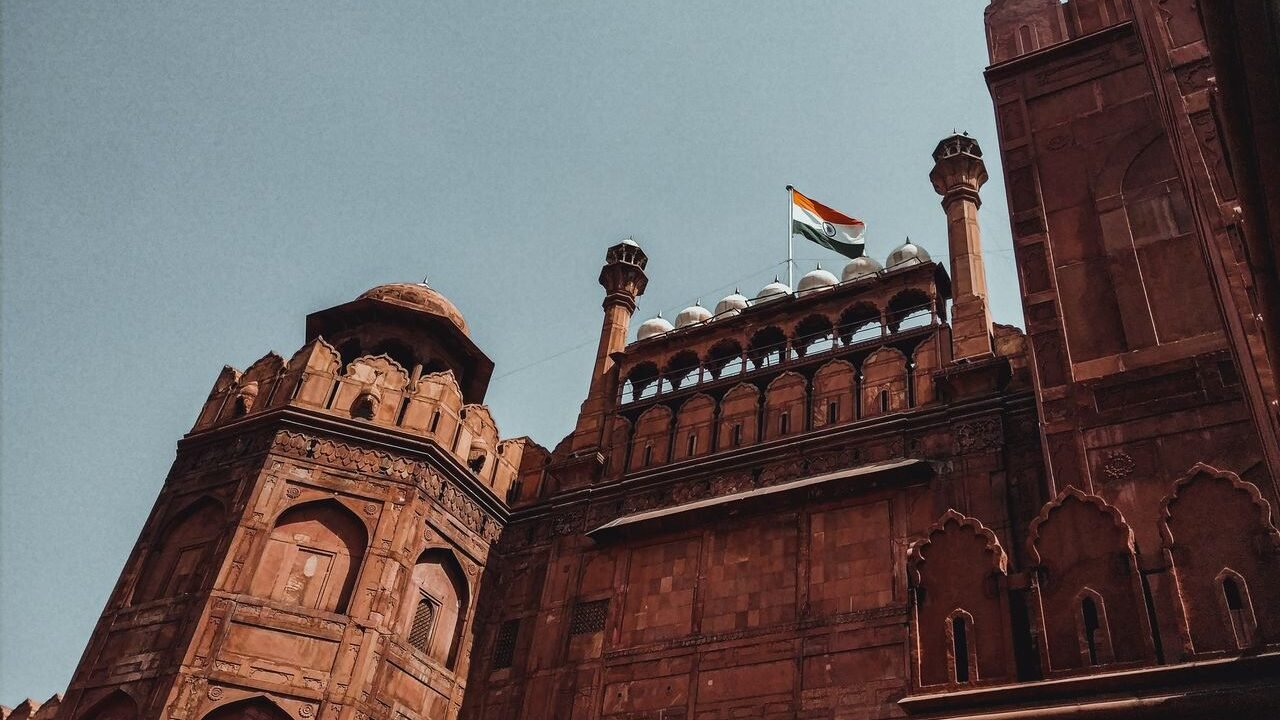
The Red Fort (Lal Qila) in Delhi is a 17th-century Mughal palace-fort of red sandstone, completed on 6 April 1648 for Emperor Shah Jahan. A UNESCO World Heritage Site since 2007, it houses the Lahori Gate, the Diwan-i-Aam, the Diwan-i-Khas and the Rang Mahal, and it is where India’s Prime Minister raises the national flag every Independence Day.
Updated 12 October 2026. Ticket prices, opening days and which areas are open can change, so confirm them with the Archaeological Survey of India (ASI) notices or the official ticketing channel before you go.

Red Fort Delhi at a glance
| Fact | Detail |
|---|---|
| Location | Old Delhi (Shahjahanabad), beside Chandni Chowk |
| Built by | Emperor Shah Jahan; completed 6 April 1648 |
| Architect | Usually attributed to Ustad Ahmad Lahori |
| Material | Red sandstone, with white marble inside |
| UNESCO status | Inscribed in 2007 under criteria (ii), (iii) and (vi) |
| Main entrance | Lahori Gate |
| Famous for | Independence Day flag-hoisting and the Mughal court buildings |
Who built the Red Fort, and why?
Shah Jahan, the fifth Mughal emperor, moved his capital from Agra to Delhi in the 1630s and founded a new walled city, Shahjahanabad. The fort was its palace, begun in 1639 and completed on 6 April 1648. Its design is usually credited to the architect Ustad Ahmad Lahori, who is also associated with the Taj Mahal, although the attribution rests on later tradition. The fort was originally called Qila-e-Mubarak, the blessed fort, and the name Red Fort came later from its sandstone walls.
The palace was the seat of Mughal power for about 200 years. Emperors held court here, received ambassadors and watched processions along the nearby street, now Chandni Chowk. You can read more about the dynasty in our guide to famous emperors of India, and the same monarch’s greatest monument is covered in the Taj Mahal guide.
What is the layout of the Red Fort?
The fort is an irregular octagon with walls about 2.4 km long, rising to roughly 33 m on the city side. A moat once circled the walls on the land side. There are two main gates, the Lahori Gate facing west and the Delhi Gate facing south, and inside are courts, pavilions, gardens and a canal called the Nahr-i-Bihisht, the stream of paradise, which ran through the palace buildings. The plan follows a strict order, from public spaces at the front to private apartments by the river, a pattern you can trace as you walk through.
What is the Lahori Gate?
The Lahori Gate is the main entrance and the best known part of the fort. It faces west, toward Lahore, which gives it its name, and it is from the ramparts above this gate that the Prime Minister addresses the nation on 15 August. Emperor Aurangzeb added a barbican in front of it, which prompted Shah Jahan, then a prisoner in Agra, to compare the gate to a veil placed in front of a bride, according to a well-known story. The route beyond the gate leads into a covered bazaar.
What is Chhatta Chowk?
Chhatta Chowk is the vaulted market street that leads from the Lahori Gate toward the Naubat Khana. It was built for the imperial household and once sold silks, jewellery and fine goods to the nobility. Today it is lined with souvenir shops, selling miniatures, marble inlay, brass and textiles. Prices are not fixed, so bargain gently, and note that quality varies.
What is the Naubat Khana?
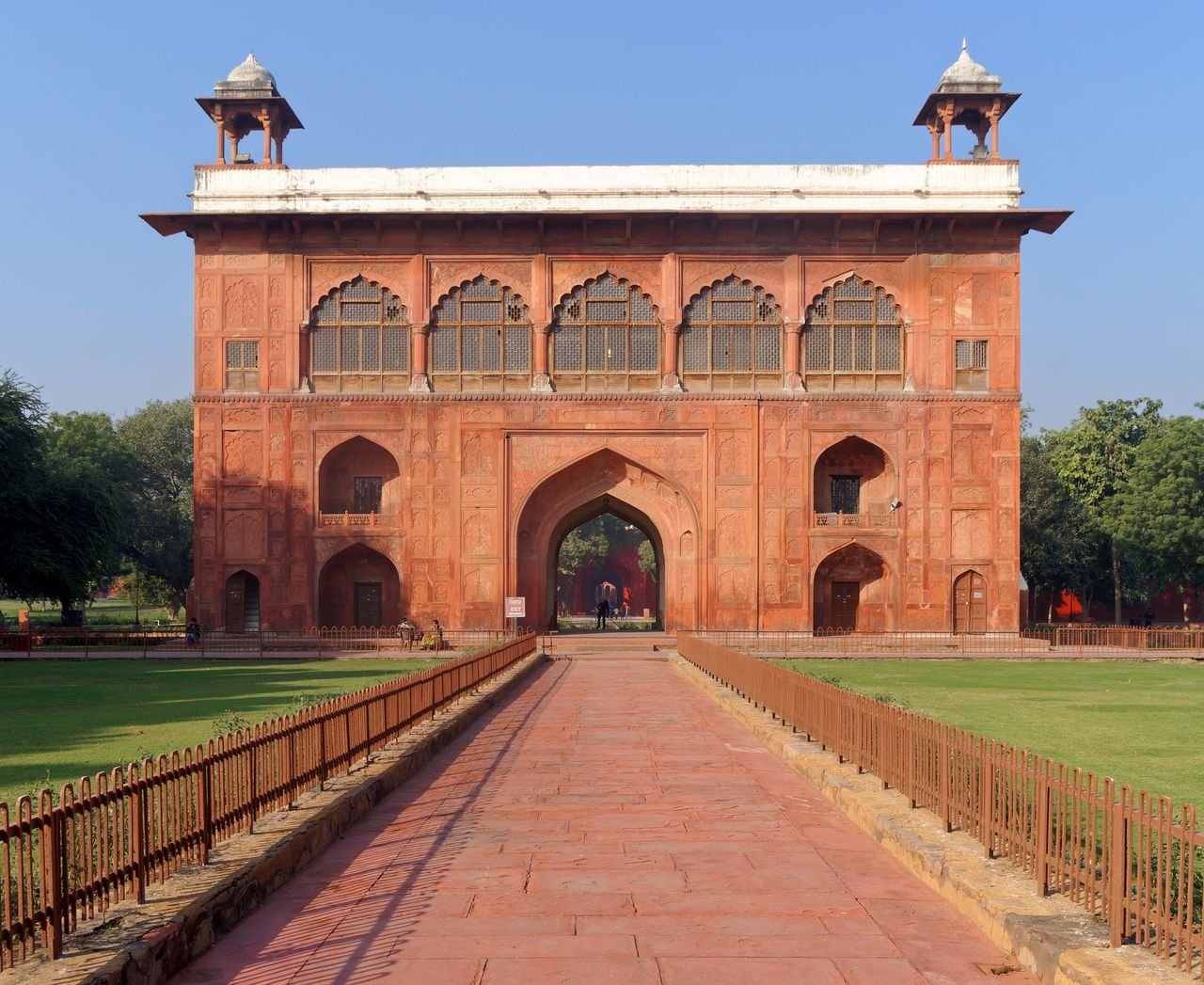
The Naubat Khana, also called Naqqar Khana, is the drum house, where musicians played at set hours to announce the emperor’s arrival. Everyone, including princes, was expected to dismount here before entering the inner court. Music was part of Mughal ceremony, and the tradition of court music that grew under the Mughals shaped Hindustani classical music; you can read more in our guide to Hindustani and Carnatic music.
What is the Diwan-i-Aam?
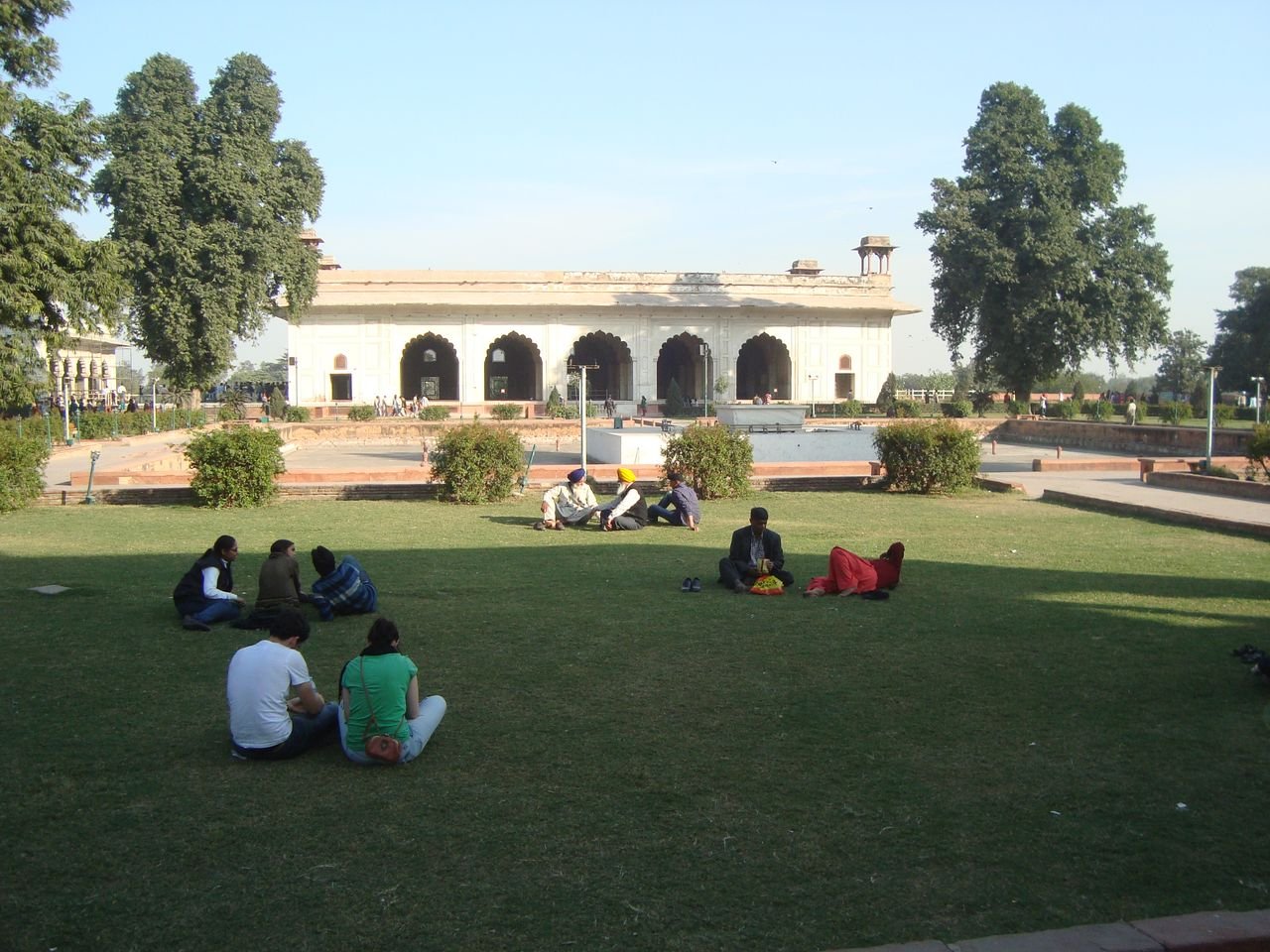
The Diwan-i-Aam is the hall of public audience, where the emperor heard petitions and met ordinary subjects. It is a large pillared hall open on three sides, with a richly decorated marble alcove set into the rear wall for the emperor’s throne. A marble platform below the alcove was for the prime minister, and the walls behind the throne carry inlaid stone panels, some of which are thought to have been created by a craftsman from Europe.

What is the Diwan-i-Khas, and where was the Peacock Throne?
The Diwan-i-Khas, the hall of private audience, is a smaller and finer pavilion in white marble, inlaid with flowers, where the emperor met nobles and ministers. A Persian couplet inscribed there, often translated as “if there is a paradise on earth, it is this, it is this, it is this,” is widely quoted, though its authorship is debated. This hall once held the Peacock Throne, Shah Jahan’s famous jewelled throne. In 1739 the Persian ruler Nadir Shah sacked Delhi and took away the throne with other treasures, and the story of the throne’s later fate is a matter of dispute among historians.

What is the Rang Mahal?
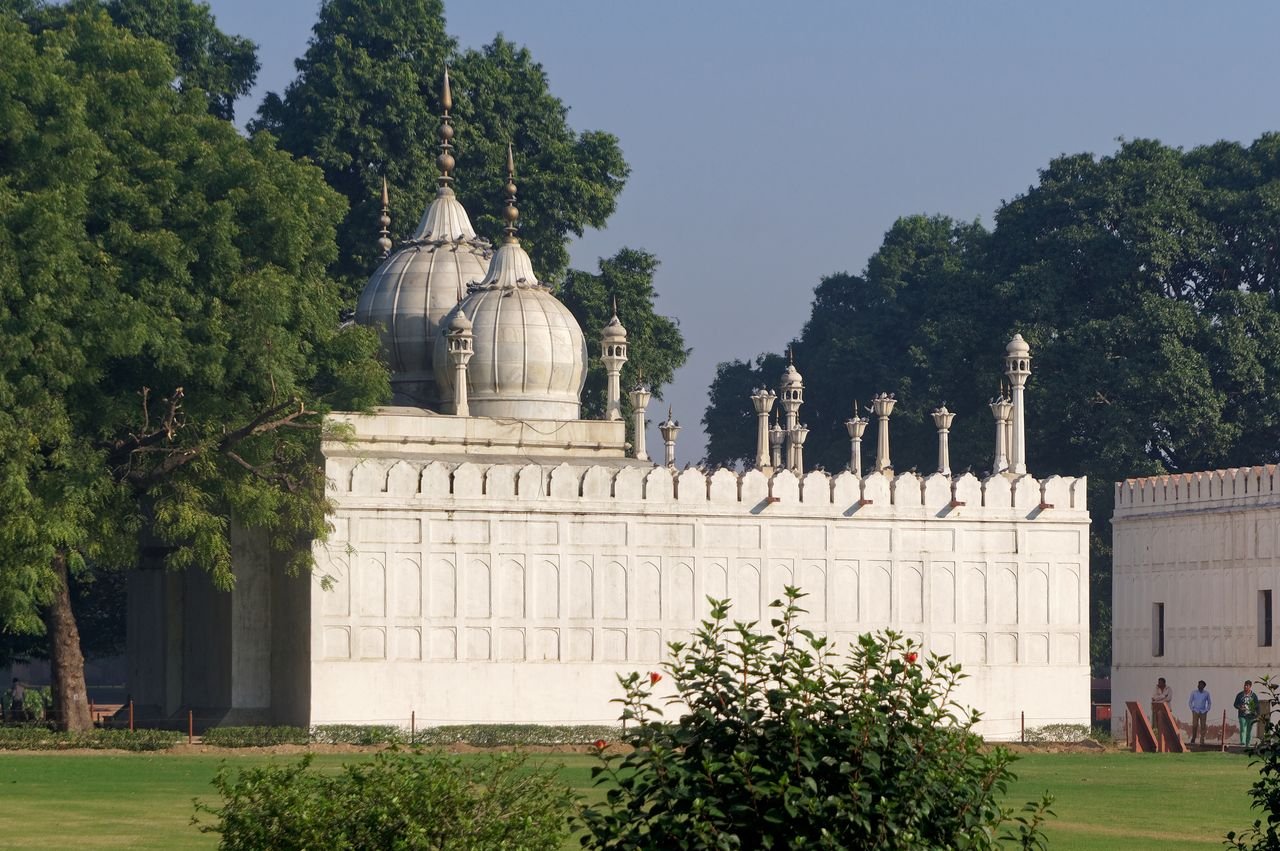
The Rang Mahal, the palace of colour, was the main residence of the emperor’s chief wives and women of the household. It has a marble basin in the centre, fed by the canal, and the ceiling was once covered in gilt and mirror work. Other buildings in the private area include the Mumtaz Mahal, now a museum, and the Khas Mahal, the emperor’s own apartments. The Moti Masjid, the small pearl mosque of white marble, was added by Aurangzeb.
What museums are inside the Red Fort?
Several museums sit in the former barracks and palace buildings. The Archaeological Museum in the Mumtaz Mahal displays Mughal-era objects, textiles and weapons, and other galleries cover the 1857 uprising and the freedom movement, including a gallery that tells the story of Subhas Chandra Bose and the Indian National Army. Opening arrangements vary, so ask at the ticket counter which galleries are open on the day of your visit, and keep an hour spare if you like museums.
How did the Red Fort change after the Mughals?
After the 1739 invasion and the weakening of Mughal power, the fort remained a symbolic centre. During the uprising of 1857 it became a rallying point for the rebels, who proclaimed the last Mughal emperor, Bahadur Shah Zafar, as their leader. When the British retook Delhi, they exiled him and used the fort as a military base. Many of the inner buildings were demolished or altered, and barracks were built in their place. The Archaeological Survey of India took over conservation in the early 20th century, and restoration has continued since.
Why is the Red Fort important in modern India?
On 15 August 1947 Jawaharlal Nehru hoisted the national flag at the Red Fort, a ceremony that has since become an annual tradition for every Prime Minister. In 2000 the fort was attacked by militants on 22 December, an event that led to tighter security, and in 2018 a government scheme allowing private companies to adopt the fort’s maintenance became a point of public debate. UNESCO inscribed the fort in 2007 along with the Salimgarh Fort as a Mughal monument that blended Persian, Timurid and Indian architecture.
Watch: the Red Fort on film
These three videos show the fort in different ways. The first is a Sansad TV episode on Delhi’s history, the second is a virtual tour from India’s tourism ministry, and the third is an English-language documentary on the fort. They are third-party videos, and their views are those of their makers.
How do you visit the Red Fort?
The Red Fort is served by the Lal Qila and Chandni Chowk stations of the Delhi Metro, and a rickshaw ride from either takes a few minutes. The fort is normally closed on Mondays and may close or restrict entry around Independence Day and other events, so check before you travel. Allow two to three hours for a full visit, more if you want to see the museums.
- Tickets. The ASI sets separate prices for Indian and foreign visitors and sells tickets online. Buying in advance avoids the queue at the counter. Check the current price on the official site.
- Best time. November to February is cool and clear. Go early in the morning, before the crowds, as the sandstone gets hot by midday in summer.
- Security. Expect bag checks. Large bags, food and some electronics may not be permitted, so travel light.
- Light and sound show. An evening show on the fort’s history has been run in the grounds. Confirm whether it is running and what time it starts.
- Nearby. Jama Masjid, Chandni Chowk’s food lanes and the Raj Ghat memorial are all within a short ride.
Where to go next
The Red Fort belongs to a family of great Indian fortresses, which you can compare in our guide to the top 10 forts of India, and the royal residences described in the top 10 royal palaces of India. For Rajput fortress history, read the Chittorgarh Fort guide. Other sacred and royal cities in this series include Amritsar’s Golden Temple and the ghats of Varanasi, and the full list of recognised monuments is in our guide to India’s UNESCO World Heritage Sites.
Sources used for this article: general reference works and the Wikipedia article on the Red Fort, plus the UNESCO listing summary for the Red Fort Complex. Dates, the attribution of the architect, the couplet in the Diwan-i-Khas and the fate of the Peacock Throne are reported differently by different historians, and the text says so where it matters. Photographs are used under Creative Commons licences with credit shown beneath each picture.
Frequently asked questions
-
Who built the Red Fort?
Emperor Shah Jahan built it, and it was completed on 6 April 1648. The design is usually credited to Ustad Ahmad Lahori.
-
Why is it called the Red Fort?
The name comes from its red sandstone walls. The fort was originally called Qila-e-Mubarak, the blessed fort.
-
Is the Red Fort a UNESCO World Heritage Site?
Yes. It was inscribed in 2007 as the Red Fort Complex, under criteria (ii), (iii) and (vi).
-
Why does the Prime Minister speak from the Red Fort?
Jawaharlal Nehru raised the flag there on 15 August 1947, and every Prime Minister has since addressed the nation from its ramparts on Independence Day.
-
Which day is the Red Fort closed?
It is normally closed on Mondays, but days can change, so check the ASI notice or the official ticketing site.
-
What is the best time to visit the Red Fort?
November to February is the most comfortable. Go in the morning to avoid crowds and heat.
-
How long does a visit take?
Allow two to three hours for the main buildings, and more if you plan to see the museums.