Ten powerful mantras traditionally chanted for success, wealth and growth — in Sanskrit and transliteration, with their sources, meanings and the blessings devotees seek — plus how to chant them correctly.
Success is not built through effort alone: a calm mind, confidence and inner balance matter too. For centuries, devotees have turned to mantras — sacred sounds, words or verses repeated in prayer and meditation — to steady the mind and seek divine blessings for prosperity, learning and protection. This guide presents ten of the most widely chanted, with their correct text and meaning.
What Is a Mantra?
The Sanskrit word mantra combines man, “to think”, with tra, “instrument” — an instrument of the mind. It is traditionally explained as mananāt trāyate: that which protects the one who reflects on it. Mantras range from single seed syllables such as Om to full Vedic verses.
What Are the Benefits of Chanting Mantras?
Devotees chant mantras to invoke divine blessings — for wisdom, prosperity, protection or peace — as an act of faith. On a practical level, slow, rhythmic repetition focuses attention and calms the mind in much the same way as meditation, which many people find reduces stress and builds discipline and confidence. Mantras are best seen as support for sincere effort, not a substitute for it.
1. Gayatri Mantra — for Wisdom
ॐ भूर्भुवः स्वः ।
तत्सवितुर्वरेण्यं भर्गो देवस्य धीमहि ।
धियो यो नः प्रचोदयात् ॥
Om Bhur Bhuvah Svah
Tat Savitur Varenyam
Bhargo Devasya Dhimahi
Dhiyo Yo Nah Prachodayat
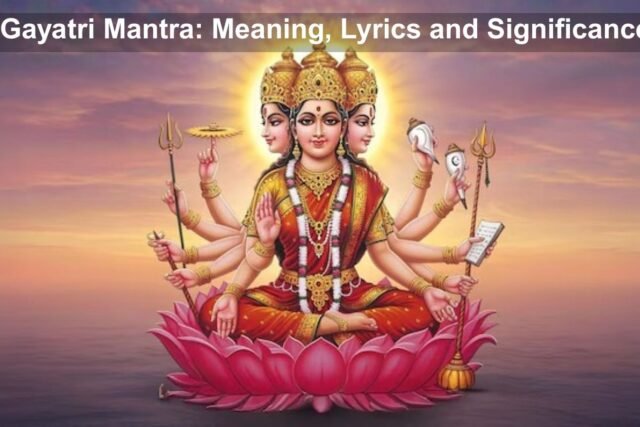
Source: Rigveda 3.62.10, attributed to the sage Vishvamitra. Meaning: “We meditate on the adorable radiance of the divine Savitr; may it inspire our intellect.” It is a prayer for illuminated understanding, traditionally chanted at sunrise. See our full guide to the Gayatri Mantra.
2. Mahamrityunjaya Mantra — for Protection and Healing
ॐ त्र्यम्बकं यजामहे सुगन्धिं पुष्टिवर्धनम् ।
उर्वारुकमिव बन्धनान्मृत्योर्मुक्षीय माऽमृतात् ॥
Om Tryambakam Yajamahe
Sugandhim Pushtivardhanam
Urvarukamiva Bandhanat
Mrityor Mukshiya Mamritat
Source: Rigveda 7.59.12, also in the Yajurveda. Meaning: “We worship the three-eyed One, fragrant, who increases nourishment. As a ripe cucumber is freed from its stalk, may I be freed from death — but not from immortality.” Dedicated to Lord Shiva, it is chanted for protection, healing and freedom from fear.
3. Ganesha Mantra — for Success and New Beginnings
ॐ गं गणपतये नमः ॥
Om Gam Ganapataye Namah
Meaning: “Salutations to Ganapati”, with gam as his seed syllable (bija). Lord Ganesha is worshipped as Vighnaharta, remover of obstacles, and is invoked before any new undertaking — a new job, business, exam or journey.
4. Lakshmi Mantra — for Wealth
ॐ श्रीं महालक्ष्म्यै नमः ॥
Om Shreem Mahalakshmyai Namah
Meaning: “Salutations to Mahalakshmi”, with shreem as her seed syllable. Goddess Lakshmi is the deity of wealth, prosperity and auspiciousness, and devotees chant this for financial stability and a harmonious home — especially on Fridays and at Diwali Lakshmi Puja.
5. Saraswati Mantra — for Knowledge
ॐ ऐं सरस्वत्यै नमः ॥
Om Aim Saraswatyai Namah
Meaning: “Salutations to Saraswati”, with aim as her seed syllable. Goddess Saraswati presides over learning, music and the arts, and students traditionally chant this mantra before study and on Vasant Panchami.
6. Kubera Mantra — for Prosperity
ॐ यक्षाय कुबेराय वैश्रवणाय धनधान्याधिपतये ।
धनधान्यसमृद्धिं मे देहि दापय स्वाहा ॥
Om Yakshaya Kuberaya Vaishravanaya Dhanadhanyadhipataye
Dhanadhanyasamriddhim Me Dehi Dapaya Svaha
Meaning: “Om, to Kubera, lord of the Yakshas, son of Vishravas, lord of wealth and grain — grant me abundance of wealth and grain.” Kubera is the treasurer of the gods, and is worshipped alongside Lakshmi on Dhanteras.
7. Hanuman Mantra — for Strength and Courage
ॐ हनुमते नमः ॥
Om Hanumate Namah
Meaning: “Salutations to Hanuman.” Lord Hanuman embodies devotion, strength and fearlessness, and devotees chant his name — or the Hanuman Chalisa — for courage in the face of difficulty, especially on Tuesdays and Saturdays.
8. Vishnu Mantra — for Peace and Stability
ॐ नमो भगवते वासुदेवाय ॥
Om Namo Bhagavate Vasudevaya
Meaning: “Salutations to Lord Vasudeva” — Vishnu in his form as Krishna. Known as the dvadashakshari, the twelve-syllable mantra, it is prominent in the Bhagavata Purana, where the child devotee Dhruva is taught it by the sage Narada.
9. Navagraha Shloka — for Harmony With the Planets
ब्रह्मा मुरारिस्त्रिपुरान्तकारी भानुः शशी भूमिसुतो बुधश्च ।
गुरुश्च शुक्रः शनिराहुकेतवः सर्वे ग्रहाः शान्तिकरा भवन्तु ॥
Brahma Murari Tripurantakari Bhanuh Shashi Bhumisuto Budhashcha
Gurushcha Shukrah Shani Rahu Ketavah Sarve Grahah Shantikara Bhavantu
Meaning: “May Brahma, Vishnu and Shiva, and the Sun, Moon, Mars, Mercury, Jupiter, Venus, Saturn, Rahu and Ketu — all the planets — bring peace.” It invokes the nine grahas of Vedic astrology, and is chanted by those who seek harmony with planetary influences.
10. Om — the Primordial Sound
ॐ
The Mandukya Upanishad describes Om (A-U-M) as the whole of existence: its three sounds represent waking, dreaming and deep sleep, and the silence after it the fourth state, turiya, pure consciousness. It begins almost every mantra and is itself the simplest to chant. A few minutes of slow Om chanting is a natural way to begin meditation.
How Do You Chant Mantras Correctly?
- Choose a quiet place and sit comfortably with a straight spine, after bathing if possible.
- Keep a regular time — early morning (brahma muhurta) is traditional, but consistency matters most.
- Chant slowly and clearly, attending to the sound and meaning. Learning pronunciation from a teacher or trusted recording is ideal.
- Use a mala of 108 beads to count; beginners can start with 11 or 21 repetitions.
- Chant with devotion and patience, and pair it with sincere effort in daily life.
For more on mantra meditation, see our beginner’s meditation guide.
Can Mantras Really Change Your Life?
Mantras are not magical shortcuts. The tradition itself teaches that they bear fruit when chanted with faith and joined to right action — the Gita’s ideal of doing one’s duty wholeheartedly. Regular chanting cultivates discipline, calm and confidence, and for the devotee, a living connection with the divine; combined with hard work, that can transform how one meets life’s challenges.
Listen to these powerful mantras:
Conclusion
From the Vedic Gayatri and Mahamrityunjaya to the simple seed mantras of Ganesha, Lakshmi and Saraswati, these ten mantras have been chanted by millions for generations. Begin with the one that speaks to you, chant it daily with devotion, and let it become a steady companion on your path.
Frequently Asked Questions
What is a mantra?
A mantra is a sacred sound, word or verse repeated in prayer or meditation. The Sanskrit word combines man, to think, with tra, instrument, meaning an instrument of the mind, and is traditionally explained as that which protects the one who reflects on it. Mantras range from the single syllable Om to full Vedic verses.
Which is the most powerful mantra for success?
The Gayatri Mantra from Rigveda 3.62.10, a prayer for illuminated intellect, and the Ganesha mantra Om Gam Ganapataye Namah, invoking the remover of obstacles before new undertakings, are among the mantras most widely chanted for success. Tradition holds that any mantra chanted with faith and joined to sincere effort bears fruit.
Which mantra is chanted for wealth?
The mantras most widely chanted for wealth are the Lakshmi mantra Om Shreem Mahalakshmyai Namah and the Kubera mantra, which asks the treasurer of the gods for abundance of wealth and grain. Both are especially chanted on Dhanteras and at Diwali Lakshmi Puja.
Is it Om Bhur Bhuvah Svah or Swaha?
The correct opening of the Gayatri Mantra is Om Bhur Bhuvah Svah, naming the earth, the intermediate space and the heavens. Svaha, with a long final a, is a different word, a sacrificial exclamation used when making an offering into the fire, and does not belong in the Gayatri Mantra.
How many times should a mantra be chanted?
Mantras are traditionally chanted 108 times, one full round of a japa mala, but beginners can start with 11 or 21 repetitions a day and build up gradually. Chanting slowly and attentively every day matters more than the number of repetitions.
What is the best time to chant mantras?
The traditional best time to chant mantras is brahma muhurta, the period of about an hour and a half before sunrise, when the mind is calm, and the Gayatri Mantra in particular is chanted at sunrise. However, chanting at the same time every day matters more than the exact hour.
Do I need perfect Sanskrit pronunciation to chant mantras?
Correct pronunciation is valued in the tradition, especially for Vedic mantras such as the Gayatri, so it is worth learning from a teacher or a trusted recording. Devotion, attention and regular practice are equally emphasised, and beginners should not let imperfect pronunciation stop them from chanting.
Can chanting mantras reduce stress?
Many people find that slow, rhythmic mantra chanting calms the mind and reduces stress, in much the same way as meditation, because it focuses attention and steadies the breath. Chanting supports, but does not replace, professional help for anxiety or other mental health conditions.