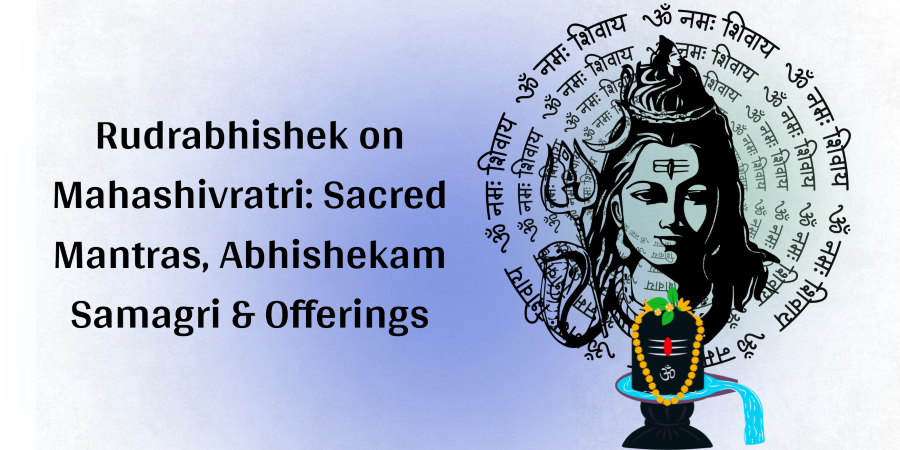
Rudrabhishek is the ritual bathing of the Shivling while chanting Vedic mantras. This guide covers its meaning, the complete samagri (items needed), the key mantras and the step-by-step procedure for Maha Shivratri.
Rudrabhishek is one of the most sacred rituals dedicated to Lord Shiva, and it holds a special place on the night of Maha Shivratri, when devotees traditionally perform an abhishek in each of the night’s four prahars. The ritual combines abhishekam (ritual bathing of the Shivling), Vedic chanting and symbolic offerings. Maha Shivratri 2027 falls on Saturday, 6 March — see our Maha Shivratri guide for timings.
What Is Rudrabhishek?
Rudrabhishek is a Vedic ritual in which the Shivling is bathed with water, milk, curd, honey, ghee and other sacred substances while mantras are chanted. Rudra is Shiva in his fierce yet compassionate form, and abhishek means ceremonial bathing. In its full form, the ritual is accompanied by the Shri Rudram — the Namakam and Chamakam hymns of the Krishna Yajurveda (Taittiriya Samhita 4.5 and 4.7).
Besides Maha Shivratri, it is traditionally performed on Mondays, on Pradosh, through the month of Shravan, and in times of personal difficulty.
Why Is Rudrabhishek Performed on Maha Shivratri?
Maha Shivratri is the most auspicious night for Shiva worship, and devotees perform abhishek through the night’s four prahars, with the most important at Nishita Kaal, around midnight. Many keep a Maha Shivratri fast alongside the ritual. Even a simple abhishek with water and bel leaves, performed with devotion, is traditionally considered complete.
What Samagri Is Needed for Rudrabhishek?
Liquids for Abhishek
- Ganga jal or pure water — purification
- Milk — purity and peace
- Curd — health and longevity
- Honey — sweetness and harmony
- Ghee — removal of negativity
- Sugarcane juice — joy and the removal of sorrow
These are the meanings traditionally associated with each offering.
Dry Offerings
- Sugar, for happiness and harmony
- Vibhuti (sacred ash), symbolising detachment
- Sandalwood paste (chandan)
- Unbroken rice (akshat)
Flowers and Sacred Leaves
- Bel patra (bilva leaves) — the offering most dear to Shiva
- Dhatura flowers and fruit
- White flowers such as kaner
- Garlands for the Shivling
Safety note: dhatura is poisonous if eaten. Offer it only to the Shivling, keep it away from children and pets, and wash your hands after handling it.

Other Offerings
- Incense sticks (dhoop) and camphor
- Ghee lamp (diya)
- Coconut, fruits and sweets
- Betel leaves and betel nut
- Rudraksha beads (optional)
Utensils
- Shivling on a clean base
- Copper or brass vessel (lota) for pouring
- Puja thali and bell
Which Mantras Are Chanted During Rudrabhishek?
- Om Namah Shivaya — the Panchakshara, or five-syllable mantra, chanted repeatedly throughout the abhishek.
- Maha Mrityunjaya Mantra — the Vedic prayer from Rigveda 7.59.12, traditionally chanted for protection and healing:
“Om Tryambakam Yajamahe…” - Rudra Gayatri:
“Om Tatpurushaya Vidmahe Mahadevaya Dhimahi Tanno Rudrah Prachodayat” - Rudra mantra:
“Om Namo Bhagavate Rudraya” - Shiva Panchakshara Stotram, traditionally attributed to Adi Shankaracharya:
“Nagendra Haraya Trilochanaya…” - Shri Rudram (Namakam and Chamakam) — chanted during a complete Vedic rudrabhishek, usually by trained priests.
How Do You Perform Rudrabhishek, Step by Step?
Step 1: Prepare the worship area. Clean the space and place the Shivling on a clean cloth over a wooden plank (chowki), with a vessel below to collect the offerings.
Step 2: Begin with water. Pour Ganga jal or pure water slowly over the Shivling while chanting Om Namah Shivaya.
Step 3: Offer panchamrit. Offer milk, curd, honey, ghee and sugar one by one, rinsing the Shivling gently with water after each.
Step 4: Apply sandalwood and offer bel leaves. Apply chandan and offer bel leaves (smooth side up), flowers and dhatura.
Step 5: Chant. Chant Om Namah Shivaya or the Maha Mrityunjaya Mantra, traditionally 108 times on a rudraksha mala.
Step 6: Light the lamp and incense. Light the ghee lamp, incense and camphor.
Step 7: Aarti and prasad. Perform the Maha Shivratri aarti, offer fruits and sweets, and distribute prasad.
Why Do Devotees Perform Rudrabhishek?
Devotees traditionally perform rudrabhishek to remove obstacles, seek peace of mind, and invite Shiva’s grace and protection, and many also perform it hoping to ease unfavourable astrological influences. Many find the slow, repeated offering and chanting deeply calming. These are devotional beliefs rather than medical or scientific claims, and the ritual is not a substitute for medical care.
Conclusion
Rudrabhishek is a complete act of worship: bathing, adorning and praising Lord Shiva with offerings that each carry meaning. Performed on Maha Shivratri with simple samagri and sincere devotion, at home or in a temple, it expresses the heart of the festival — surrender and faith. 🔱
Frequently Asked Questions
What is Rudrabhishek?
Rudrabhishek is a Vedic ritual in which the Shivling is bathed with water, milk, curd, honey, ghee and other sacred substances while mantras are chanted. In its full form it is accompanied by the Shri Rudram, the Namakam and Chamakam hymns of the Krishna Yajurveda, Taittiriya Samhita 4.5 and 4.7.
Why is Rudrabhishek performed on Maha Shivratri?
Rudrabhishek is performed on Maha Shivratri because it is the most auspicious night for Shiva worship, and tradition calls for an abhishek in each of the night’s four prahars, with the most important at Nishita Kaal around midnight. In 2027 Maha Shivratri falls on Saturday, 6 March.
What samagri is needed for Rudrabhishek?
The samagri for rudrabhishek includes Ganga jal or pure water, milk, curd, honey, ghee and sugar for panchamrit, sugarcane juice, bel leaves, white flowers, dhatura, sandalwood paste, vibhuti, akshat, incense, camphor, a ghee lamp, fruits and sweets, a copper or brass vessel, and a Shivling.
Which mantras are chanted during Rudrabhishek?
During rudrabhishek, devotees chant Om Namah Shivaya, the Maha Mrityunjaya Mantra from Rigveda 7.59.12, the Rudra Gayatri and the Shiva Panchakshara Stotram. A complete Vedic rudrabhishek also includes the Shri Rudram, usually chanted by trained priests.
Can Rudrabhishek be performed at home?
Yes. Rudrabhishek can be performed at home with a Shivling, water, milk and bel leaves, while chanting Om Namah Shivaya. The full Vedic form with Shri Rudram is usually performed by priests, but a simple abhishek done with devotion is traditionally considered complete.
What is the best time for Rudrabhishek on Maha Shivratri?
The most auspicious time for rudrabhishek on Maha Shivratri is Nishita Kaal, the midnight period, which in 2027 falls at approximately 12:07 to 12:57 AM IST on 7 March. Many devotees also perform an abhishek in each of the night’s four prahars from sunset to sunrise.
What does each Rudrabhishek offering symbolise?
In rudrabhishek tradition, water symbolises purification, milk purity and peace, curd health, honey sweetness and harmony, ghee the removal of negativity and sugarcane juice joy, while bel leaves are the offering most dear to Shiva. Together they represent the devotee’s complete offering of self.
Is fasting necessary for Rudrabhishek?
No. Fasting is traditional on Maha Shivratri and many devotees keep a vrat alongside rudrabhishek, but it is not required to perform the ritual. Children, the elderly, pregnant women and anyone unwell can perform rudrabhishek fully without fasting.
Can Rudrabhishek remove planetary doshas?
In Hindu astrological tradition, rudrabhishek is often performed in the hope of easing unfavourable planetary influences, such as Kaal Sarp Dosha. This is a matter of faith and tradition rather than a demonstrable effect, and devotees perform it primarily as an act of devotion to Shiva.
Is dhatura safe to use in Rudrabhishek?
Dhatura is traditionally offered to Shiva, but the plant is poisonous if eaten. Offer it only on the Shivling, keep it out of reach of children and pets, wash your hands after handling it, and never include it in prasad or food.