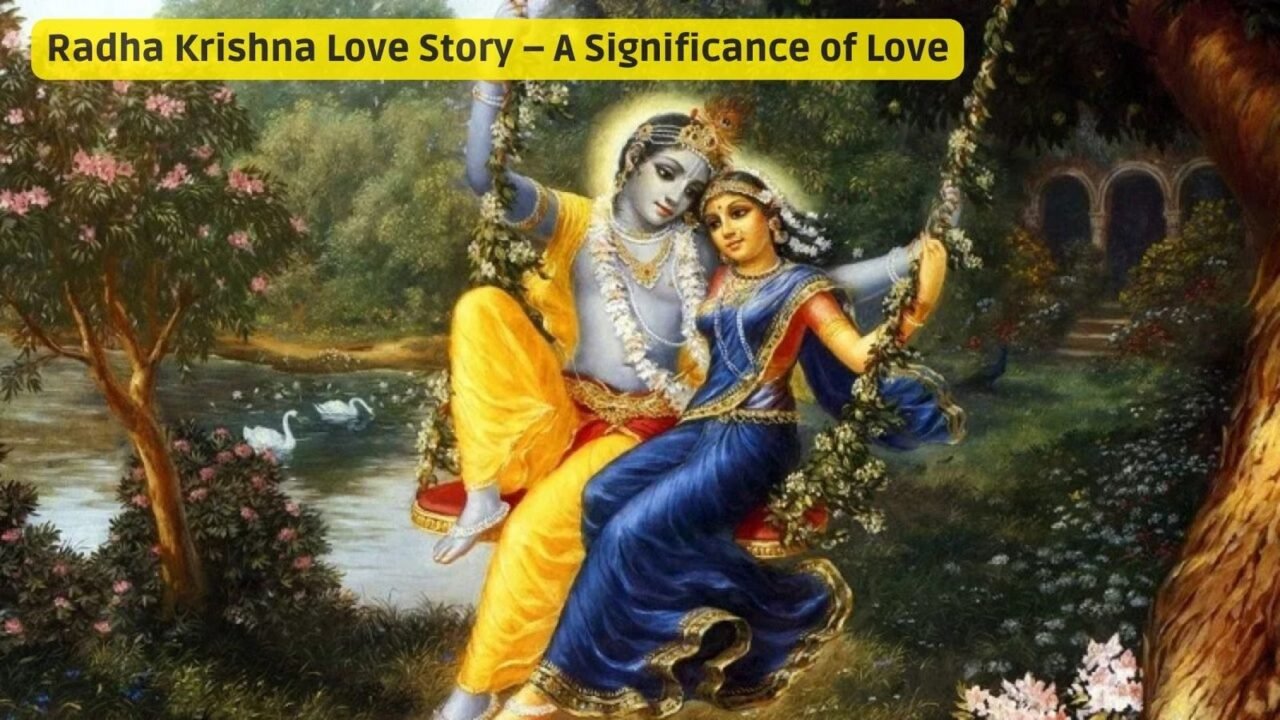
This page explains the Radha Krishna love story — where it comes from, what it symbolises, the meaning of their separation, and why it is regarded as the highest expression of devotion in Hindu tradition.
Among the many sacred relationships described in Hindu tradition, the bond between Radha and Krishna is considered the highest expression of divine love. Their relationship is not merely a romantic tale but a symbol of devotion, surrender and the union between the soul and the divine. The Radha Krishna love story has been told for centuries through scripture, poetry, music and dance.
Who Are Radha and Krishna?
In Hindu tradition, Krishna is regarded as an incarnation of Vishnu, who appeared on earth to restore righteousness. His life is described in texts such as the Bhagavata Purana and the Mahabharata. Read more about who Krishna is.
Radha is considered the embodiment of devotion and divine energy. In the Gaudiya Vaishnava tradition she is revered as Krishna’s own divine energy, and she represents the soul that longs for union with God. Tradition holds that she was born in Barsana, near Vrindavan, and her birth is celebrated as Radhashtami, fifteen days after Krishna Janmashtami.
Where Does the Radha Krishna Story Come From?
Although the Bhagavata Purana tells of Krishna’s youth among the gopis of Vrindavan, it does not name Radha. In its account of the Rasa Lila, Krishna disappears with one especially beloved gopi, whom later devotional tradition identifies as Radha.
Radha’s story is developed above all in the 12th-century Sanskrit poem Gita Govinda by Jayadeva, and in the Brahma Vaivarta Purana. Later poets — among them Vidyapati, Chandidas and Surdas — made Radha and Krishna the heart of Bhakti poetry, and the Gaudiya Vaishnava tradition of Chaitanya Mahaprabhu placed Radha’s devotion at the centre of its theology.
How Did the Radha Krishna Love Story Begin?

The story begins in Vrindavan, where Krishna spent his youth among the cowherds performing his playful divine acts, the leelas. According to devotional tradition, Radha lived nearby and was drawn to Krishna from a young age. Their bond grew through music, dance and companionship. Krishna’s flute enchanted everyone in the village, but it was Radha, tradition says, who understood the deeper meaning behind its melody.
Their relationship is understood not as ordinary romance but as a sacred relationship symbolising devotion, purity and the soul’s attraction to the divine.
What Does Radha Krishna Love Symbolise?
In devotional philosophy, Radha represents the human soul, and Krishna the Supreme Divine. Their union reflects the eternal longing of the soul to reunite with its source. This makes Radha Krishna love a metaphor for every devotee’s spiritual journey: just as Radha’s heart is wholly devoted to Krishna, devotees are encouraged to cultivate the same surrender towards God.
The relationship is valued for its purity — love without conditions, expectations or selfish desire. It is often described as prema, the highest form of bhakti.
What Is the Spiritual Meaning of Their Separation?
Radha and Krishna did not remain together in a worldly sense. Krishna left Vrindavan for Mathura to fulfil his duty, and later ruled from Dwarka. Devotional poetry dwells on Radha’s longing in this separation, called viraha.
In spiritual philosophy the separation holds deep meaning: it represents the soul’s longing for the divine presence. Radha’s love continued undiminished after Krishna left, showing that true devotion does not depend on physical closeness but lives within the heart. Many traditions regard this longing itself as one of the most intense forms of devotion.
How Has the Radha Krishna Story Influenced Culture?
For centuries, poets, saints and artists have expressed this relationship through literature, music and dance. The Bhakti movement placed Radha’s devotion at its centre, and the story has inspired classical dance forms such as Odissi and Kathak, temple rituals and countless devotional songs.
Vrindavan and Barsana, associated with their divine pastimes, remain major pilgrimage destinations. In art and sculpture Radha and Krishna are almost always depicted together, symbolising harmony, joy and spiritual love.
What Can We Learn from Radha Krishna Love?

1. Love Without Conditions
Radha’s devotion to Krishna is pure and selfless. Her love does not seek reward or recognition, teaching that true love grows stronger when it is free from expectation.
2. Devotion as a Spiritual Path
In the Bhakti tradition, devotion is itself a path to the divine. The Radha Krishna story shows how sincere devotion can bring a person closer to spiritual realisation.
3. Faith Beyond Physical Presence
Even after Krishna left Vrindavan, Radha’s devotion remained constant — faith and love depend on inner connection, not physical closeness.
4. Unity of Soul and Divine
The symbolism of Radha Krishna love reminds devotees that every soul has the potential to unite with the divine through love, devotion and awareness.
How Is Radha Krishna Love Relevant Today?
The story continues to inspire people seeking deeper meaning in relationships and spirituality. Many see in it a reminder that love can be sacred when rooted in respect, devotion and purity. Devotees keep its essence alive through chanting Radhe Radhe and Radhe Krishna, singing bhajans and meditating on the divine pair.
Conclusion
The Radha Krishna love story is a timeless symbol of devotion and divine connection, a love that transcends physical boundaries and material desire. From Jayadeva’s Gita Govinda to the songs sung in Vrindavan today, it teaches that love becomes a spiritual path when guided by sincerity, surrender and faith.
Watch the divine love of Radha and Krishna unfold in this beautiful story — a timeless symbol of pure devotion and eternal connection 🕉️
If you enjoy meaningful love stories, don’t miss this True Love Story article that highlights the power of unconditional love.
Frequently Asked Questions About the Radha Krishna Love Story
-
Who are Radha and Krishna?
Krishna is revered in Hindu tradition as an incarnation of Vishnu, and Radha as the embodiment of devotion, whom the Gaudiya Vaishnava tradition regards as Krishna’s own divine energy. Together they represent the eternal bond between the soul and the divine, and they are worshipped together in temples across India.
-
Is Radha mentioned in the Bhagavata Purana?
No. The Bhagavata Purana tells of Krishna’s youth among the gopis of Vrindavan but does not name Radha; in its Rasa Lila, Krishna disappears with one especially beloved gopi, whom later tradition identifies as Radha. Radha’s story is developed chiefly in Jayadeva’s 12th-century Gita Govinda and the Brahma Vaivarta Purana.
-
What is the Gita Govinda?
The Gita Govinda is a 12th-century Sanskrit poem by the poet Jayadeva that celebrates the love of Radha and Krishna, including their separation and reunion. It became one of the most influential works of Bhakti literature and is still sung in temples and performed in classical dance, especially Odissi.
-
Did Radha and Krishna get married?
In most traditions Radha and Krishna did not marry, and their bond is understood as spiritual rather than worldly; Krishna’s wives in the Puranas include Rukmini and Satyabhama. Some texts, such as the Brahma Vaivarta Purana, describe a divine marriage between them, so accounts differ between traditions.
-
Where was Radha born?
Tradition holds that Radha was born in Barsana, a village near Vrindavan in the Braj region of Uttar Pradesh, to Vrishabhanu and Kirtida. Her birth is celebrated as Radhashtami on the Shukla Ashtami of Bhadrapada, fifteen days after Krishna Janmashtami, especially in Barsana and Vrindavan.
-
Why did Krishna leave Radha?
Krishna left Vrindavan for Mathura to fulfil his duty, defeating the tyrant Kamsa, and later ruled from Dwarka. Devotional tradition reads the separation as teaching that dharma, one’s duty, must be honoured even in the presence of love, and poets dwell on Radha’s longing in separation, called viraha.
-
What is the spiritual meaning of Radha and Krishna’s separation?
The separation of Radha and Krishna symbolises the soul’s longing for the divine, called viraha in devotional poetry. Radha’s love remained undiminished after Krishna left, showing that true devotion lives in the heart rather than in physical closeness, and many traditions regard this longing as among the most intense forms of devotion.
-
What can we learn from Radha Krishna love?
The Radha Krishna story teaches selfless love without expectation, devotion as a spiritual path, faith that does not depend on physical presence, and the potential of every soul to unite with the divine. In the Bhakti tradition this pure love, called prema, is regarded as the highest form of devotion.