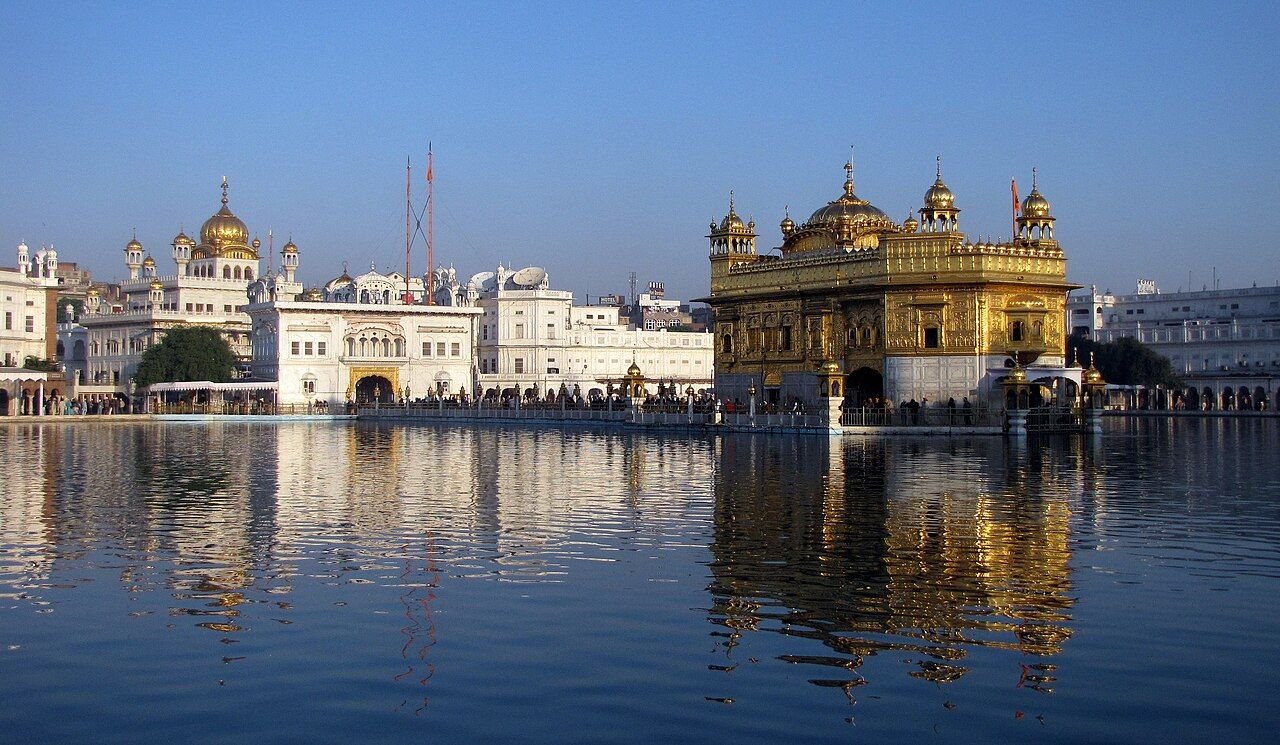
The Golden Temple, formally Harmandir Sahib or Sri Darbar Sahib, is the holiest gurdwara of Sikhism, set in the middle of a sacred pool in Amritsar, Punjab. Guru Arjan, the fifth Sikh Guru, began its construction in 1581, the Adi Granth was installed there in 1604, and its free community kitchen serves well over 100,000 meals a day to people of every faith.
Updated 12 October 2026. Timings, queue arrangements and rules for visitors can change, so confirm them with the SGPC information office or notices at the complex before you travel.
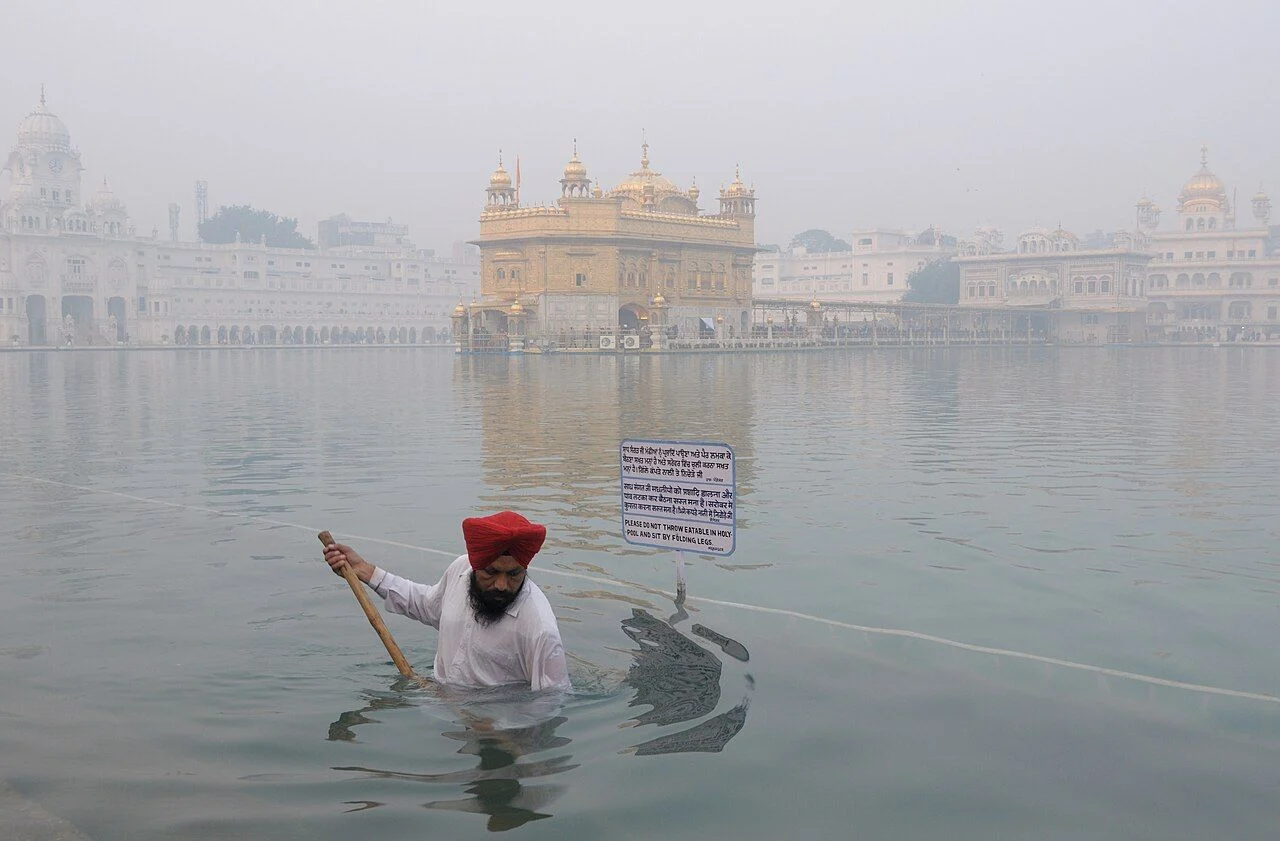
Golden Temple Amritsar at a glance
| Fact | Detail |
|---|---|
| Official name | Harmandir Sahib, also called Sri Darbar Sahib |
| Location | Amritsar, Punjab, in the old city |
| Founded | Construction began 1581 under Guru Arjan; Adi Granth installed 16 August 1604 |
| Setting | In the middle of the Amrit Sarovar, a sacred pool, reached by a causeway |
| Entrances | Four, one on each side, symbolising openness to all |
| Langar | Free vegetarian meals for all visitors, over 100,000 people a day |
| Entry | Free; head covering required and shoes removed |
What is the Golden Temple?
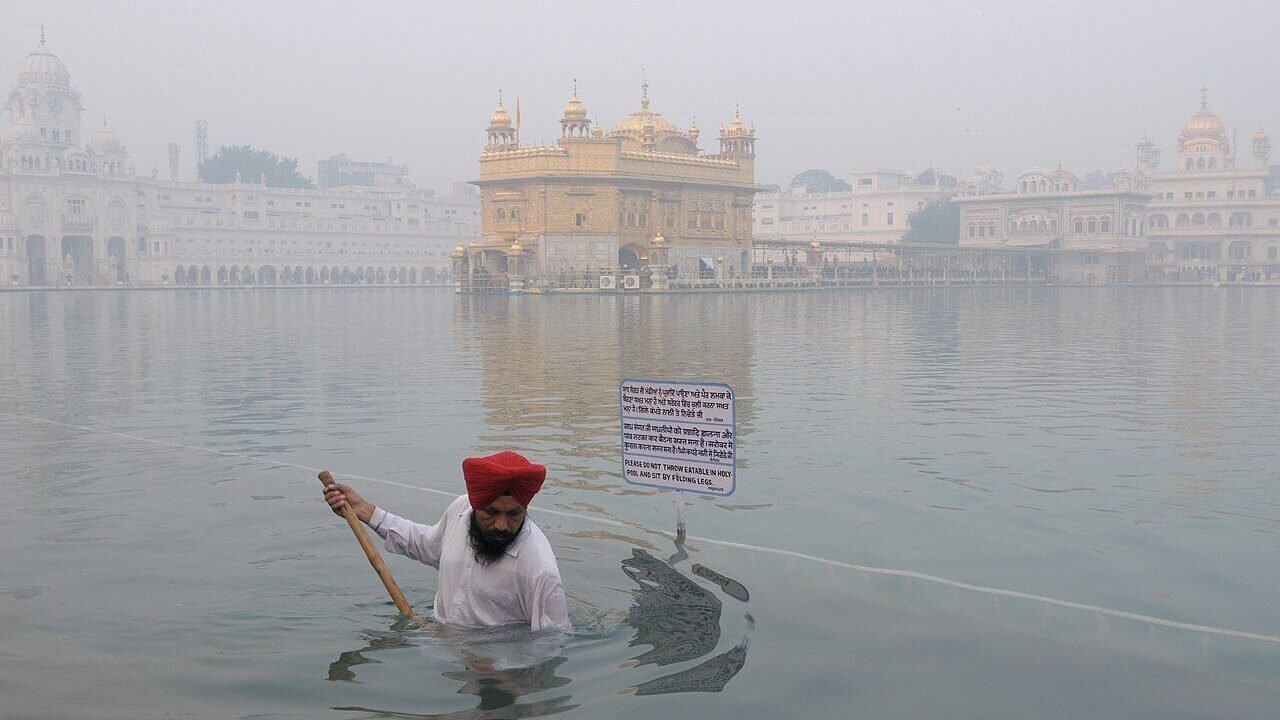
The Golden Temple is the central shrine of the Sikh faith, and the most visited place of worship in Punjab. The name “Harmandir” means the temple of God, and “Sahib” is a title of respect. The shrine stands on a small platform in the middle of a rectangular pool, and the Guru Granth Sahib, the Sikh scripture, is kept and read there from early morning until night. Anyone may enter, regardless of religion, caste or nationality, as long as they cover their head and remove their shoes.
Who built the Golden Temple, and when?
The Amritsar site was developed by the fourth Guru, Ram Das, who had a pool dug and founded the town. His son and successor, Guru Arjan, began building the temple in 1581 and completed it around 1589. Tradition says he invited a Muslim Sufi saint of Lahore, Mian Mir, to lay the foundation stone, which is often cited as a sign of the shrine’s inclusive spirit, although accounts differ on the details.
Guru Arjan also compiled the Adi Granth, the first version of the Sikh scripture, and installed it in the new temple on 16 August 1604, with Baba Buddha as its first reader. The design was deliberate. While Hindu temples are usually built on a raised platform and entered up steps, Harmandir Sahib sits lower than its surroundings, so worshippers walk down to it. The four entrances, one on each side, signal that people of all four directions and all four traditional castes are welcome.
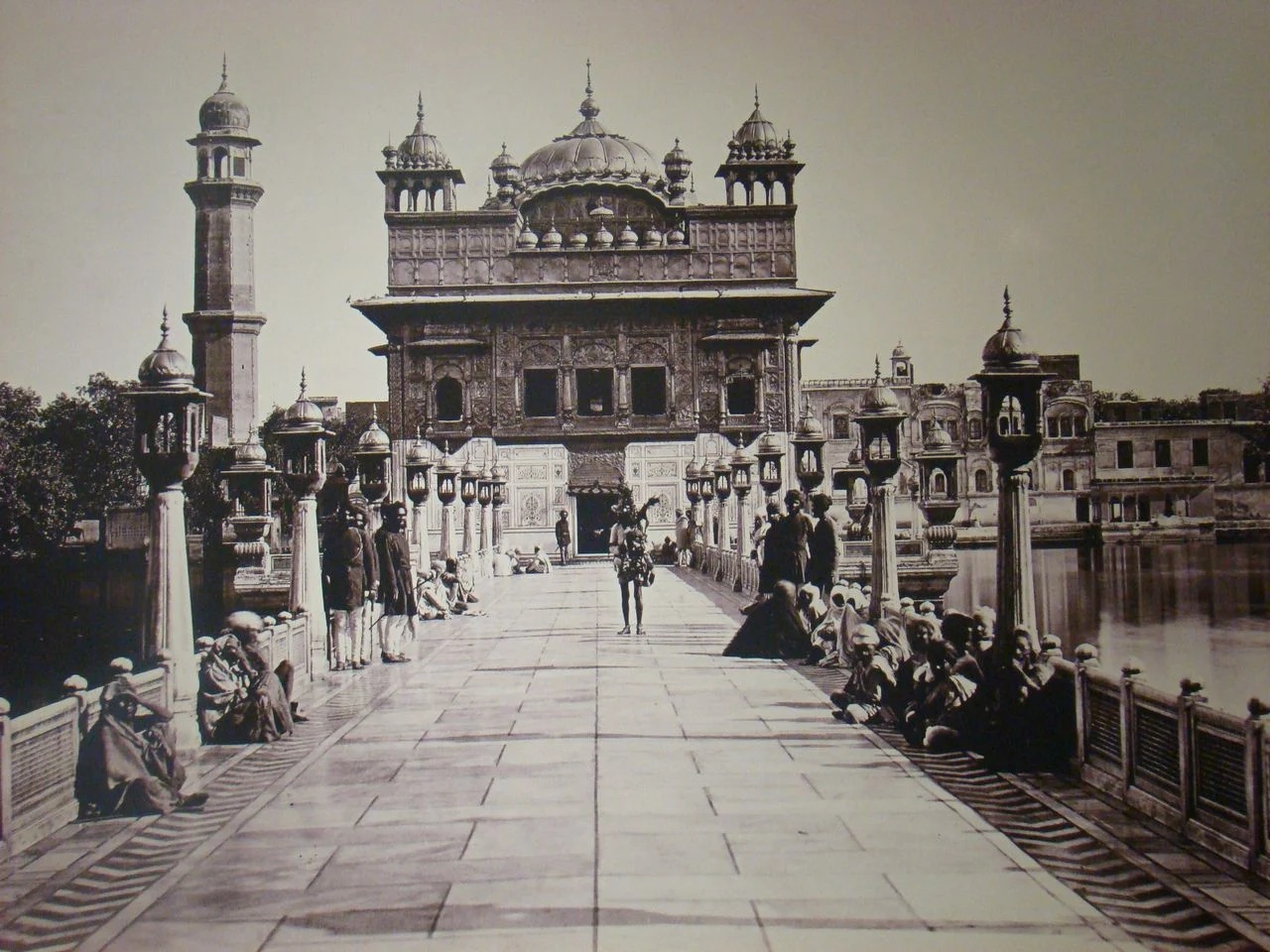
Was the Golden Temple destroyed and rebuilt?
Yes, more than once. In the 18th century the shrine was attacked during the Afghan invasions. Ahmad Shah Durrani’s forces damaged or destroyed the temple in 1757 and again in 1762, and the pool was reported to have been filled in. After the Sikh Misls recovered Amritsar, the temple was rebuilt around 1764 under the leadership of Jassa Singh Ahluwalia, and the structure visitors see today largely dates from that rebuilding and later additions.
Several of these dates are given slightly differently by different historians, so treat the exact years as approximate. What matters is the pattern: the community repeatedly rebuilt the shrine, and that history is a large part of why it is held in such affection.
Why is it called the Golden Temple?
The upper floors are covered in gold-plated copper. Maharaja Ranjit Singh, the Sikh ruler of Punjab, funded the gilding in the early 19th century, and sources usually place the start of the work at 1803 and its completion around 1830. The gold gave the temple its popular English name. The lower storey is faced with white marble inlaid with floral and geometric designs in coloured stone, in the Mughal-influenced style known as pietra dura, and the dome is shaped like an inverted lotus.
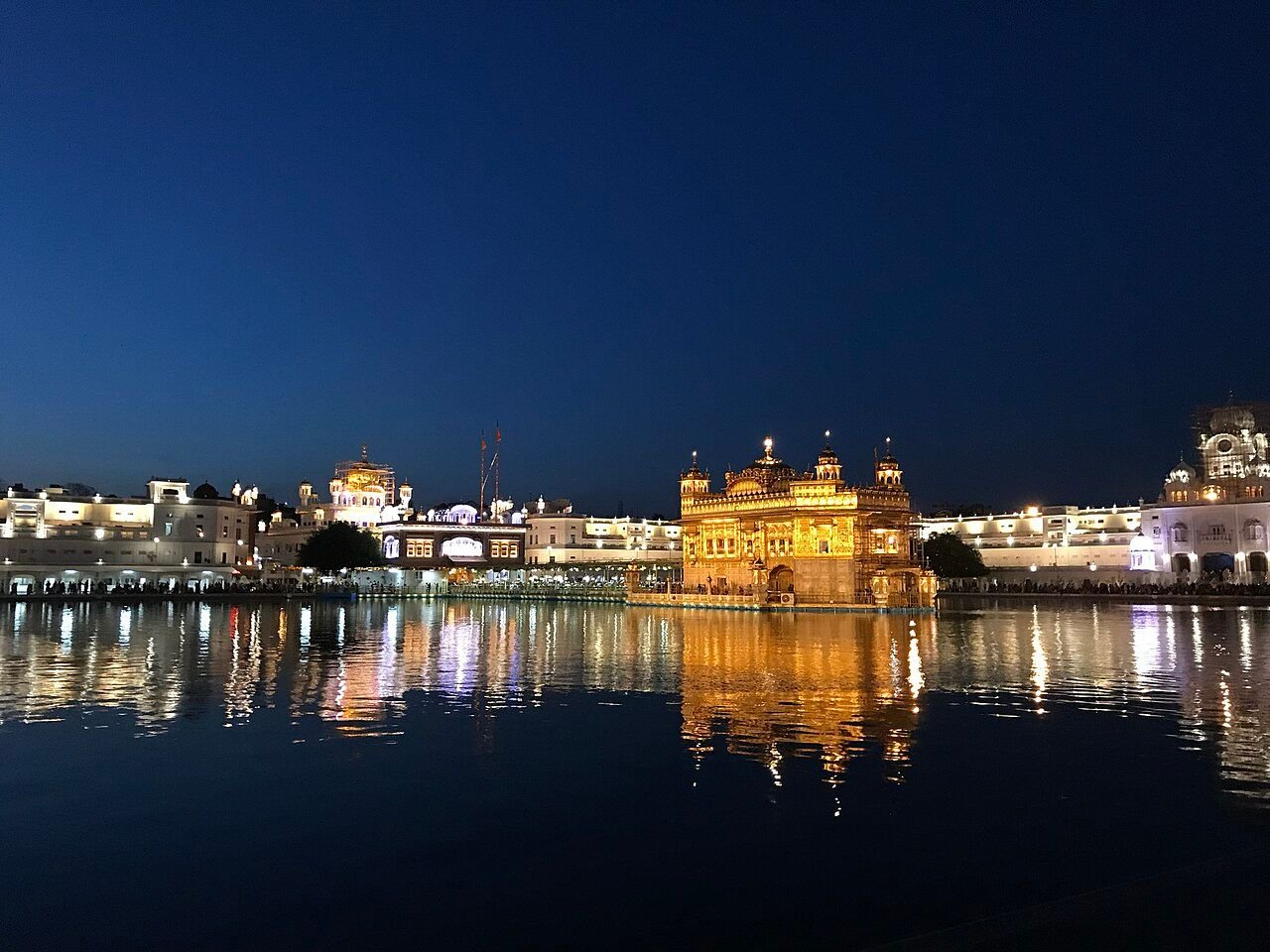
What does the architecture of Harmandir Sahib look like?
The temple blends Hindu and Islamic architectural ideas into a distinct Sikh style. A causeway called the Guru’s Bridge connects the shrine to the surrounding walkway, and the sanctum is on the ground floor, where musicians sing devotional hymns (kirtan) through the day. A short flight of steps leads to the first floor, and the gilded dome and corner pavilions crown the building. The pool, the Amrit Sarovar, is about 5 m deep and is surrounded by a marble walkway called the parikrama, where pilgrims walk clockwise around the water.
Many visitors bathe in the sarovar, and the water is considered holy. The building also reflects the Sikh idea of equality: it has no priests in the usual sense of a hereditary clergy, and the person who reads the scripture is chosen from the community.
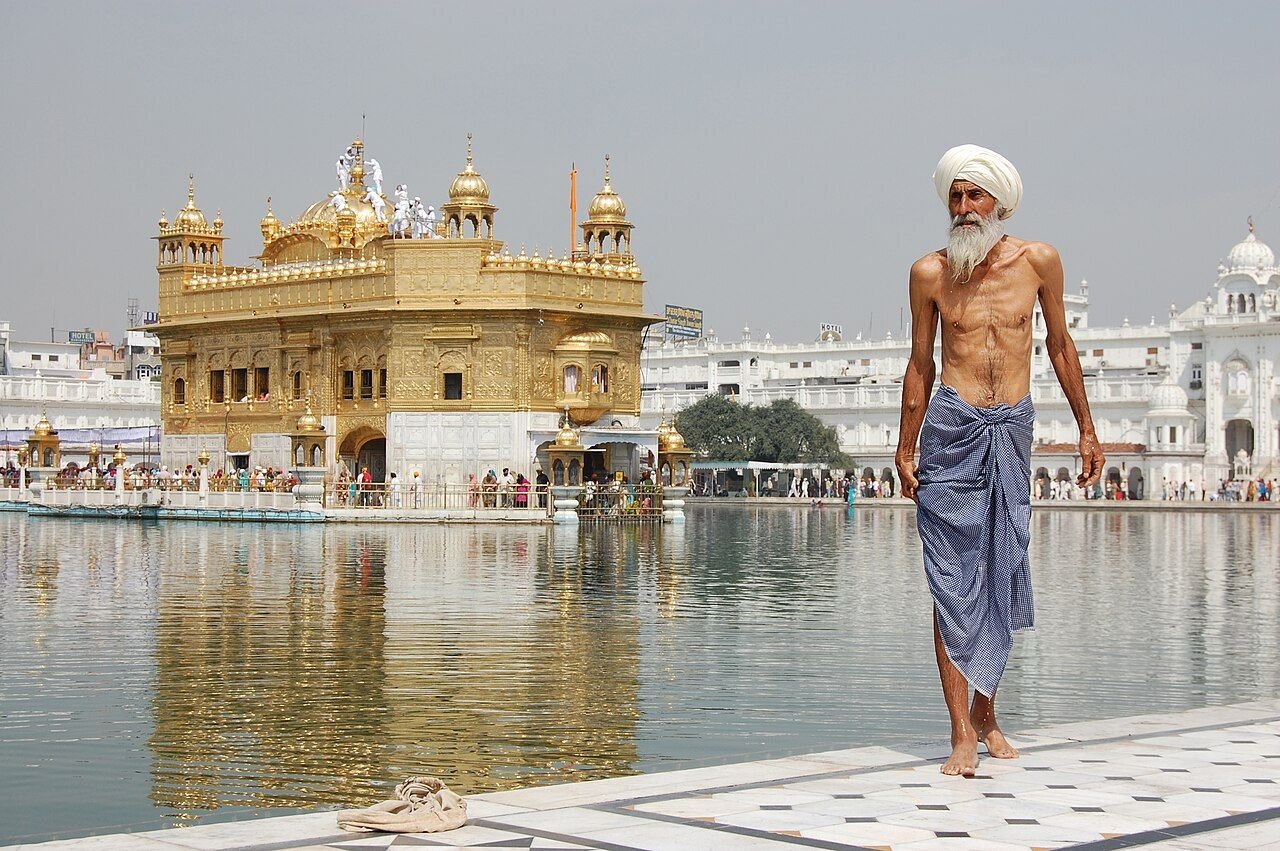
What is the Akal Takht?
The Akal Takht, meaning the throne of the timeless one, stands directly opposite the causeway. It was founded by Guru Hargobind, the sixth Guru, in 1606 as the highest seat of temporal authority in Sikhism, balancing the spiritual authority of Harmandir Sahib. Edicts on matters affecting the Sikh community are issued from there. The building was badly damaged in June 1984, during the army operation known as Operation Blue Star, and the Akal Takht was reconstructed afterwards, with work completed in 1999. The events of 1984 remain deeply painful and politically sensitive for many Sikhs, and visitors are asked to be respectful.
What is langar at the Golden Temple?
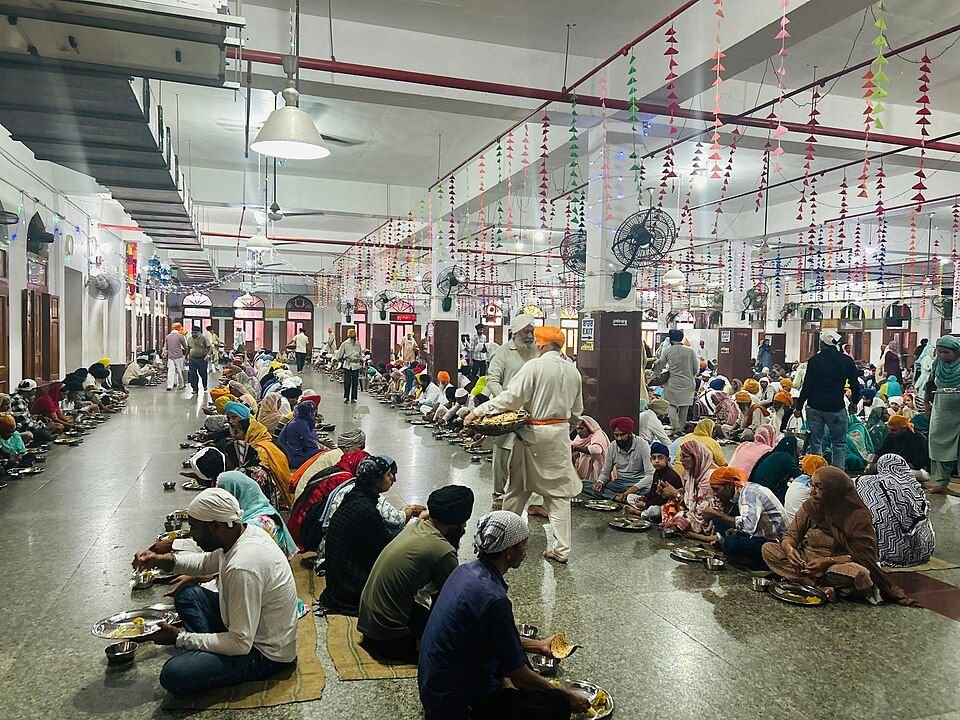
Langar is the free community kitchen found in every gurdwara, and the one at the Golden Temple is among the largest in the world. It is reported to serve more than 100,000 people a day, and more on festival days. Everyone sits in a row on the floor, whatever their religion, wealth or caste, and eats the same simple vegetarian meal, usually dal, vegetables, roti and kheer. The food is cooked and served largely by volunteers, called sevadars, and it is paid for by donations. The tradition began with the first Guru, Nanak, who rejected caste distinctions, and it was formalised by Guru Amar Das, the third Guru.
Visitors are welcome to take part in seva, the voluntary service that keeps the kitchen running: cutting vegetables, serving food or washing plates. It is a good way to experience the site beyond the sightseeing.
Watch: the Golden Temple on film
These three videos show the temple, the kitchen and its history. The first is a National Geographic documentary on how the shrine is run, the second looks at the kitchen that feeds the crowds, and the third is a Hindi explainer on the temple’s history. They are third-party videos, and their views are those of their makers.
What else is there to see near the Golden Temple?
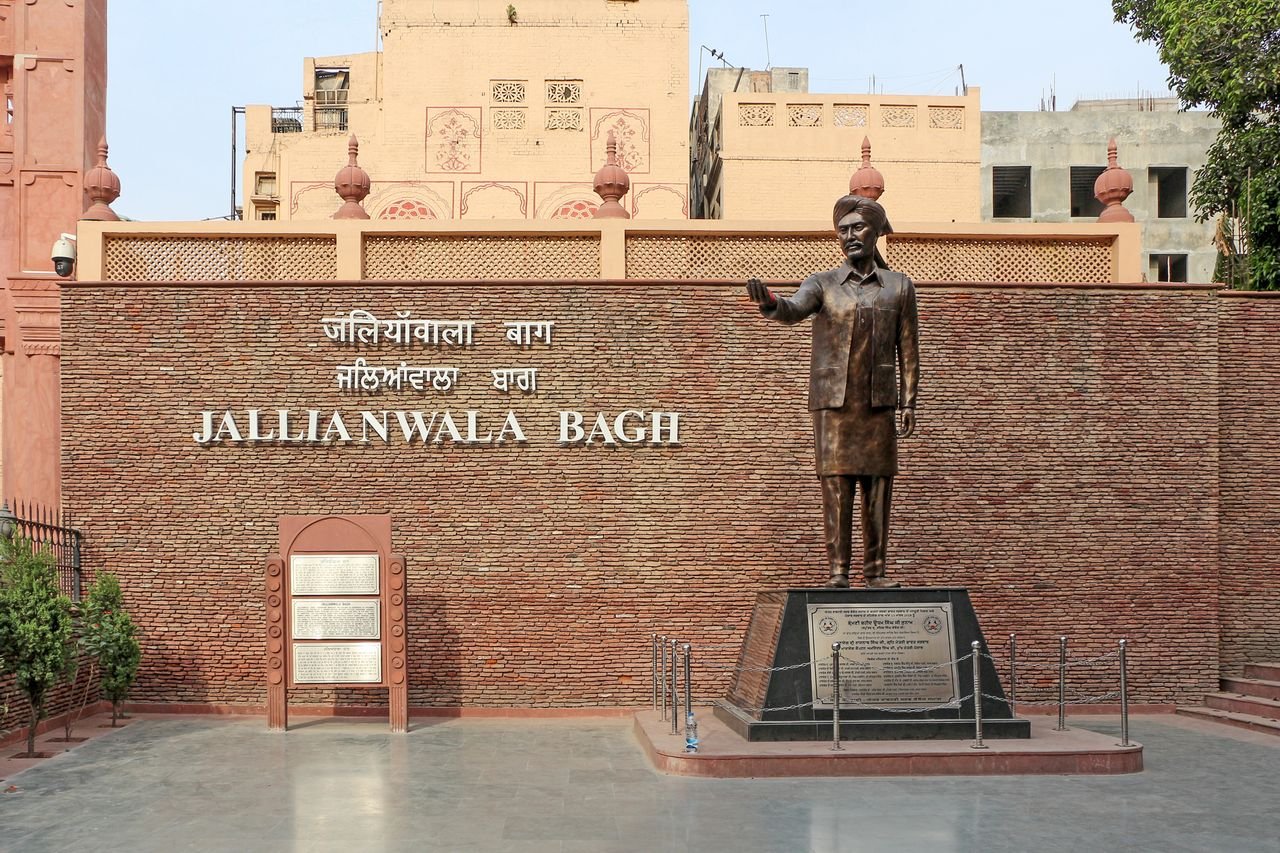
Jallianwala Bagh is a short walk from the temple entrance. It is the walled garden where, on 13 April 1919, troops under General Dyer opened fire on a large unarmed crowd, killing hundreds according to official figures and more according to Indian estimates. The memorial, with its bullet-marked walls and the well, is a sombre but essential stop, and it ties the city to the story of the freedom struggle. Many visitors also see the Wagah border ceremony, the daily flag-lowering ritual shared by India and Pakistan, which is about 30 km from the city, and sample Amritsari kulcha and lassi in the old town.
How do you visit the Golden Temple?
Amritsar has an airport (Sri Guru Ram Dass Jee International Airport) and a major railway station, and the temple is a short ride from the centre. Entry is free and the complex is open to visitors through the day and night, although the main sanctum has its own routine of opening and closing ceremonies. Expect long queues at weekends, festivals and holidays.
- Dress and conduct. Cover your head with a scarf or bandana (they are available on site), remove shoes and wash your feet at the entrance. Do not bring or consume tobacco, alcohol or meat, and keep voices low.
- Best time. October to March is cooler. Early morning before sunrise, and the evening when the temple is lit, are the most atmospheric times. Summer afternoons are very hot, especially on the marble.
- Photography. Photos are generally allowed in the complex but not inside the sanctum. Follow the signs and the instructions of the staff.
- Festivals. Vaisakhi in April, Guru Nanak’s birthday (Gurpurab) in November and Diwali, when the complex glows with lamps, are the busiest and most memorable times.
- Stay. The complex runs free pilgrim lodgings (sarai), and there are many hotels nearby in all price ranges.
Is the Golden Temple a UNESCO World Heritage Site?
Not yet. The Golden Temple is on India’s tentative list for UNESCO but is not an inscribed World Heritage Site. You can browse the sites that are inscribed in our guide to India’s UNESCO World Heritage Sites.
Where to go next
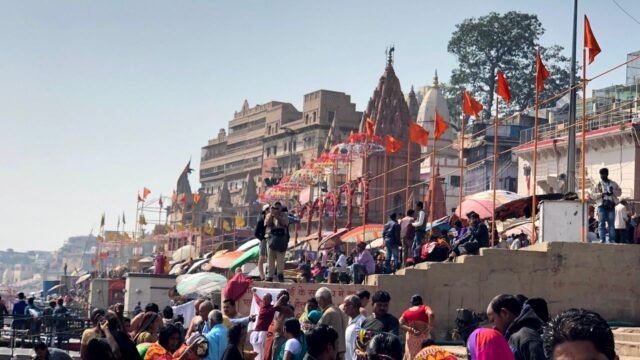
If this journey interests you, a few related guides help you plan. The Mughal rulers whose style influenced the marble inlay are profiled in famous emperors of India, and the same craft appears at the Taj Mahal and the Red Fort in Delhi. For another sacred city built around water, read our Varanasi ghats guide, and for fortified history see the top 10 forts of India. Devotional singing is central to gurdwara worship; our explainer on what a raga is shows how kirtan draws on the same system of melody.
Sources used for this article: general reference works and the Wikipedia article on Harmandir Sahib for the dates of construction, destruction and rebuilding, and for the langar figures. Historians give some dates slightly differently, and the text says so where it matters. Photographs are used under Creative Commons licences or in the public domain, with credit shown beneath each picture.
Frequently asked questions
-
Who built the Golden Temple?
Guru Arjan, the fifth Sikh Guru, began construction in 1581 on land developed by Guru Ram Das. The Adi Granth was installed there on 16 August 1604.
-
Why is the Golden Temple golden?
Its upper floors are covered in gold-plated copper. Maharaja Ranjit Singh funded the gilding in the early 19th century, from about 1803.
-
Is entry to the Golden Temple free?
Yes. Entry is free for everyone, and the langar serves free meals. Visitors must cover their heads and remove their shoes.
-
How many people eat at the Golden Temple langar?
The kitchen is reported to serve more than 100,000 people a day, with more on festival days.
-
Can non-Sikhs visit the Golden Temple?
Yes. People of all religions and nationalities are welcome as long as they follow the dress and conduct rules.
-
What is the best time to visit the Golden Temple?
October to March is cooler. Early morning and evening, when the temple is lit, are the most atmospheric times.
-
Is the Golden Temple a UNESCO World Heritage Site?
No. It is on India’s tentative list but is not an inscribed World Heritage Site.