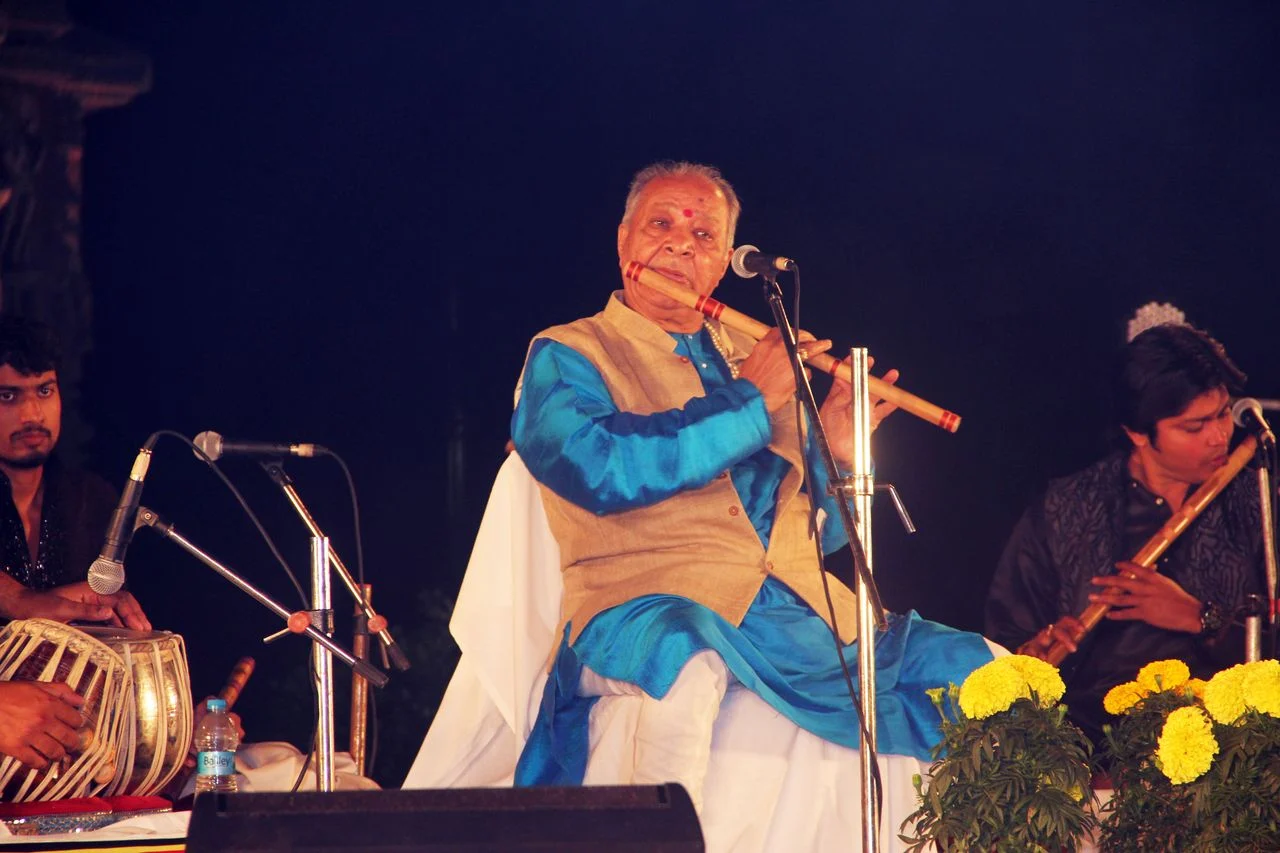
The bansuri is a side-blown bamboo flute from India, made from a single hollow reed with a sealed end, one blowing hole and six finger holes. It is closely associated with Lord Krishna, appears in Hindustani classical, folk and film music, and was brought to the concert stage in the 20th century by masters such as Pannalal Ghosh and Hariprasad Chaurasia.
Updated 12 October 2026. Descriptions of flute sizes, tunings and techniques are general and vary between makers and teachers; confirm details with a teacher or maker before buying an instrument.
Bansuri at a glance
| Feature | Detail |
|---|---|
| Material | A single length of hollow bamboo or cane |
| Type | Side-blown (transverse) flute, closed at the blowing end |
| Holes | One blowing hole and six finger holes (some folk flutes have seven) |
| Associated with | Lord Krishna, called Murlidhar or Venugopala |
| Used in | Hindustani classical, folk, devotional and film music |
| Pitch | Longer flutes sound lower; players carry several sizes |
| Famous players | Pannalal Ghosh, Hariprasad Chaurasia, Ronu Majumdar |
What is a bansuri?
The bansuri is the bamboo flute of North India, and one of the oldest wind instruments in the subcontinent. The name comes from the Sanskrit word for bamboo (vamsha) combined with the word for sound or melody (svara), so it means roughly “bamboo of music.” It is played held sideways, to the right of the face, with the player blowing across a hole near the sealed end. Related flutes are known by other names across India: the venu in the south, the pullanguzhal in Tamil Nadu, and the murali in many regional traditions.
The sound is airy and soft, and it is prized for its closeness to the human voice. A skilled player can slide between notes in a way that is central to Hindustani music. For this reason the bansuri is often described as the instrument that comes nearest to singing, and the ragas it plays best are slow, expressive ones. If you are new to the idea, read our guide to what a raga is first.
Why is the bansuri linked with Lord Krishna?
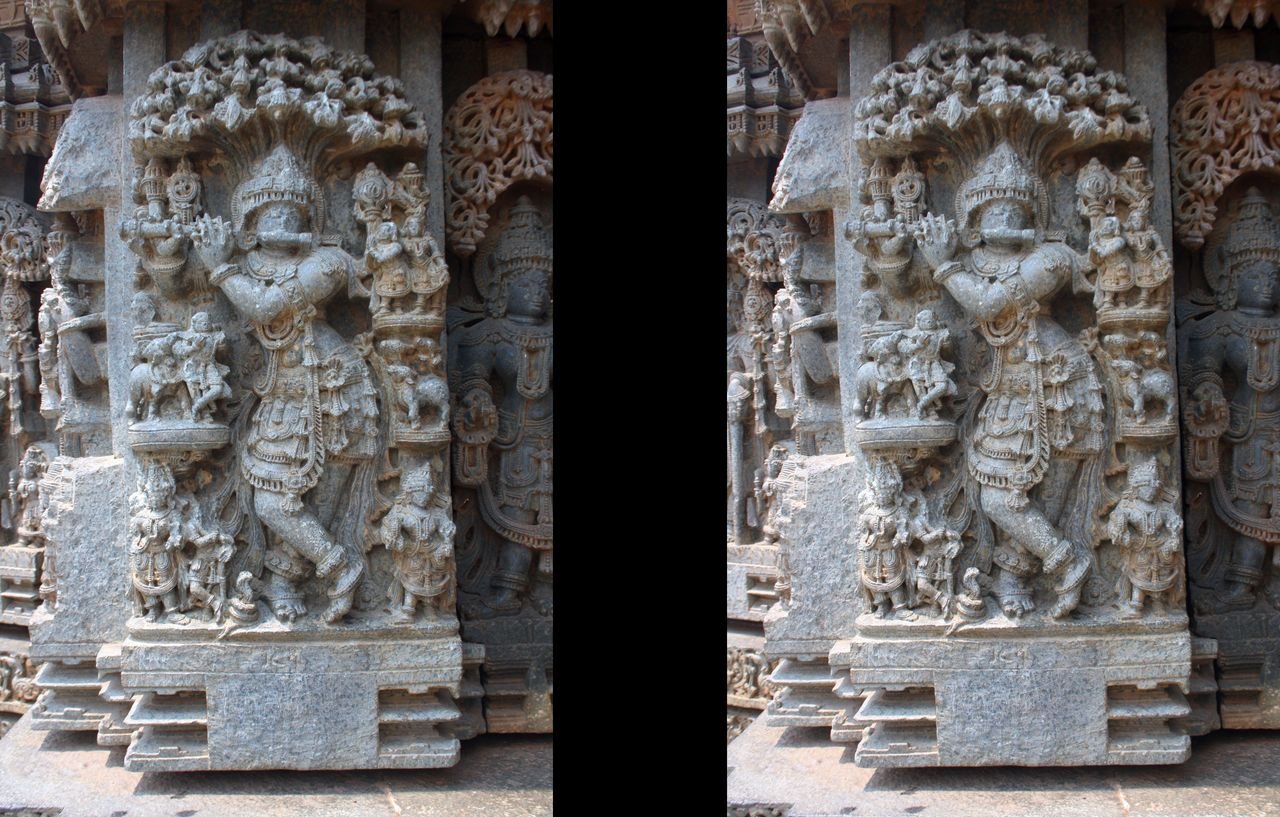
In Hindu tradition Krishna is the divine flute player, who charms the cowherd women (gopis), the cows and the forest with his music at Vrindavan. Names such as Murlidhar and Venugopala, both meaning the holder of the flute, refer to this image. The flute is usually shown as a long bamboo played sideways, and sculptors and painters have depicted it for centuries. In temple art it appears in carved reliefs, such as the carving of Krishna playing the flute at the Hoysala temple of Somanathapura in Karnataka, shown below, as well as in miniature paintings and devotional songs.
How old is the bansuri?
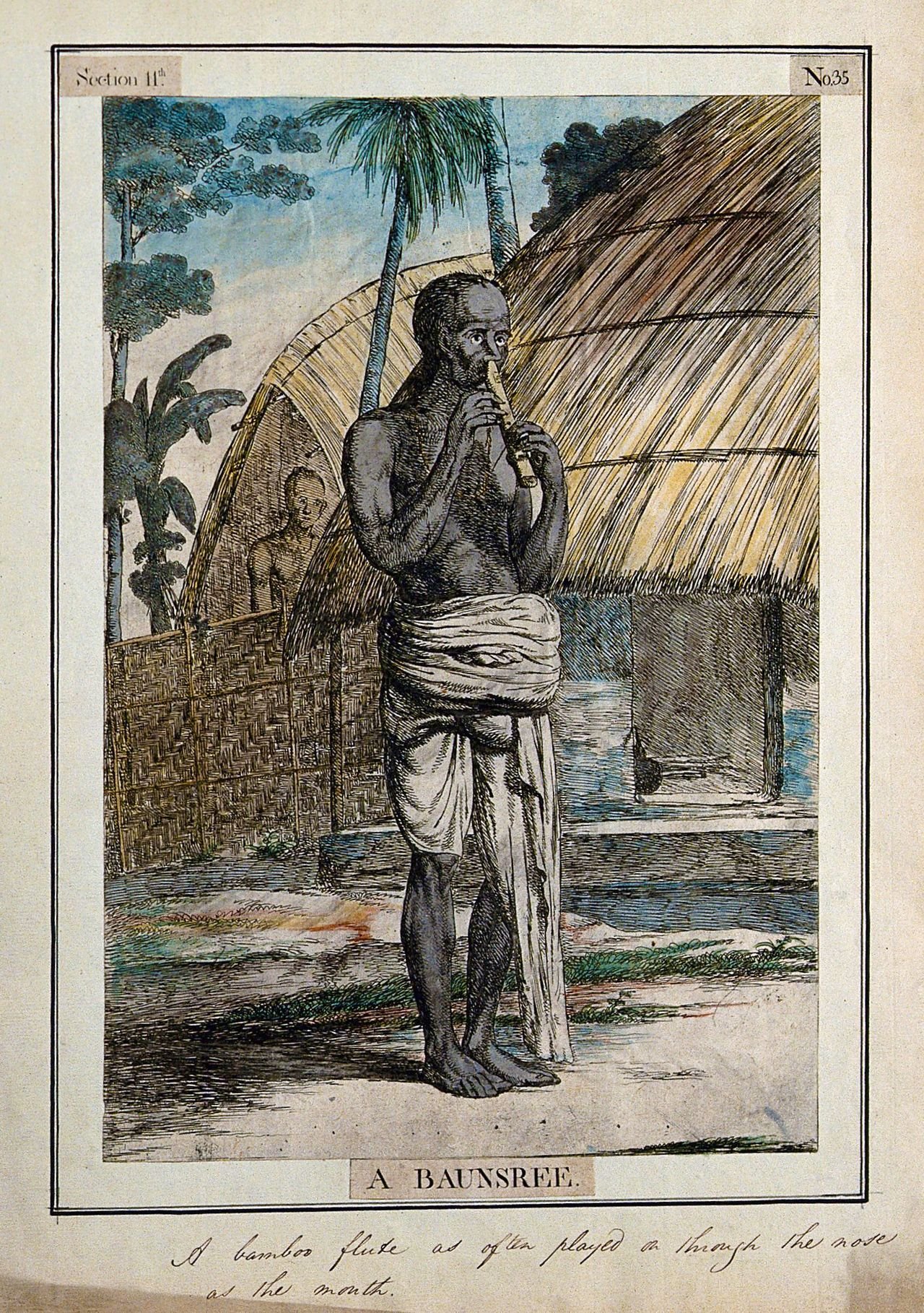
Flutes are among the oldest instruments in the world, and bamboo flutes have been played in India for a very long time. Ancient Sanskrit texts mention the flute, and carved images of flute players appear in early temples and caves. Historians cannot give an exact date for the bansuri as it is known today, because the instrument evolved gradually from folk and devotional flutes. What is clear is that the modern concert bansuri is a 20th-century development, shaped by a handful of musicians who changed its size, tuning and technique.
How is a bansuri made?
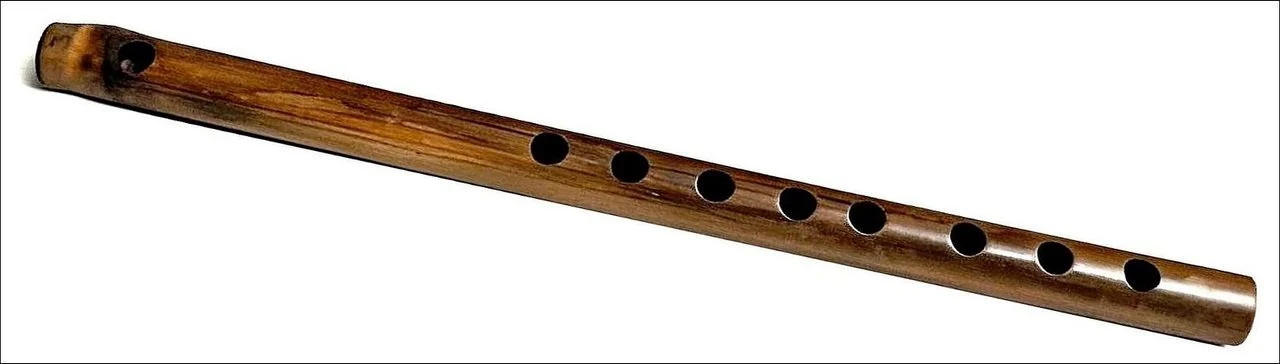
A bansuri is made from a straight length of bamboo or cane, chosen for its even walls and uniform bore. Makers in regions such as Assam, Kerala and West Bengal are known for suitable cane. The maker dries the cane, then burns or drills the holes. The placement of each finger hole determines the pitch, and tiny differences change the tuning, which is why a good maker measures carefully and tests each flute by ear. The blowing end is sealed with a cork or plug, and the instrument is often wrapped with thread, lacquer or varnish to protect it from moisture and cracking.
What are the types and sizes of bansuri?
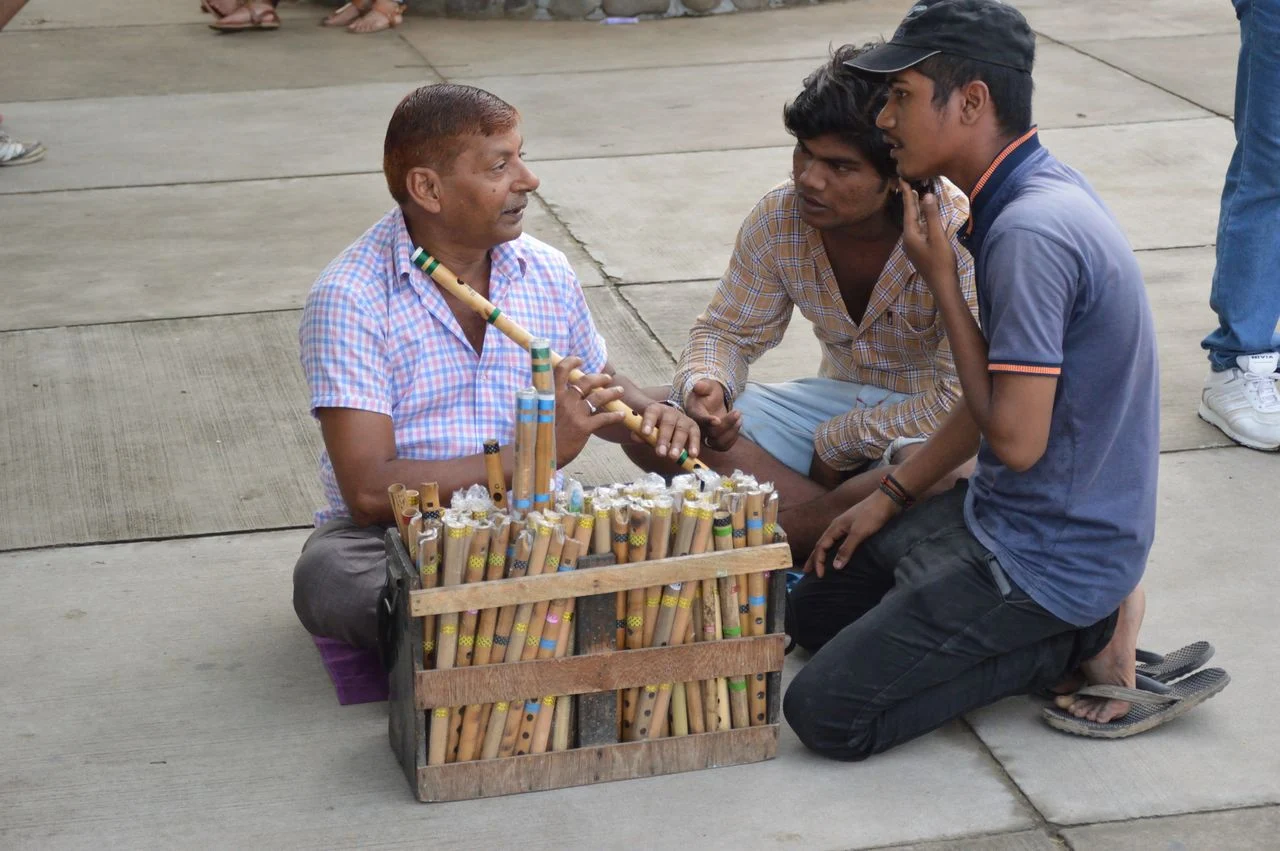
Bansuris come in many lengths, and length decides pitch. Short flutes, around 30 to 40 cm, are high-pitched and are often used for light music and film songs. Medium flutes suit most classical performance, and the long bass flutes, which can approach a metre in length, produce deep, mellow notes that classical players prefer for slow, meditative ragas. Because a long flute has widely spaced finger holes, playing it takes a large hand span and firm control of breath.
- Concert flutes. Medium to long instruments with six finger holes, used for Hindustani classical music.
- Bass flutes. The longest instruments, with a low, rich tone, used for slow alap passages.
- Folk and devotional flutes. Often shorter and simpler, with six or seven holes, played in villages and at festivals.
- Venu. The South Indian flute, usually with eight holes, used in Carnatic music.
How is the bansuri played?
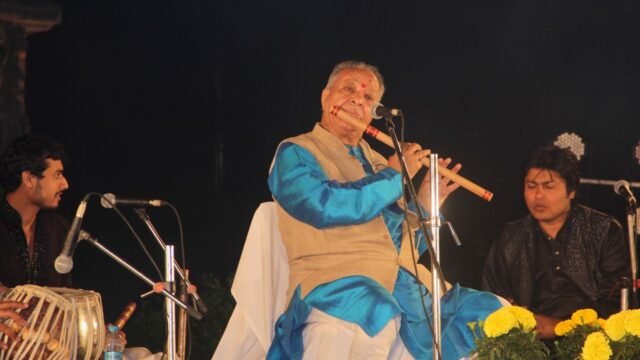
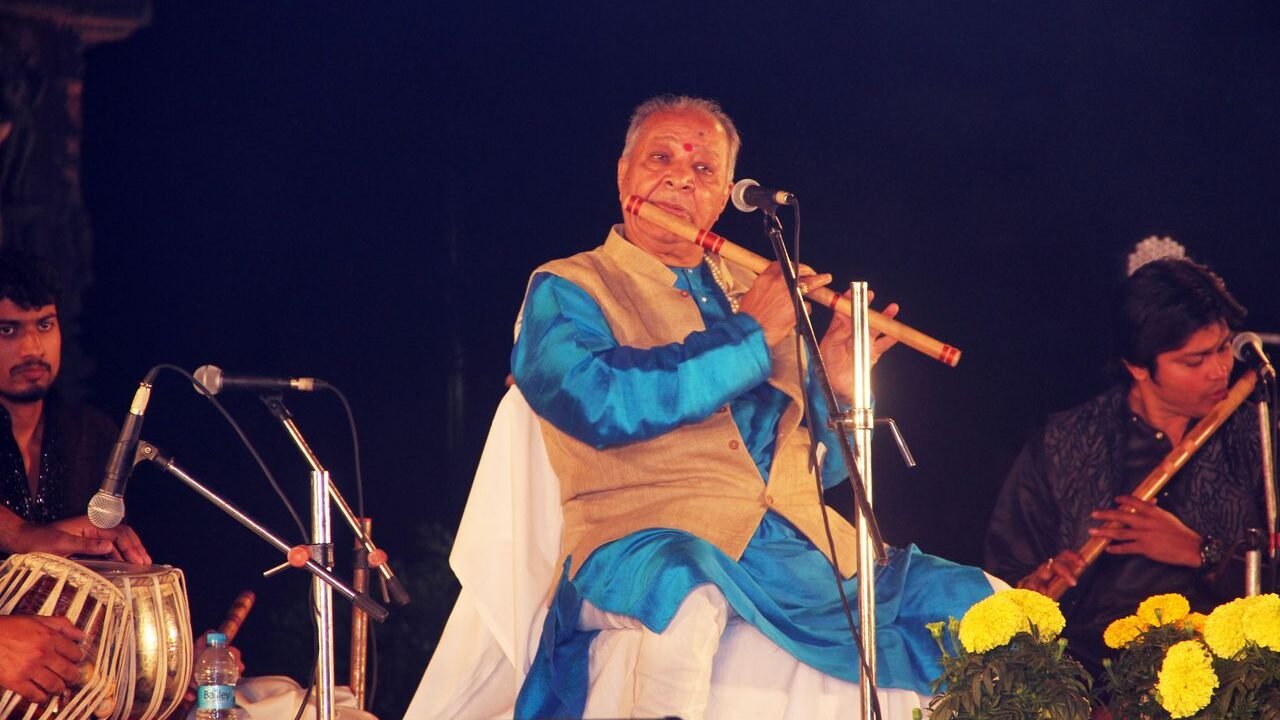
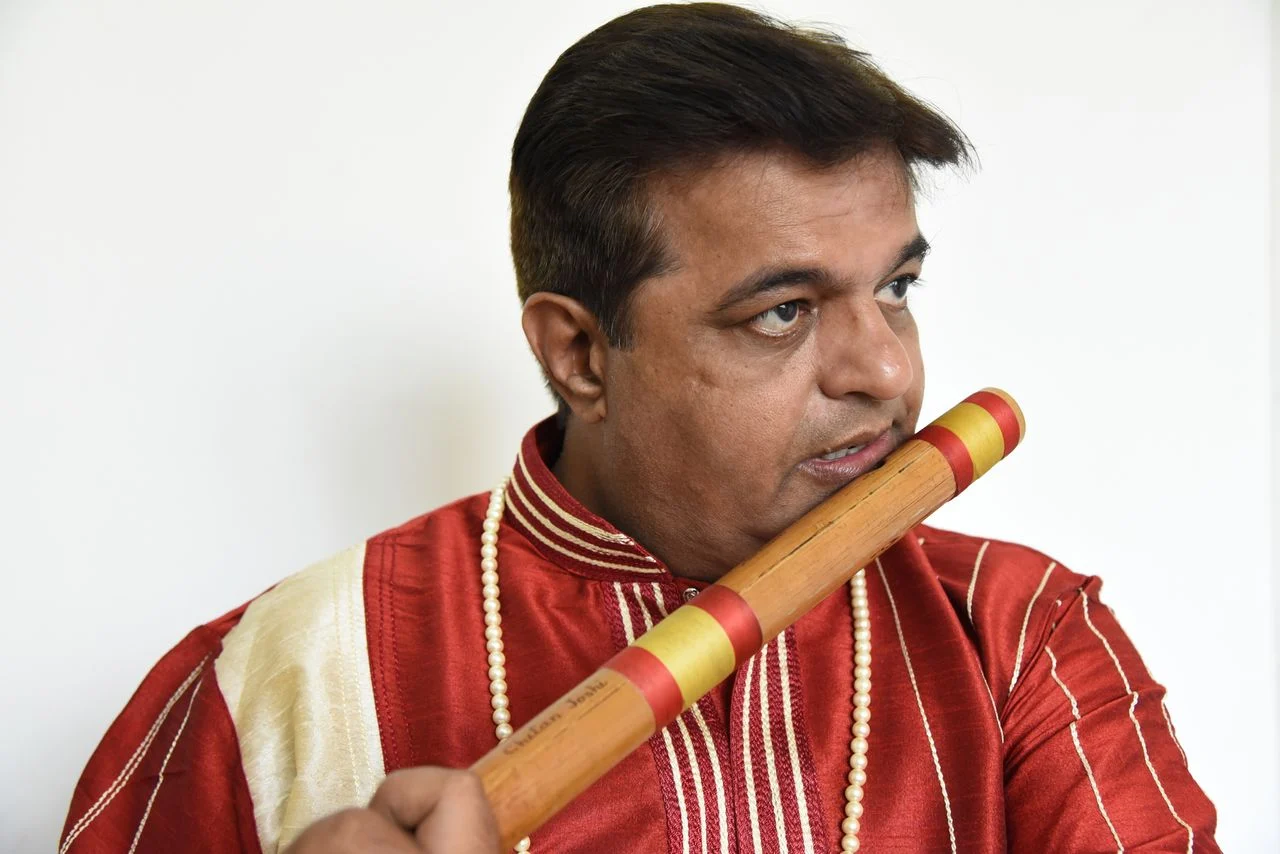
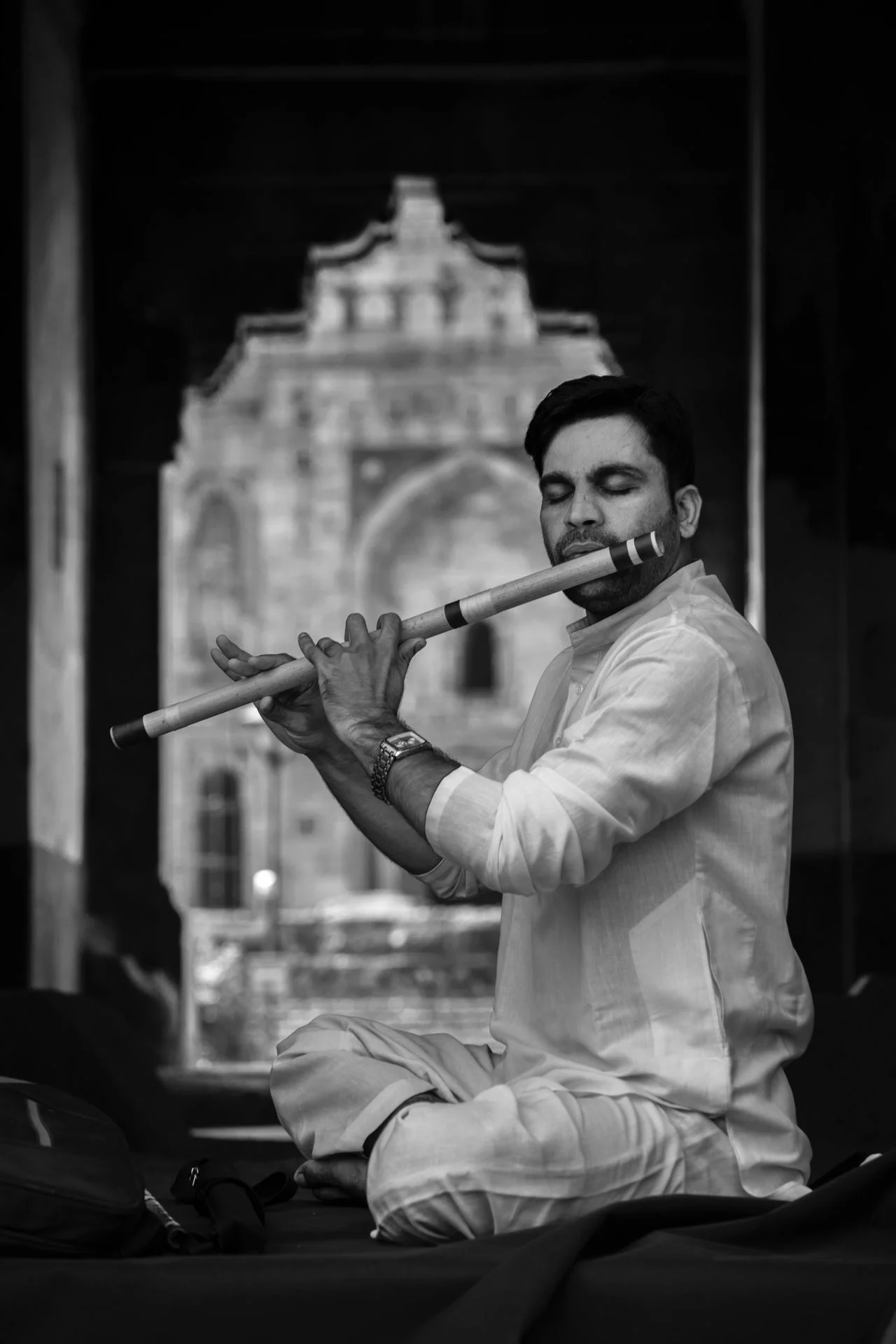
The player holds the flute sideways, rests it against the lower lip and blows a narrow stream of air across the blowing hole. The fingers of both hands cover the finger holes, and lifting them one by one raises the pitch. Skilled players also use half-covered holes and cross-fingering to produce the in-between notes and slides (meend) that Hindustani ragas need, and some use circular breathing, which lets them play for long stretches without a visible pause. Control of breath is central, because the same flute can sound thin, round or breathy depending on the angle and speed of the air.
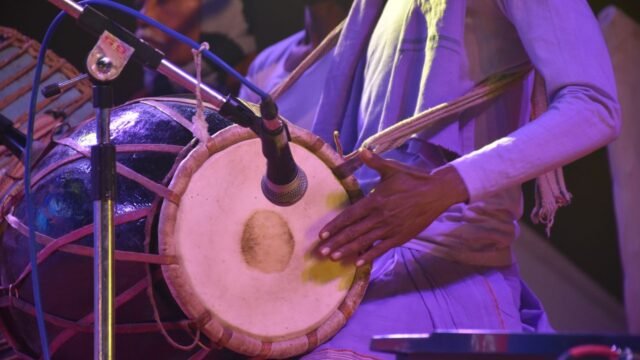
Rhythm matters just as much as melody. When a bansuri player performs with a drummer, the flute follows the cycle of a taal, which is explained in our article on Teentaal and the tabla. The emotional range of the instrument, from tenderness to longing, connects to the moods described in Navarasa, the nine rasas.
Who made the bansuri a concert instrument?
Pannalal Ghosh (1911 to 1960) is widely credited with turning the bansuri from a folk and devotional instrument into a classical one. According to standard accounts he used a longer flute, added a hole and trained in vocal and instrumental techniques so that the flute could handle the same ragas as the sitar and voice. Hariprasad Chaurasia, born in 1938, then took the instrument to world audiences with his lyrical style and large body of recordings; you can read about him in our article on famous Indian classical musicians. Other well-known players include Ronu Majumdar and, of a younger generation, Rakesh Chaurasia.
Watch: the bansuri in performance
These three videos show the instrument in use. The first is Hariprasad Chaurasia playing Brindabani Sarang, the second shows how a bansuri is made and played, and the third is a classical flute performance by Rakesh Chaurasia. They are third-party videos, and their views are those of their makers.
Which ragas suit the bansuri best?
Because the bansuri breathes like a voice, it suits ragas with long, flowing phrases. Evening and night ragas such as Yaman, Bhoopali and Bageshree are often played on it, and so are pastoral ragas associated with the rains and with Krishna, such as Brindavani Sarang and Pahadi. Pahadi, meaning of the hills, is a light raga often used for folk-flavoured tunes. These associations are tradition, not rules, and different artists choose differently. A good way to learn is to hear the same raga on the flute, the voice and the sitar, and notice how each instrument handles the slides between notes.
How is the bansuri different from the Western flute?
Both are side-blown flutes, but the similarities end there. A Western concert flute is a metal instrument with a complex key mechanism that gives a fixed scale, while the bansuri is a simple tube with open holes, which lets the player bend notes freely. The bansuri is made to play the microtonal movements of Indian ragas, and a player normally owns several flutes, each tuned to a different pitch to match the singer or the other instruments. The Western flute, by contrast, is a precision instrument designed for ensemble playing in a fixed tuning. Neither is better; they answer different musical questions.
How can a beginner learn the bansuri?
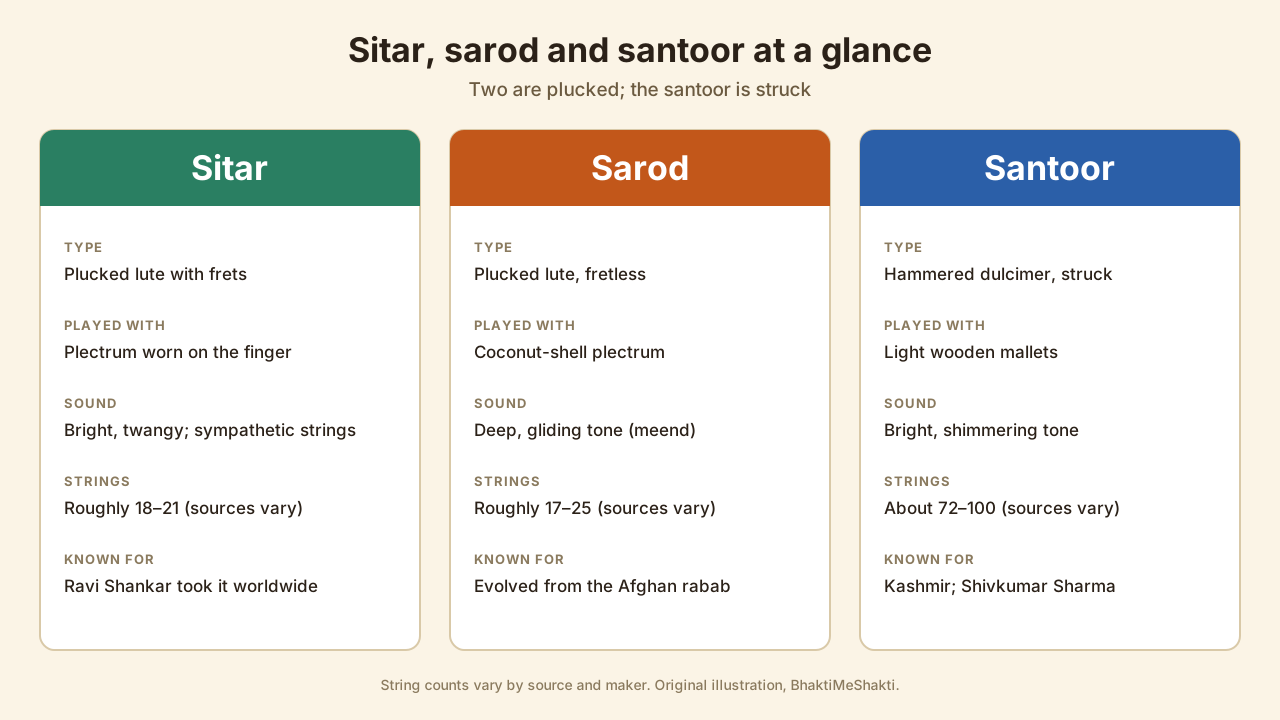
Begin with a medium-sized flute, which is easier to hold and finger than a long bass flute, and learn from a teacher if you can, because breath and posture are hard to correct alone. Expect the first weeks to be about making a clear tone: practise a steady long note, then simple scales, then slides between notes. Keep the flute dry, store it away from heat and avoid leaving it in direct sun, since bamboo can crack. As you progress, learn a simple raga, and then explore other melodic instruments. Our guide to the veena covers the stringed counterpart, and the stringed instruments of the north are compared in the sitar, sarod and santoor guide. If you enjoy the stories behind Indian art, our article on Indian folk paintings shows how Krishna and his flute appear in painting too.
Sources used for this article: general reference works and the Wikipedia articles on the bansuri, the Indian bamboo flute and Pannalal Ghosh. Sizes, hole counts and some biographical details vary between sources and makers, and the text says so where it matters. Photographs are used under Creative Commons licences or in the public domain, with credit shown beneath each picture.
Frequently asked questions
-
What is a bansuri?
The bansuri is a side-blown bamboo flute from India, with one blowing hole and usually six finger holes.
-
Why is the bansuri associated with Krishna?
In Hindu tradition Krishna is the divine flute player, which is why he is called Murlidhar or Venugopala.
-
Who is the most famous bansuri player?
Hariprasad Chaurasia is the best known, and Pannalal Ghosh is widely credited with making the bansuri a classical concert instrument.
-
What is the bansuri made of?
A single length of hollow bamboo or cane, dried, drilled and often wrapped with thread and varnish.
-
How many holes does a bansuri have?
A concert bansuri has one blowing hole and six finger holes. Some folk flutes have seven.
-
What is the difference between the bansuri and a Western flute?
The bansuri is a simple open-hole bamboo tube that can bend notes, while the Western flute is a keyed metal instrument with a fixed scale.
-
Is the bansuri easy to learn?
Making a clear sound takes practice. Beginners usually start with a medium-sized flute and a teacher, and practise long notes before scales.