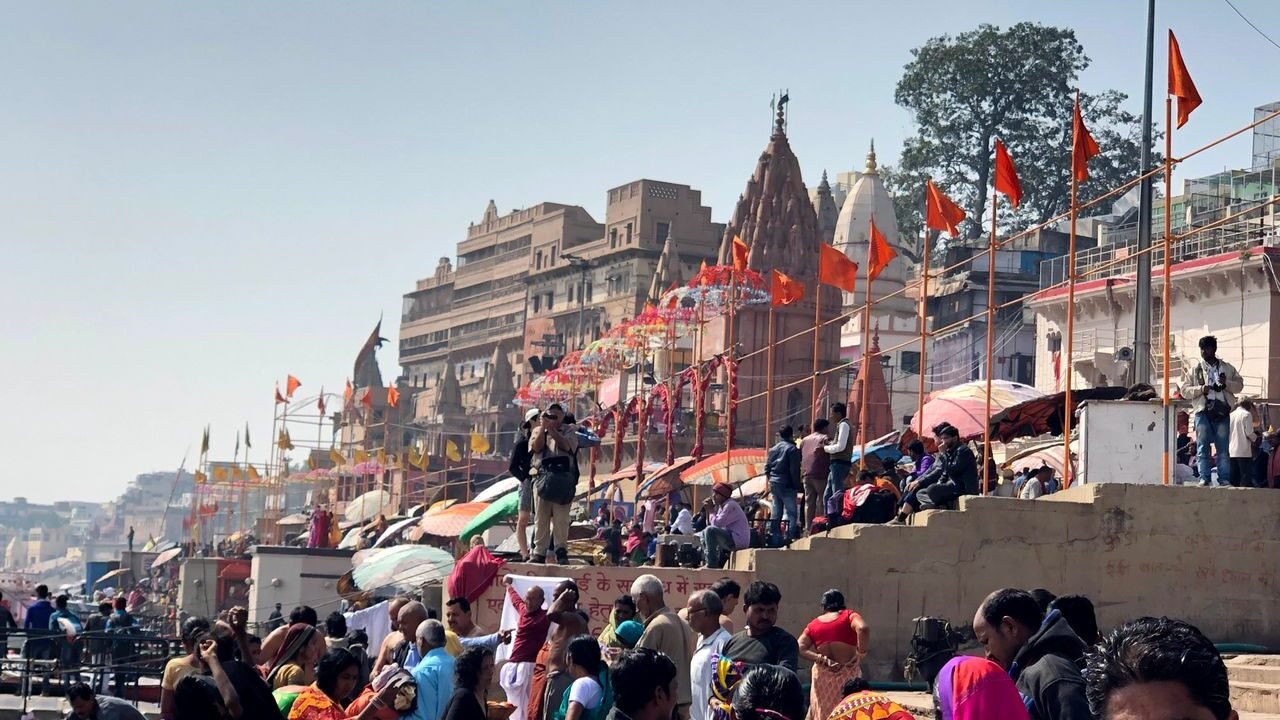
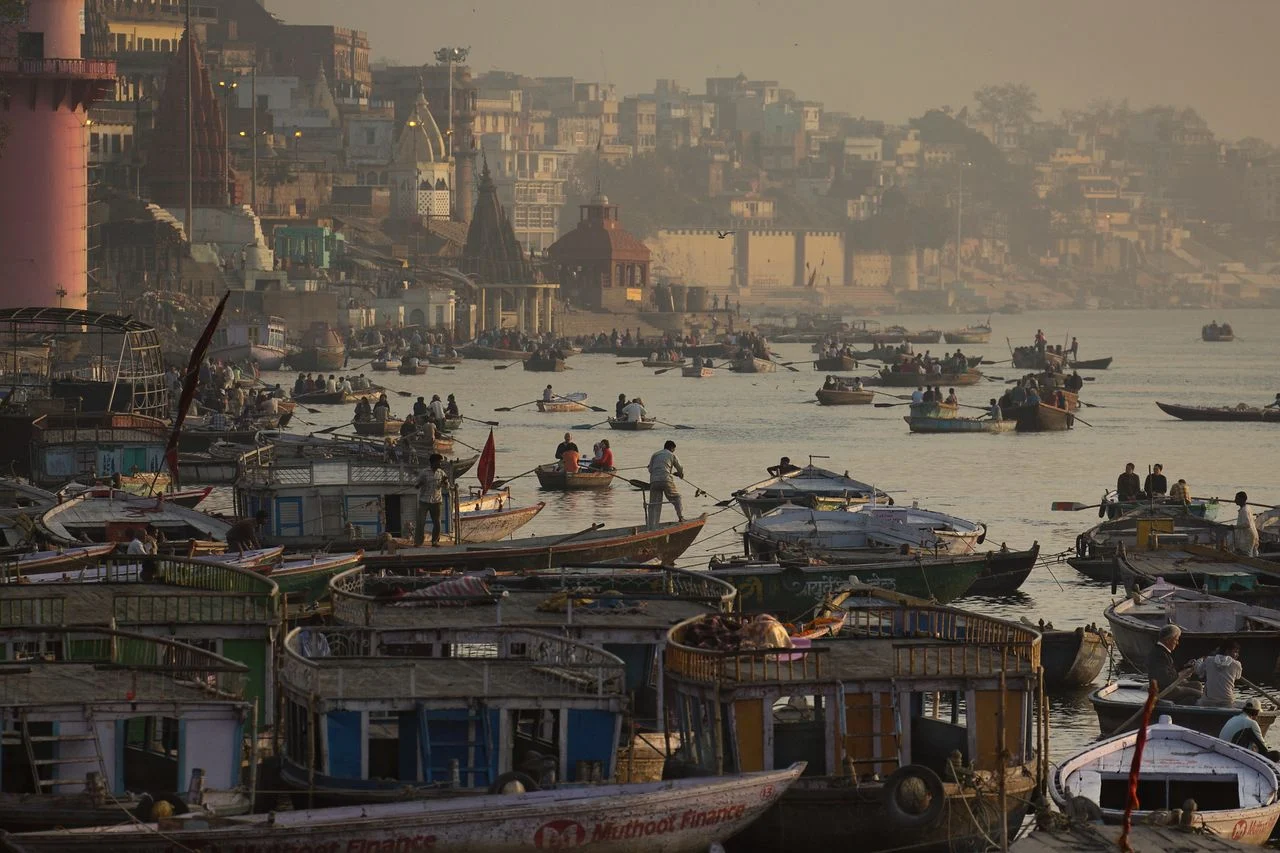
Varanasi has 84 ghats, the stone steps that run for about 6 to 7 km along the west bank of the Ganga. The most visited are Dashashwamedh Ghat, famous for its nightly Ganga Aarti, Assi Ghat in the south, and the cremation ghats of Manikarnika and Harishchandra. The best way to see them is a sunrise boat ride followed by the evening aarti.
Updated 12 October 2026. Boat fares, aarti timings and river conditions change with the season and the water level, so confirm them locally before you go.
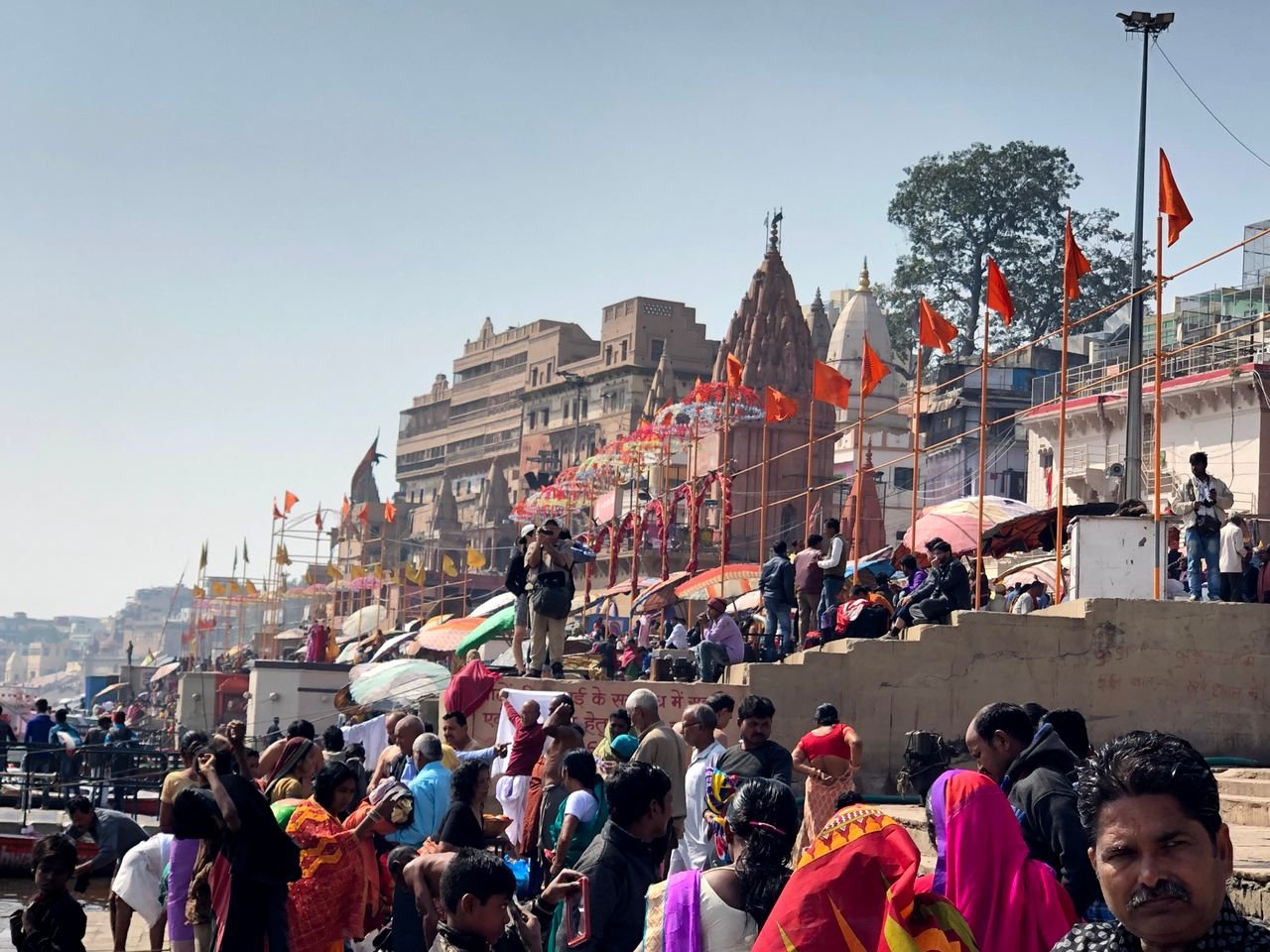
Varanasi ghats at a glance
| Ghat | Known for |
|---|---|
| Dashashwamedh | The main ghat and the nightly Ganga Aarti |
| Assi | The southern end, quieter, popular with students and for sunrise |
| Manikarnika | The main cremation ghat, considered especially sacred |
| Harishchandra | A second, smaller cremation ghat |
| Scindia | Built by the Scindia family; a leaning temple stands partly in the water |
| Panchganga | Where five rivers are said to meet, with a tall lamp tower |
What are the ghats of Varanasi?
A ghat is a flight of stone steps leading down to a river. In Varanasi, also called Kashi or Banaras, the ghats form an almost unbroken line along the Ganga, and they are the centre of daily life in the city. Pilgrims bathe, priests perform rituals, boatmen wait for passengers, and families hold ceremonies for births, marriages and deaths. The city is one of the oldest continuously inhabited places in the world, and Hindus believe that a bath here, or death here, brings liberation (moksha).
The ghats look the way they do thanks mostly to the 18th century. After the Mughal period, the Marathas, together with other rulers and wealthy patrons, rebuilt many of the ghats, added temples and palaces, and gave the riverfront the layered skyline seen today. Each ghat has its own story and its own patron, which makes a slow walk or boat ride more rewarding than a quick look.
How many ghats are there in Varanasi?
The usual figure is 84, and the number is widely quoted in guidebooks and official sources. Some of the ghats are bathing places, a few are cremation grounds and many are private or attached to palaces and temples. The count can vary depending on how smaller ghats are counted, so treat 84 as a convention. Most visitors cover the stretch from Assi Ghat in the south to Raj Ghat near the bridge in the north.
What is the Ganga Aarti at Dashashwamedh Ghat?
The Ganga Aarti is an evening fire ritual of thanks to the river goddess. It is held at Dashashwamedh Ghat shortly after sunset and lasts about 45 minutes to an hour. A group of young priests stands on raised platforms and, to the sound of bells, conch shells and chanting, swings large brass lamps in synchronised patterns. Thousands of people watch from the steps and from boats on the river. The ghat’s name refers to a legend in which Brahma sacrificed ten horses here, though other explanations are also given.
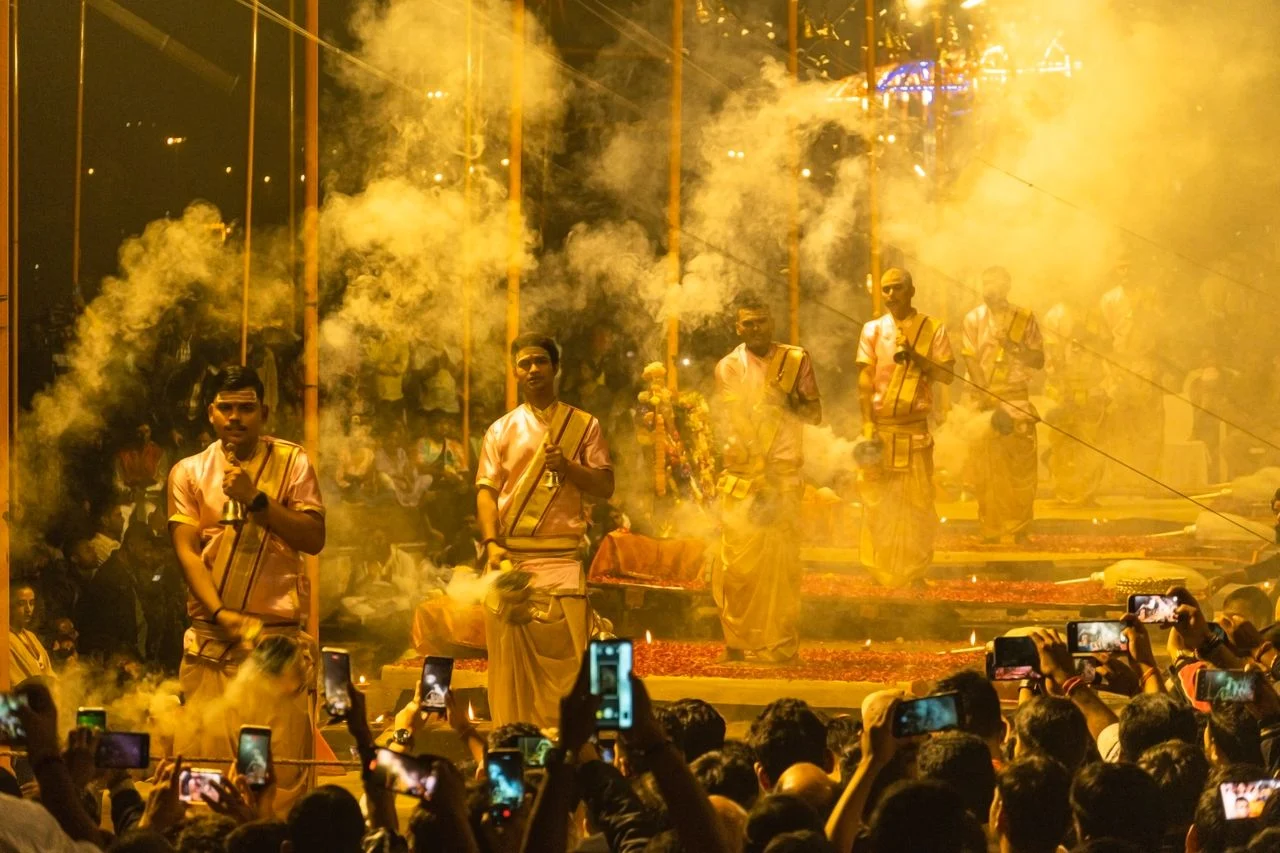
For a good view, arrive 45 minutes to an hour early, or watch from a boat anchored near the ghat. The rows of devotees, the incense and the music are best experienced slowly, and the ritual is as much a performance of sound as of light. The musical side of such worship draws on the same traditions covered in our guide to what a raga is.
Which are the best ghats to visit in Varanasi?
Five or six ghats give a rounded picture of the city. Begin in the south and move north, ideally by boat, then walk selected stretches on foot.
- Assi Ghat. The southern end, where the Assi stream meets the Ganga. It is calmer than the central ghats, with morning yoga, music and tea stalls, and a popular place to watch the sunrise.
- Dashashwamedh Ghat. The main ghat, close to the Kashi Vishwanath Temple and always busy. It is the place for the evening aarti.
- Manikarnika Ghat. The principal cremation ghat. Fires burn here through day and night, and it is regarded as one of the most sacred places for the last rites. Visitors should be respectful and never photograph the ceremonies.
- Scindia Ghat. Built by Baizabai Scindia of the Gwalior royal family in the 19th century according to common accounts. A partly submerged temple tilts here, a reminder of the weight of the construction.
- Harishchandra Ghat. The older and smaller of the two burning ghats, named after the legendary truthful king Harishchandra.
What is special about Assi Ghat?
Assi Ghat is where many travellers begin and end. It lies at the confluence of the Ganga and the small Assi river, and pilgrims bathe here before worshipping at a Shiva lingam under a tree. In the early morning the ghat hosts the Subah-e-Banaras programme of music and chanting, and in the evening there is a smaller aarti. The cafes, bookshops and homestays nearby make it a comfortable base, especially for first-time visitors who want to ease into the city.
What is the Kashi Vishwanath Temple?
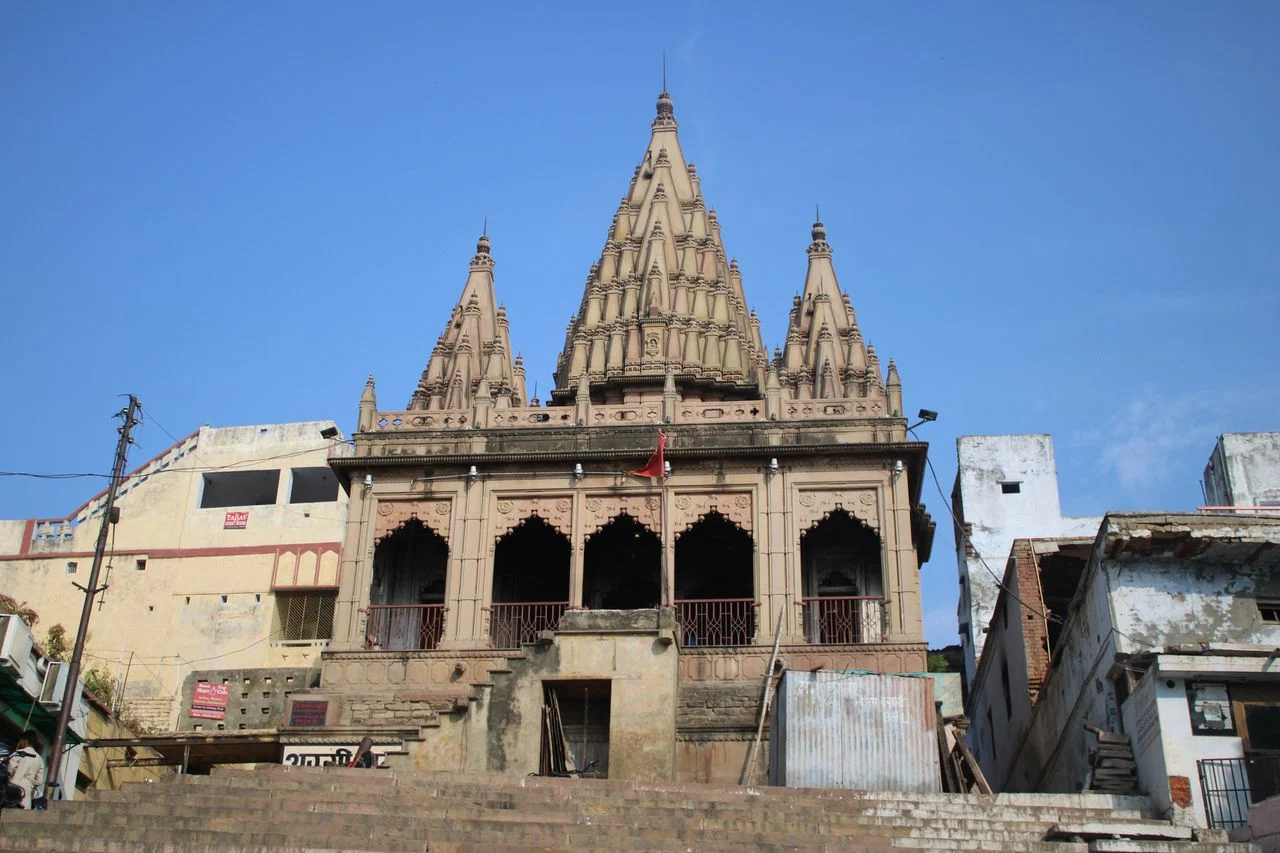
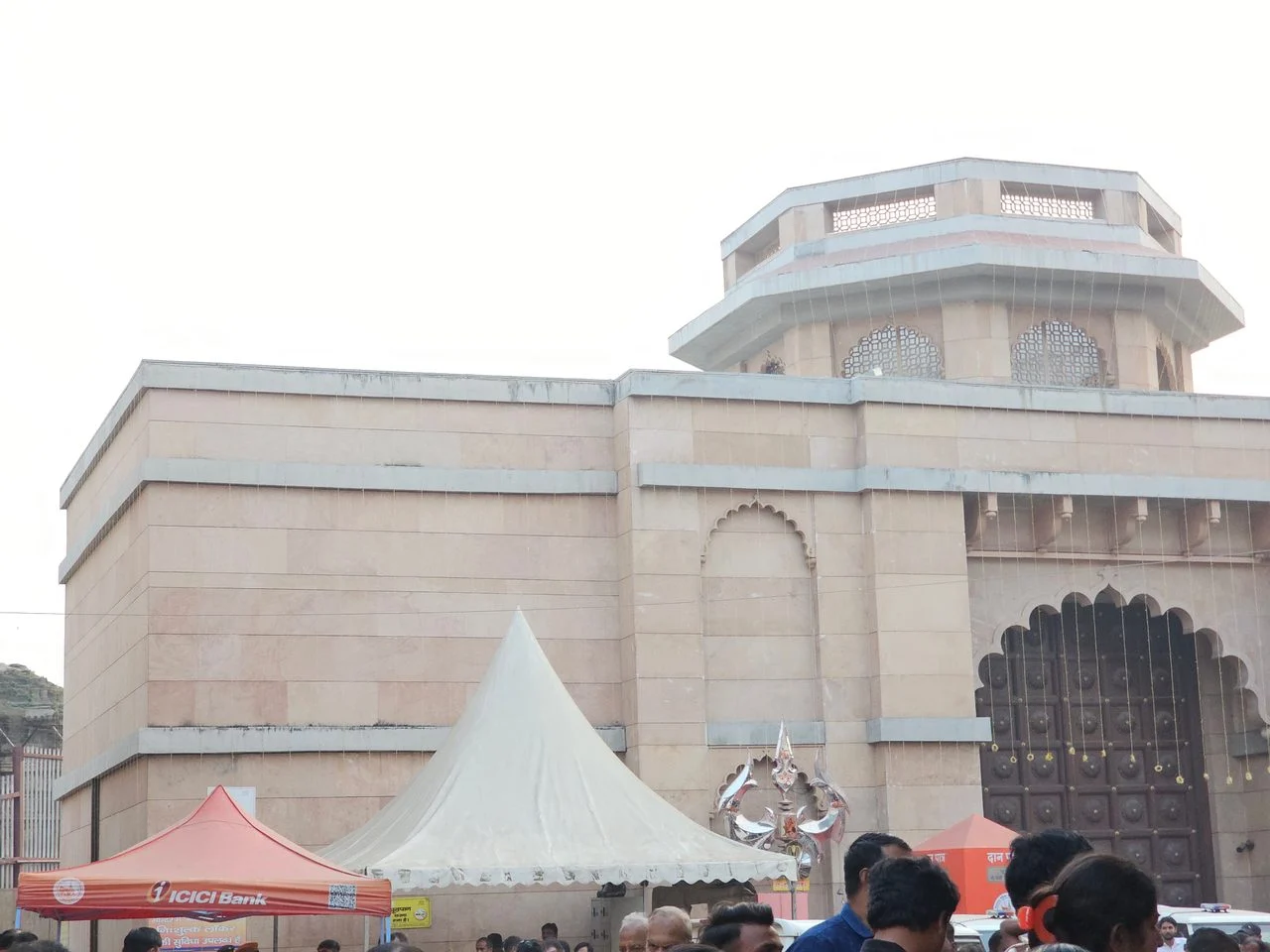
The Kashi Vishwanath Temple is dedicated to Shiva as lord of the universe and is one of the twelve jyotirlingas, the most sacred Shiva shrines in India. The present temple dates from the late 18th century, when Ahilyabai Holkar of Indore rebuilt it, and it was extended with a corridor linking it to the Ganga in recent years. Security is tight, queues can be long and phones and bags are usually not allowed inside, so plan to leave them at your hotel. Visitors should check the current rules before they go.
Why do Hindus cremate their dead at Varanasi?
Hindu belief holds that dying in Kashi, and being cremated on its ghats, frees the soul from the cycle of rebirth. Manikarnika Ghat is the best known place for this, and the fires there have burned for centuries according to local tradition. The scene can be confronting for visitors. It is a working place of grief and ritual, not an attraction, so keep a respectful distance, do not take photographs, and ignore anyone who offers to take you closer for a fee.
Watch: Varanasi ghats on film
These three videos give a sense of the riverfront. The first is a tourism film on the ghats, the second looks at life and death along the river, and the third is a full recording of the Ganga Aarti. They are third-party videos, and their views are those of their makers.
What is the best way to see the ghats?
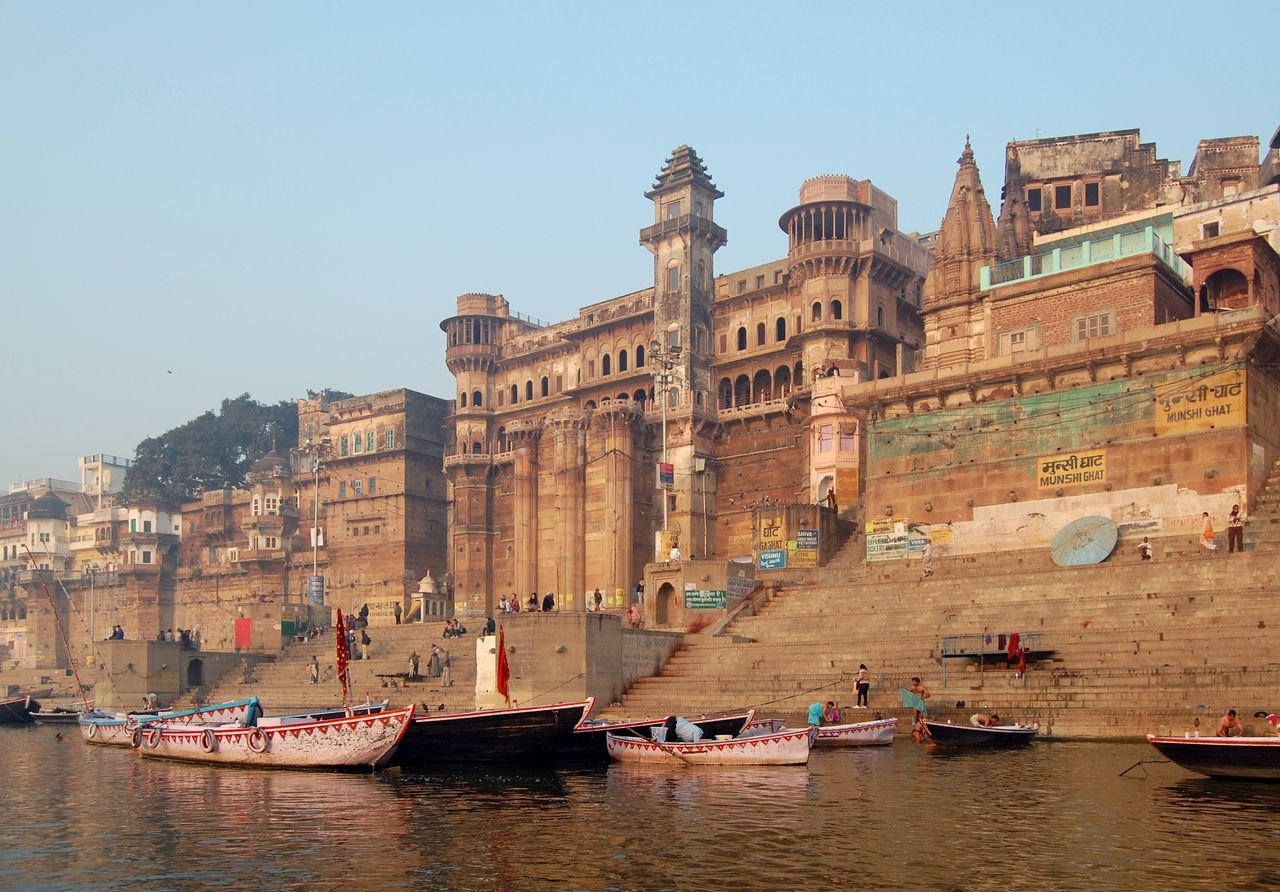
A boat ride at sunrise is the classic choice. Boats leave from Assi, Dashashwamedh and other ghats, and a ride along the whole riverfront takes roughly one to two hours. Agree the price before you board, and ask whether it covers the whole route. Rowing boats are quieter than motor boats. Many people then walk the stretch between Dashashwamedh and Assi on foot, where the lanes behind the ghats hide small temples, silk shops and tea stalls. Allow time for the evening aarti and, if your schedule allows, a second visit on another day.
When is the best time to visit Varanasi?
October to March is the most comfortable, with mild days and cool mornings on the river. Dev Deepawali, held about two weeks after Diwali in November, lights the ghats with lakhs of lamps and is a highlight, but accommodation books out early. Summer is very hot, and the monsoon brings a high, fast-flowing river that can close some ghats and make boating restricted. Because water levels change, check locally before planning a boat ride in July to September.
- Getting there. Varanasi has an airport (Lal Bahadur Shastri International Airport) and two main railway stations, Varanasi Junction and Banaras.
- Getting around. The old city is a maze of narrow lanes, and walking and e-rickshaws are the main options near the ghats.
- Safety. Keep valuables close in crowds, use licensed boatmen and guides, and agree prices up front.
- Nearby. Sarnath, where the Buddha gave his first sermon, is about 10 km from the city centre and makes a good half-day trip.
What should first-time visitors know about Varanasi?
Varanasi rewards patience. The lanes are narrow and crowded, cows and motorbikes share the same space, and the river itself is a place of ritual, so dress modestly and move calmly. Remove your shoes before entering any temple, carry small change for offerings and boat fares, and keep your phone and wallet secure. Drink only sealed bottled water, avoid bathing in the river unless you are sure about the water quality that week, and be wary of anyone who offers a free guide, since a fee usually follows. Most travellers find two to three days enough to see the main ghats, the temples and Sarnath without rushing, and a slower pace lets you notice the small daily rituals that make the city feel alive.
Where to go next
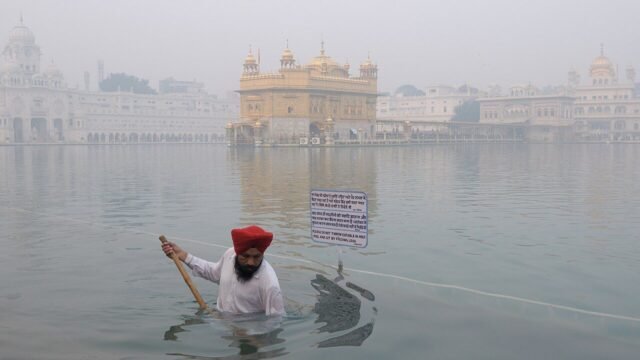
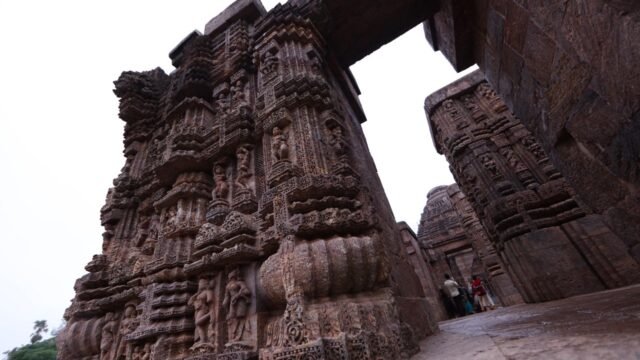
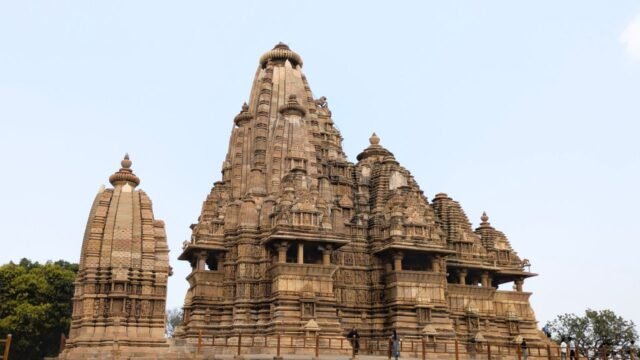
Varanasi pairs well with other great Indian riverside and temple cities. Another city whose identity rests on water and worship is Amritsar; see our Golden Temple guide. For sculptural temple art, read about Khajuraho and the Konark Sun Temple. Varanasi is also a city of music: the sitar, sarod and shehnai all have strong links to the city, which you can explore through famous Indian classical musicians and the differences between the sitar, sarod and santoor. For the bigger picture, see India’s UNESCO World Heritage Sites.
Sources used for this article: general reference works and the Wikipedia articles on Varanasi, the ghats of Varanasi and the Kashi Vishwanath Temple. The number of ghats, the builders of individual ghats and some dates vary between sources, and the text says so where it matters. Photographs are used under Creative Commons licences with credit shown beneath each picture.
Frequently asked questions
-
How many ghats are in Varanasi?
The usual figure is 84, running for roughly 6 to 7 km along the Ganga. The count varies slightly depending on how small ghats are counted.
-
Which is the main ghat in Varanasi?
Dashashwamedh Ghat is the main and busiest ghat, and the site of the nightly Ganga Aarti.
-
What time is the Ganga Aarti in Varanasi?
It is held shortly after sunset at Dashashwamedh Ghat and lasts about 45 minutes to an hour. Exact times shift with the season, so check locally.
-
What is the best time to visit Varanasi?
October to March is the most comfortable. Dev Deepawali in November is a highlight, but rooms book out early.
-
Can tourists watch cremations at Manikarnika Ghat?
Visitors can view from a respectful distance, but should not take photographs or accept offers of paid close access.
-
What is the best way to see the ghats?
A sunrise boat ride along the riverfront, followed by a walk through selected ghats and the evening aarti.
-
How far is Sarnath from Varanasi?
Sarnath is about 10 km from the city centre and is the place where the Buddha gave his first sermon.