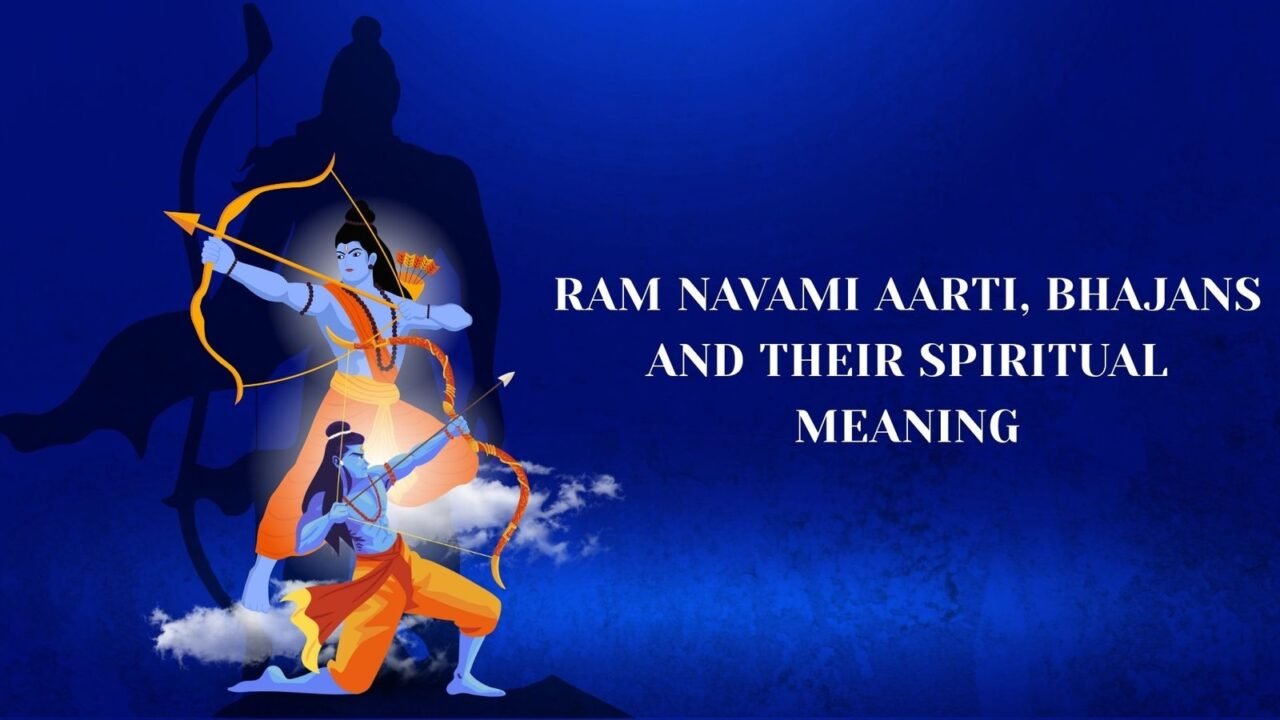
On Ram Navami — in 2027, Thursday, 15 April — devotees welcome Lord Rama’s birth at midday with aarti and bhajans. The best-loved hymn is Tulsidas’s “Shri Ramchandra Kripalu Bhaj Man”. This page gives its full lyrics with meaning, the most popular Ram bhajans and their sources, and how to perform the aarti at home. For the date, puja vidhi and fasting rules, see our Ram Navami 2027 guide.
What Is Shri Ramchandra Kripalu Bhaj Man?
Shri Ramchandra Kripalu Bhaj Man is a stuti (hymn of praise) composed by the 16th-century poet-saint Tulsidas, author of the Ramcharitmanas. It appears in his Vinaya Patrika and is written in Awadhi-inflected Sanskritised verse. It is sung at Ram Navami, in temples and homes daily, and at the close of Ram Katha.
Shri Ramchandra Kripalu Bhaj Man — Lyrics
श्रीरामचन्द्र कृपालु भजु मन हरण भवभय दारुणं।
नवकंज लोचन कंजमुख कर कंज पद कंजारुणं॥१॥
Shri Ramchandra kripalu bhaju mana harana bhavabhaya darunam
Navakanja lochana kanjamukha kara kanja pada kanjarunam
O mind, worship the compassionate Shri Ramachandra, who removes the terrible fear of worldly existence — whose eyes are like fresh lotuses, whose face, hands and feet are like red lotuses.
कन्दर्प अगणित अमित छवि नवनील नीरद सुन्दरं।
पटपीत मानहुँ तड़ित रुचि शुचि नौमि जनक सुतावरं॥२॥
Kandarpa aganita amita chhavi navanila nirada sundaram
Patapita manahun tadita ruchi shuchi naumi Janaka sutavaram
His beauty surpasses countless Kamadevas; he is lovely as a fresh dark rain-cloud, and his yellow garment gleams like lightning. I bow to him, the pure husband of Janaka’s daughter, Sita.
भजु दीनबन्धु दिनेश दानव दैत्यवंश निकन्दनं।
रघुनन्द आनन्दकन्द कोशलचन्द दशरथ नन्दनं॥३॥
Bhaju dinabandhu dinesha danava daityavamsha nikandanam
Raghunanda anandakanda Koshalachanda Dasharatha nandanam
Worship the friend of the humble, radiant as the sun, destroyer of the demon clans — the joy of the Raghu line, the root of bliss, the moon of Kosala, the son of Dasharatha.
शिर मुकुट कुण्डल तिलक चारु उदारु अङ्ग विभूषणं।
आजानुभुज शर चापधर संग्राम जित खरदूषणं॥४॥
Shira mukuta kundala tilaka charu udaru anga vibhushanam
Ajanubhuja shara chapadhara sangrama jita Kharadushanam
Crowned, with earrings and a beautiful tilak, adorned with ornaments; his arms reach to his knees; bearing bow and arrows, he defeated Khara and Dushana in battle.
इति वदति तुलसीदास शङ्कर शेष मुनि मनरंजनं।
मम हृदयकंज निवास कुरु कामादि खलदलगंजनं॥५॥
Iti vadati Tulasidasa Shankara Shesha muni manaranjanam
Mama hridayakanja nivasa kuru kamadi khaladala ganjanam
Thus says Tulsidas: O delight of the hearts of Shiva, Shesha and the sages, dwell in the lotus of my heart and destroy the band of wicked foes — desire and the other passions.
Many singers continue with verses from the Bal Kand of the Ramcharitmanas beginning “Manu jahin racheu milihi so baru”, describing Sita’s prayer to Goddess Gauri.
What Is the Spiritual Meaning of the Aarti?
In aarti, a lamp is circled before the deity while the hymn is sung. The flame represents knowledge and devotion dispelling the darkness of ignorance; offering it is an act of surrender and gratitude. Tulsidas’s final prayer — that Rama dwell in the heart and drive out desire, anger and the other passions — expresses the inner purpose of the ritual: to invite Rama’s qualities of compassion, truth and self-control into one’s own life.
Which Are the Most Popular Ram Bhajans?
1. Shri Ram Jai Ram Jai Jai Ram
The thirteen-syllable Rama Taraka Mantra, popularised by the Maharashtrian saint Samarth Ramdas. Its simple, repetitive chant is ideal for group kirtan and japa.
2. Mangal Bhavan Amangal Hari
मंगल भवन अमंगल हारी। द्रवउ सो दसरथ अजिर बिहारी॥
A chaupai from the Bal Kand of Tulsidas’s Ramcharitmanas: “May he who is the abode of auspiciousness and remover of inauspiciousness — the one who played in Dasharatha’s courtyard — shower his grace.” It is sung to open or close Ram Katha.
3. Raghupati Raghav Raja Ram
A Ram dhun made famous when Mahatma Gandhi’s companions sang it on the Dandi March in 1930. Its lines praising Rama and Sita as “Patita Pavana” — purifier of the fallen — made it a hymn of unity.
4. Ram Siya Ram, Siya Ram Jai Jai Ram
A joyful chant honouring Rama and Sita together, widely sung in homes, temples and processions.
Many devotees also recite the Hanuman Chalisa, honouring Rama’s greatest devotee. Listen here:
Why Is Chanting Rama’s Name So Important?
In the bhakti tradition, the name of God is held to be as powerful as God himself. Tulsidas writes in the Ramcharitmanas that the name of Rama is greater even than Rama, since through it countless devotees have been saved. Repeating the name steadies the mind, and singing together builds a shared sense of devotion.
How Do You Perform Ram Navami Aarti at Home?
- Clean the puja area and decorate it with flowers.
- Place an image of the Ram Darbar — Rama, Sita, Lakshmana and Hanuman.
- Light a ghee diya and incense, and offer flowers, fruits and prasad such as panakam or kheer.
- At midday — the believed moment of Rama’s birth — circle the lamp clockwise before the deity while singing “Shri Ramchandra Kripalu”.
- Offer the flame’s warmth to everyone present, then sing bhajans and distribute prasad.

How Is Ram Navami Celebrated in Temples?
Temples hold kirtans and akhand Ramayana or Ramcharitmanas recitations in the days before. At noon, the cradle of baby Rama is rocked and the aarti sung. At the Ram Janmabhoomi temple in Ayodhya, the grandest celebrations take place, while South Indian temples such as Bhadrachalam celebrate Sita Rama Kalyanam, the divine wedding.
What Does the Ram Darbar Teach?
- Rama — dharma and self-discipline.
- Sita — purity, strength and steadfastness.
- Lakshmana — loyalty and brotherly love.
- Hanuman — devotion and selfless service.
Singing their praises is a prayer to grow in these qualities. Shri Ram Jai Ram Jai Jai Ram 🙏
Frequently Asked Questions
Which aarti is sung on Ram Navami?
The hymn most widely sung on Ram Navami is Shri Ramchandra Kripalu Bhaj Man, a stuti composed by the 16th-century poet-saint Tulsidas in his Vinaya Patrika. It praises Rama’s compassion and beauty and ends with Tulsidas’s prayer that Rama dwell in his heart and destroy desire and the other passions.
Who wrote Shri Ramchandra Kripalu Bhaj Man?
Shri Ramchandra Kripalu Bhaj Man was written by Tulsidas, the 16th-century poet-saint who also composed the Ramcharitmanas and is traditionally credited with the Hanuman Chalisa. The hymn appears in his Vinaya Patrika, and its last stanza names him with the words iti vadati Tulasidasa, thus says Tulsidas.
When should Ram Navami aarti be performed?
Ram Navami aarti is performed at midday, during the Madhyahna period, because tradition holds that Lord Rama was born at noon. In 2027 Ram Navami falls on Thursday, 15 April, with the birth moment around 12:20 PM in New Delhi; the exact time varies by city.
Where does Mangal Bhavan Amangal Hari come from?
Mangal Bhavan Amangal Hari is a chaupai from the Bal Kand of Tulsidas’s Ramcharitmanas. It asks for the grace of Rama, the abode of auspiciousness and remover of the inauspicious, who played as a child in King Dasharatha’s courtyard, and is often sung to open or close Ram Katha.
What is the history of Raghupati Raghav Raja Ram?
Raghupati Raghav Raja Ram is a Ram dhun, a devotional chant praising Rama and Sita, that became famous when Mahatma Gandhi and his companions sang it on the Dandi Salt March in 1930. It has since become one of India’s best-known bhajans, sung as a hymn of devotion and unity.
What is the Rama Taraka Mantra?
The Rama Taraka Mantra is Shri Ram Jai Ram Jai Jai Ram, a thirteen-syllable chant popularised by the 17th-century Maharashtrian saint Samarth Ramdas. Taraka means that which carries one across, and the mantra is believed to carry devotees across the ocean of worldly existence.
Can Ram Navami aarti be performed at home?
Yes. Ram Navami aarti can be performed at home by placing an image of Rama, Sita, Lakshmana and Hanuman, lighting a ghee diya and incense, offering flowers and prasad, and circling the lamp before the deity at midday while singing Shri Ramchandra Kripalu, followed by bhajans.