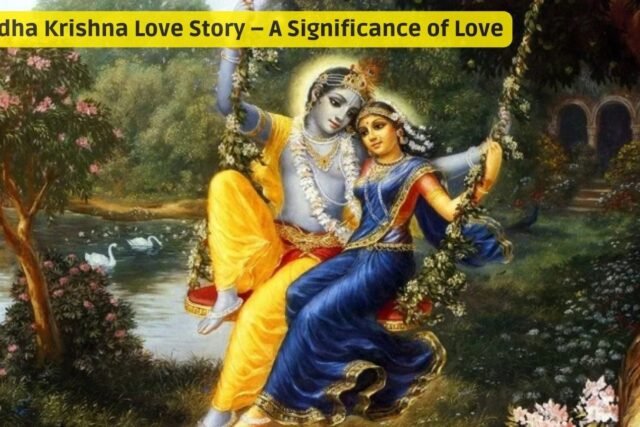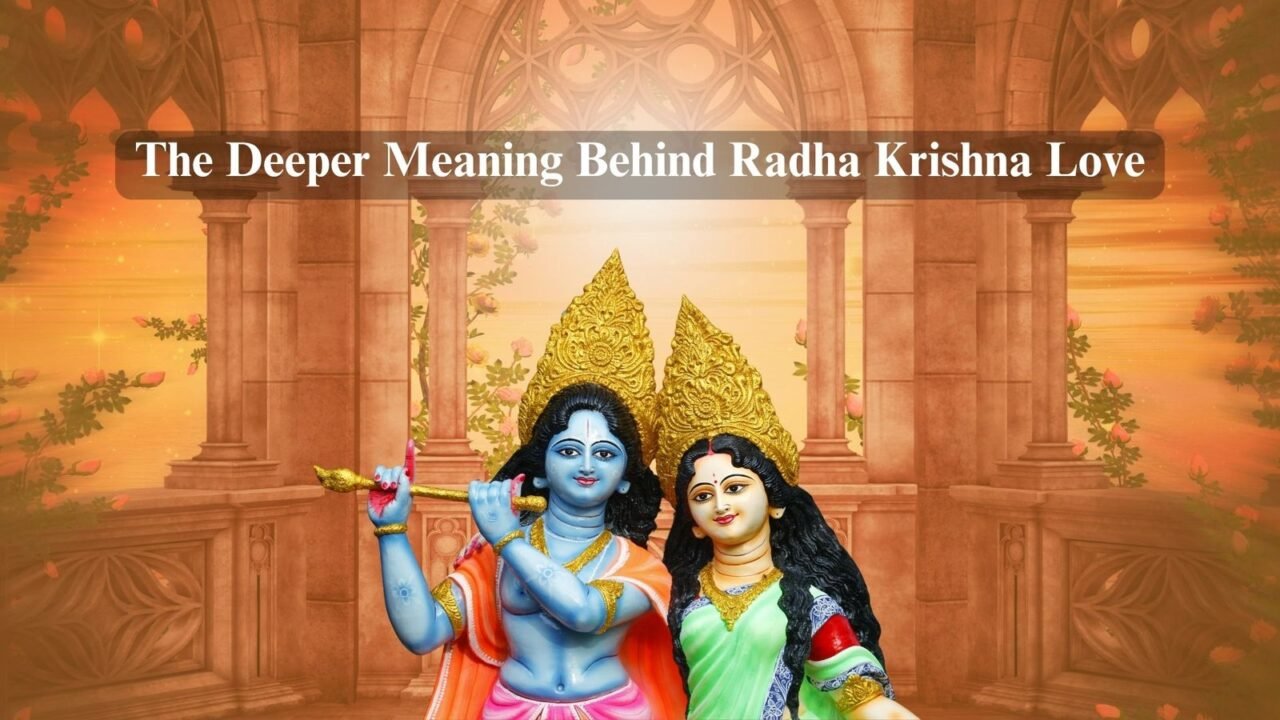
What Radha and Krishna’s love means in Hindu devotional philosophy — the soul and the divine, Radha as Krishna’s own energy, the five moods of bhakti, and why separation is considered love’s highest form. For the story itself, see our Radha Krishna love story.
In the Bhakti traditions, the love of Radha and Krishna is not read as a romance between two individuals but as a teaching about the relationship between the soul and God. Whole schools of Vaishnava theology have been built on it. This page explains the main ideas.
What Do Radha and Krishna Symbolise?
- Radha represents the devoted soul (jivatma) in its purest longing for God.
- Krishna represents the Supreme (Paramatma), the object of that longing.
Their love is therefore a metaphor for the soul’s journey towards union with the divine. Radha’s love asks nothing in return, which is why it is held up as the model of prema, pure love of God.
What Is Radha’s Place in Gaudiya Vaishnava Theology?
In the Gaudiya Vaishnava tradition founded by Chaitanya Mahaprabhu (1486–1534) in Bengal, Radha is far more than Krishna’s beloved. She is his hladini shakti — his own energy of bliss — so that Radha and Krishna are ultimately one reality appearing as two in order to enjoy love. Her love is called mahabhava, the highest possible state of devotion.
Gaudiya followers regard Chaitanya himself as Radha and Krishna combined in a single form: Krishna appearing in order to experience Radha’s love for himself.
Which Traditions Worship Radha and Krishna Together?
Several Vaishnava traditions place the divine couple at the centre of worship. The Nimbarka sampradaya is among the earliest to worship Radha and Krishna together. The Radhavallabha sampradaya, founded in Vrindavan by Hit Harivansh in the 16th century, gives Radha the highest place of all. The Gaudiya tradition of Chaitanya, from which ISKCON descends, spread the worship of Radha-Krishna worldwide. Literary roots lie in Jayadeva’s 12th-century Gita Govinda.
What Are the Five Moods of Devotion?

Gaudiya theologians, following Rupa Goswami, describe five principal bhavas, or moods, in which a devotee may love God:
- Shanta — peaceful reverence
- Dasya — the love of a servant, as Hanuman for Rama
- Sakhya — the love of a friend, as the cowherd boys for Krishna
- Vatsalya — parental love, as Yashoda for the child Krishna
- Madhurya — the love of the beloved, as Radha and the gopis for Krishna
Madhurya bhava, embodied by Radha, is regarded as the most intimate and complete, because it contains all the others.
Why Is Separation Considered the Highest Form of Love?
Krishna left Vrindavan for Mathura to fulfil his duty, and Radha remained behind. Devotional poetry gives this separation a name — viraha — and treats it not as tragedy but as love’s most intense expression. In separation, the beloved fills every thought. Chaitanya Mahaprabhu is described as spending his last years absorbed in the mood of Radha’s viraha. The teaching is that longing for God is itself a form of union.
What Can Modern Relationships Learn from Radha and Krishna?
1. Love Should Be Selfless
Radha’s love seeks the beloved’s happiness, not her own — a model of love as giving rather than possessing.
2. Let Go of Expectations
Love without conditions is steadier than love that keeps accounts.
3. Connection Matters More Than Proximity
Radha’s love outlasted Krishna’s departure, showing that inner connection survives distance.
4. Respect Each Other’s Purpose
Krishna left to fulfil his dharma; love need not stand in the way of another’s calling.
5. Love Brings Peace
Love rooted in trust rather than fear brings peace rather than anxiety.
How Is Radha-Krishna Love Expressed in Devotion?

Devotees express this love through kirtan and japa of names such as Radhe Radhe and the Hare Krishna mahamantra, through bhajans, pilgrimage to Vrindavan and Barsana, and festivals such as Janmashtami and Radhashtami. See also our pages on Krishna and Radha and Krishna shlokas and mantras. In the Bhagavad Gita, Krishna himself teaches that loving devotion, bhakti, is the surest path to him.
Conclusion
For the Bhakti traditions, Radha-Krishna love is a map of the soul’s relationship with God: selfless, unconditional, and deepened rather than diminished by separation. As hladini shakti, madhurya bhava and viraha, it describes the highest reaches of devotion — and, for ordinary relationships, a model of love as giving rather than possessing. 🙏
Watch the divine meaning of Radha Krishna Love unfold in this beautiful story:
If you enjoy meaningful love stories, don’t miss this True Love Story article that highlights the power of unconditional love.
Frequently Asked Questions
What is the spiritual meaning of Radha Krishna love?
In Hindu devotional philosophy, Radha Krishna love symbolises the relationship between the soul and God: Radha represents the devoted soul, or jivatma, and Krishna the Supreme, or Paramatma. Radha’s love, which asks nothing in return, is held up as the model of prema, the purest love of God.
What is hladini shakti?
Hladini shakti is a Gaudiya Vaishnava term meaning Krishna’s energy of bliss, and in that tradition Radha is understood as its personification. Radha and Krishna are therefore considered one reality appearing as two, so that divine love can be enjoyed, and Radha’s love is called mahabhava, the highest state of devotion.
What is madhurya bhava?
Madhurya bhava is the mood of loving God as one’s beloved, embodied by Radha and the gopis of Vrindavan. Gaudiya theologians following Rupa Goswami list it as the fifth and highest of the five principal devotional moods, after shanta, dasya, sakhya and vatsalya, because it contains all the others.
What are the five bhavas of devotion?
The five principal bhavas, or moods of devotion, described in Gaudiya Vaishnava theology are shanta, peaceful reverence; dasya, the love of a servant; sakhya, the love of a friend; vatsalya, parental love, as Yashoda’s for Krishna; and madhurya, the love of the beloved, as Radha’s for Krishna.
Why is separation important in Radha Krishna love?
Separation, called viraha, is considered the most intense expression of love in devotional poetry, because in the beloved’s absence the beloved fills every thought. After Krishna left Vrindavan for Mathura, Radha’s love continued undiminished, and Chaitanya Mahaprabhu is described as spending his last years absorbed in her mood of viraha.
Which traditions worship Radha and Krishna together?
Radha and Krishna are worshipped together above all in the Nimbarka sampradaya, among the earliest to do so; the Radhavallabha sampradaya founded in Vrindavan by Hit Harivansh in the 16th century; and the Gaudiya Vaishnava tradition of Chaitanya Mahaprabhu, from which ISKCON descends.
Did Radha and Krishna marry?
In most traditions Radha and Krishna did not marry, and their love is understood as spiritual rather than worldly; Krishna’s wives in the Puranas include Rukmini and Satyabhama. Some texts, such as the Brahma Vaivarta Purana, describe a divine marriage between them, so accounts differ between traditions.
What can modern relationships learn from Radha and Krishna?
Radha and Krishna’s love offers a model of love as giving rather than possessing: selfless, free of conditions, able to survive distance, respectful of each other’s purpose, and rooted in trust rather than fear. Devotees see in it an ideal that can make ordinary relationships steadier and more generous.