Shri Hanuman: Life, Powers and Teachings of Anjaneya Bajrang Bali
Who Is Hanuman Ji?
Lord Hanuman, also known as Anjaneya, is one of the most revered deities in Hinduism. His unwavering devotion to Lord Rama, immense strength, courage and selfless service make him a central figure in the Ramayana. Also called Bajrang Bali and Sankat Mochan, he symbolises devotion, strength and the triumph of good over evil.
His deeds are recorded principally in the Valmiki Ramayana, where the Sundara Kanda is devoted largely to him, and retold in Tulsidas’s Ramcharitmanas (16th century).
What Are the Powers and Attributes of Hanuman Ji?
- Devotion. Hanuman Ji is the ultimate symbol of devotion. His service to Lord Rama and Sita is a true example of dedication, and reciting the Hanuman Chalisa remains the most common way devotees express it.
- Strength and valour. His heroism in the Ramayana — the leap across the ocean to Lanka, and carrying an entire mountain so that the Sanjeevani herb growing on it could be found — demonstrates extraordinary power.
- Wisdom and intelligence. Known for physical strength, he is equally famous for wisdom. Many scriptures describe him as a scholar and an expert in the Vedas.
- Protection. He is regarded as a protector from evil forces, illness and obstacles. Devotees recite the Hanuman Chalisa seeking courage and protection.
What Are the Key Events in Hanuman Ji’s Life?
- Birth and childhood. Born to Anjana and Kesari with the blessings of Vayu, Hanuman showed signs of his divine nature and strength from a young age.
- Meeting Lord Rama. His first encounter with Rama and Lakshmana marks the beginning of his unwavering service and devotion.
- Journey to Lanka. His leap across the ocean to find Sita, the burning of Lanka and his confrontation with Ravana are among his most celebrated deeds. (Valmiki Ramayana, Sundara Kanda.)
- The Sanjeevani. Sent to fetch the Sanjeevani herb to revive Lakshmana and unable to identify it, Hanuman lifted the whole mountain on which it grew and carried it back — a testament to his dedication and resourcefulness. The mountain is named Gandhamadana or Dronagiri depending on the recension. (Valmiki Ramayana, Yuddha Kanda.)
How Do Devotees Worship Hanuman Ji?
- Hanuman Chalisa. Composed by Tulsidas in the 16th century in Awadhi, its forty chaupais, opened by two dohas and closed by one, praise Hanuman Ji’s virtues and deeds. It is recited in Hindi, English, Bengali, Kannada, Telugu and Gujarati among other languages.
- Hanuman Aarti. Sung during pujas and ceremonies, the aarti expresses devotion towards Hanuman Ji. Many devotees recite the Chalisa and the aarti together.
- Tuesdays and Saturdays. These days are considered auspicious for worshipping Hanuman Ji, when devotees recite the Chalisa, the aarti and other hymns.
Which Are the Most Famous Hanuman Temples in India?
What Are the Famous Stories and Legends About Hanuman Ji?
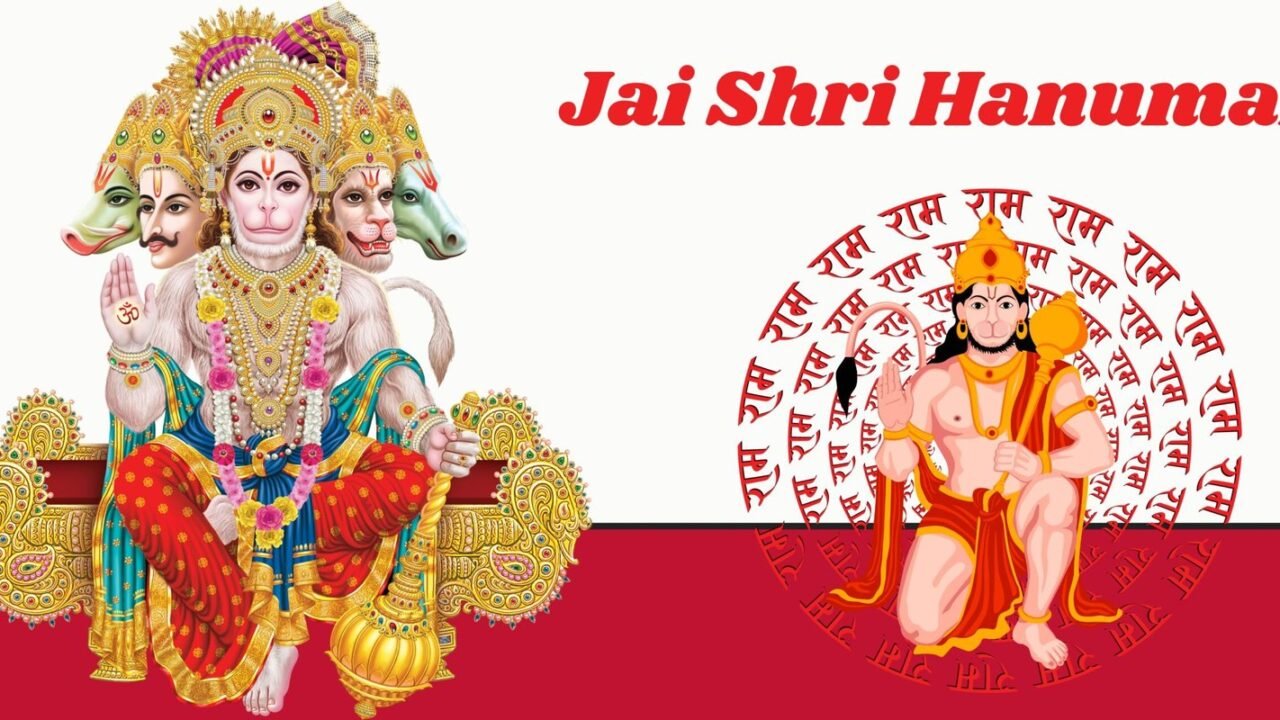
Panchmukhi Hanuman
The five-faced form of Hanuman, representing his ability to vanquish different kinds of evil forces. Devotees often recite the Panchmukhi Hanuman Kavach for protection.
Hanuman and Shani Dev
The story of how Hanuman rescued Shani Dev from Ravana’s captivity, after which Shani Dev blessed Hanuman and his devotees.
Which Hanuman Chalisa, Aarti and Mantras Can You Recite?
- Hanuman Aartis. Devotional praise sung during puja, above all Aarti Kije Hanuman Lala Ki.
- Hanuman Chalisa. Read the complete Hanuman Chalisa with meaning; it is also available in Hindi, Bengali, Kannada, Telugu and Gujarati among other languages.
- Stotras and mantras. Including Hanuman shlokas and the Anjaneya Chalisa, recited for protection and guidance.
- Books and recordings. Works on the life, teachings and stories of Hanuman Ji, including audio and video recitations.
The life and teachings of Hanuman Ji inspire millions with devotion, courage and selfless living. Through the Chalisa, the mantras, the aarti and other devotional practices, worship of Hanuman nurtures faith and sets an example of determination and perseverance.
Sources
- Valmiki Ramayana — Sundara Kanda (the journey to Lanka and the meeting with Sita) and Yuddha Kanda (the Sanjeevani episode).
- Ramcharitmanas — Tulsidas, 16th century, in Awadhi. The retelling through which most of North India knows these episodes.
- Hanuman Chalisa — Tulsidas. Forty chaupais, opened by two dohas and closed by one.
- The association of the Sankat Mochan temple at Varanasi with Tulsidas is traditional.
- The Panchmukhi form and the Shani Dev episode come from later Puranic and regional traditions rather than the Valmiki Ramayana, and details vary between tellings.
Frequently Asked Questions About Hanuman Ji
-
Who is Shri Hanuman?
Shri Hanuman is a Hindu deity revered as the devoted servant of Lord Rama and a central hero of the Ramayana; the Sundara Kanda of the Valmiki Ramayana is devoted largely to his journey to Lanka. He is also known as Anjaneya, Bajrang Bali, Pavanputra, Maruti and Sankat Mochan.
-
Why is he called Hanuman?
The name Hanuman is traditionally explained as coming from hanu, meaning jaw, because Indra struck the infant Hanuman on the jaw with his thunderbolt when he leapt towards the sun, mistaking it for a ripe fruit. In the same story the gods then blessed him with great strength and protection from harm.
-
Why is Hanuman called Anjaneya?
Hanuman is called Anjaneya because he is the son of Anjana; the name is formed from Anjana with a Sanskrit suffix meaning son of. It is the name most widely used in South India, where he is worshipped in many temples as Anjaneya Swamy.
-
Why is Hanuman called Bajrang Bali?
Bajrang Bali comes from vajra-anga, meaning one whose body is as hard as a thunderbolt (vajra), combined with bali, meaning strong. The name reflects the tradition that the gods made Hanuman’s body indestructible, and it is especially popular in North India.
-
Which scriptures tell the story of Hanuman?
The principal source for Hanuman is the Valmiki Ramayana, especially the Sundara Kanda, which narrates his leap to Lanka and meeting with Sita, and the Yuddha Kanda, which includes the Sanjeevani episode. Tulsidas’s 16th-century Ramcharitmanas and Hanuman Chalisa are the best-known later devotional works about him.
-
What is the Hanuman Chalisa?
The Hanuman Chalisa is a devotional hymn of 40 chaupais, opened by two dohas and closed by one, composed by Tulsidas in Awadhi in the 16th century. Devotees traditionally recite it on Tuesdays and Saturdays for courage and protection, and it is among the most widely recited Hindu prayers.
-
What powers does Hanuman have?
In Hindu tradition Hanuman is credited with immense strength, the power to leap vast distances and fly, and the ability to change size at will, becoming tiny to enter Lanka and enormous to burn it. He is equally revered for humility, learning and devotion, and is counted among the chiranjivi, the immortals.
-
What are the key events of Hanuman’s life?
The key events of Hanuman’s life include his birth to Anjana and Kesari with the blessing of Vayu, his meeting with Rama and Lakshmana, his leap across the ocean to find Sita in Lanka, the burning of Lanka, and carrying the mountain bearing the Sanjeevani herb that revived Lakshmana.
-
When is Hanuman Jayanti celebrated?
Hanuman Jayanti, the festival of Hanuman’s birth, is celebrated in most of North India on the full moon (Purnima) of the month of Chaitra, usually in March or April. Some regions keep other dates: Tamil Nadu observes it in the month of Margazhi, and Andhra Pradesh and Telangana in Vaishakha.
-
What lessons does Hanuman’s life teach?
Hanuman’s life is read as a model of selfless service, loyalty and courage, and of great strength placed in the service of a higher purpose. Devotees draw from his story the lesson that devotion and humility make great deeds possible, since he credits every feat to Rama rather than to himself.