
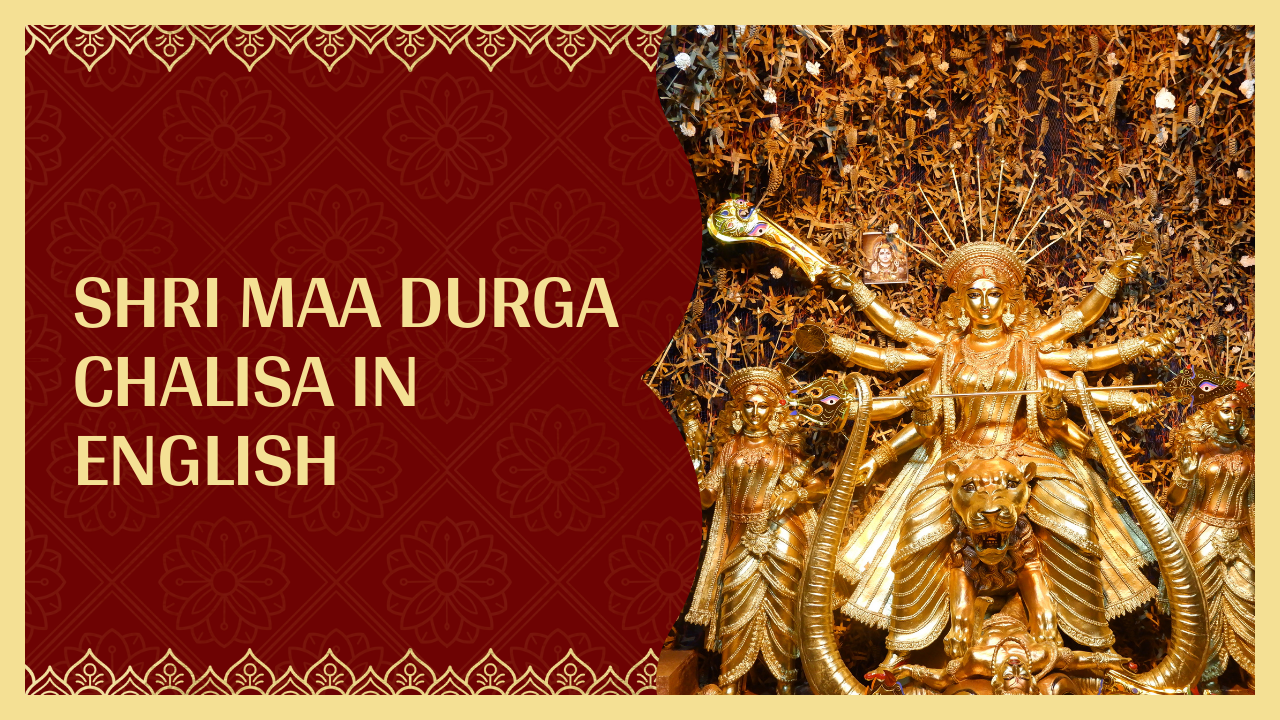
Durga Maa Chalisa is a 40-verse devotional hymn dedicated to Goddess Durga, praising her strength, wisdom and divine forms. Devotees recite it for peace of mind, protection and courage, and it is most commonly chanted during Navratri and Durga Puja. Shardiya Navratri 2026 runs from Sunday, 11 October to Vijayadashami on Tuesday, 20 October.
The Maa Durga Chalisa is a devotional hymn dedicated to Goddess Durga, composed in Awadhi and attributed in its closing verse to a poet named Devidas. Devotees describe many benefits from reciting it regularly; these come from devotional tradition rather than scientific claims:
What Are the Benefits of Reading the Durga Chalisa?
1. Divine Protection
- Reciting the Durga Maa Chalisa is believed to invoke the blessings of Goddess Durga, who protects devotees from negative energies and unforeseen dangers.
2. Strength and Courage
- Durga represents power and strength. Devotees find that chanting the Chalisa builds inner strength and resilience to face life’s challenges.
3. Spiritual Growth
- It deepens one’s connection with the divine and supports inner peace.
4. Removal of Obstacles
- Reciting the Chalisa is said to remove obstacles from one’s path in personal and professional life.
5. Peace of Mind
- Many devotees find that regular chanting brings calm and clarity.
6. A Sense of Well-being
- Many devotees find that regular recitation supports a calmer, more settled state of mind. This is a traditional belief and is not a substitute for medical care.
7. Harmonious Relationships
- It is said to bring harmony to family and social relationships.
8. Fulfilment of Desires
- Devotees believe that sincere recitation helps fulfil righteous desires and aspirations.
9. Blessings for Prosperity
- Chanting the Chalisa with devotion is thought to attract abundance, as verse 27 itself promises.
10. Support in Difficult Times
- In times of distress, fear or uncertainty, devotees turn to the Chalisa for comfort and a sense of divine protection.
Many devotees recite the Durga Chalisa together with the Durga Aarti, especially through the nine nights of Navratri. For the longer Sanskrit text, see the Durga Saptashati.
Durga Maa Chalisa in English | Durga Chalisa Lyrics English | Durga Maa Chalisa Hinglish | Durga Chalisa Song Lyrics in English
Namo Namo Durge Sukh Karni,
Namo Namo Ambe Dukh Harni. || 1 ||
Nirankar Hai Jyoti Tumhari,
Tihu Lok Phaili Ujiyaari. || 2 ||
Shashi Lalaat Mukh Maha-Vishala,
Netra Laal Bhrikuti Vikrala. || 3 ||
Roop Maatu Ko Adhik Suhaave,
Darsh Karat Jan Ati Sukh Paave. || 4 ||
Tum Sansar Shakti Lay Kina,
Paalan Hetu Anna Dhan Deena. || 5 ||
Annapurna Huyi Jag Paala,
Tum Hi Aadi Sundari Baala. || 6 ||
Pralaykaal Sab Naashan Haari,
Tum Gauri Shiv Shankar Pyaari. || 7 ||
Shiv Yogi Tumhare Gun Gaaven,
Brahma Vishnu Tumhen Nit Dhyaven. || 8 ||
Roop Saraswati Ka Tum Dhaara,
De Subuddhi Rishi Munin Ubaara. || 9 ||
Dhara Roop Narasinh Ko Amba,
Pargat Bhayi Fad Ke Khamba. || 10 ||
Raksha Kar Prahlaad Bachaayo,
Hiranyakash Ko Swarg Pachaayo. || 11 ||
Lakshmi Roop Dharo Jag Maahin,
Shree Narayan Ang Samaahin. || 12 ||
Ksheer Sindhu Mein Karat Vilaasa,
Daya Sindhu Deeje Man Aasa. || 13 ||
Hinglaaj Mein Tumhi Bhawani,
Mahima Amit Na Jaata Bakhaani. || 14 ||
Matangi Dhoomavati Maata,
Bhuvaneshwari Bagla Sukhdaata. || 15 ||
Shree Bhairav Taara Jag Taarini,
Chhinna Bhala Bhav Dukh Nivaarini. || 16 ||
Kehri Vaahan Soh Bhawani,
Langur Veer Chalat Agvaani. || 17 ||
Kar Mein Khappar Khadg Viraaje,
Jaako Dekh Kaal Dar Bhaaje. || 18 ||
Tohe Kar Mein Astra Trishoola,
Jaate Uthat Shatru Hiy Shoola. || 19 ||
Nagarkoti Mein Tumhi Viraajat,
Tihu Lok Mein Danka Baajat. || 20 ||
Shumbh Nishumbh Daanav Tum Maare,
Raktabeej Shankhan Sanhaare. || 21 ||
Mahishasur Nrip Ati Abhimaani,
Jahi Agh Bhar Mahi Akulaani. || 22 ||
Roop Kraal Kaalika Dhaara,
Sen Sahit Tum Tihi Sanhaara. || 23 ||
Padi Bheedh Santan Par Jab Jab,
Bhayi Sahaay Maatu Tum Tab Tab. || 24 ||
Amarpuri Aru Baasav Loka,
Tab Mahima Sab Kahein Ashoka. || 25 ||
Jwaala Mein Hai Jyoti Tumhari,
Tumhen Sadaa Poojen Nar Naari. || 26 ||
Prem Bhakti Se Jo Yash Gaaven,
Dukh Daaridr Nikat Nahin Aaven. || 27 ||
Dhyaave Tumhen Jo Nar Man Laayi,
Janm Maran Te Saun Chhut Jaayi. || 28 ||
Yogi Sur Muni Kahat Pukaari,
Yog Na Hoy Bin Shakti Tumhari. || 29 ||
Shankar Aachaaraj Tap Kino,
Kaam Aru Krodh Jeet Sab Leeno. || 30 ||
Nishidin Dhyaan Daro Shankar Ko,
Kaahu Kaal Nahin Sumiro Tumko. || 31 ||
Shakti Roop Ko Maram Na Paayo,
Shakti Gayi Tab Man Pachtayo. || 32 ||
Sharanagat Huyi Keerti Bakhaani,
Jai Jai Jai Jagadamb Bhawani. || 33 ||
Bhayi Prasann Aadi Jagadamba,
Dayi Shakti Nahin Kin Vilamba. || 34 ||
Moko Maatu Kasht Ati Ghero,
Tum Bin Kaun Harai Dukh Mero. || 35 ||
Aasha Trishna Nipat Sataaven,
Ripu Moorakh Mohi Ati Dar Paave. || 36 ||
Shatru Naash Keejai Maharaani,
Sumiron Ikchit Tumhen Bhawani. || 37 ||
Karo Kripa He Maatu Dayaala,
Riddhi-Siddhi De Karahu Nihaala. || 38 ||
Jab Lagi Jiyu Daya Phal Paawu,
Tumharo Yash Main Sadaa Sunaawu. || 39 ||
Durga Chalisa Jo Gaavai,
Sab Sukh Bhog Param Pad Paavai. || 40 ||
Devidas Sharan Nij Jaani,
Karahu Kripa Jagadamb Bhawani.
॥ Iti Shri Durga Chalisa Sampurn ॥
Durga Chalisa in English with its Meaning | English Durga Chalisa
Durga Maa Chalisa with Meanings
Namo Namo Durge Sukh Karni,
Namo Namo Ambe Dukh Harni. (1)
I bow to Goddess Durga, the giver of happiness, and to Goddess Ambe, the remover of sorrow.
Nirankar Hai Jyoti Tumhari,
Tihu Lok Phaili Ujiyaari. (2)
Your light is formless, and its brightness spreads across all three worlds.
Shashi Lalaat Mukh Maha-Vishala,
Netra Laal Bhrikuti Vikrala. (3)
Your forehead shines like the moon and your face is vast; your eyes are red and your brows fearsome.
Roop Maatu Ko Adhik Suhaave,
Darsh Karat Jan Ati Sukh Paave. (4)
Mother, your form is exceedingly beautiful, and those who behold it gain immense happiness.
Tum Sansar Shakti Lay Kina,
Paalan Hetu Anna Dhan Deena. (5)
You are the energy of the world, giving food and wealth for its sustenance.
Annapurna Huyi Jag Paala,
Tum Hi Aadi Sundari Baala. (6)
As Annapurna you nourish the world, and you are the primordial beautiful one.
Pralaykaal Sab Naashan Haari,
Tum Gauri Shiv Shankar Pyaari. (7)
At the time of dissolution you destroy all; you are Gauri, beloved of Shiva.
Shiv Yogi Tumhare Gun Gaaven,
Brahma Vishnu Tumhen Nit Dhyaven. (8)
Shiva and the yogis sing your praises; Brahma and Vishnu meditate on you constantly.
Roop Saraswati Ka Tum Dhaara,
De Subuddhi Rishi Munin Ubaara. (9)
You took the form of Saraswati and delivered the sages by granting them wisdom.
Dhara Roop Narasinh Ko Amba,
Pargat Bhayi Fad Ke Khamba. (10)
Mother Amba, you took the form of Narasimha and appeared by splitting open the pillar.
Raksha Kar Prahlaad Bachaayo,
Hiranyakash Ko Swarg Pachaayo. (11)
You protected and saved Prahlad, and destroyed Hiranyakashipu.
Lakshmi Roop Dharo Jag Maahin,
Shree Narayan Ang Samaahin. (12)
You take the form of Lakshmi in the world and are united with Shri Narayan.
Ksheer Sindhu Mein Karat Vilaasa,
Daya Sindhu Deeje Man Aasa. (13)
You dwell in the ocean of milk; ocean of mercy, grant the hopes of my heart.
Hinglaaj Mein Tumhi Bhawani,
Mahima Amit Na Jaata Bakhaani. (14)
At Hinglaj you are Bhavani; your boundless glory cannot be fully described.
Matangi Dhoomavati Maata,
Bhuvaneshwari Bagla Sukhdaata. (15)
You are Matangi and Mother Dhumavati; you are Bhuvaneshwari and Bagalamukhi, the giver of joy.
Shree Bhairav Taara Jag Taarini,
Chhinna Bhala Bhav Dukh Nivaarini. (16)
You are Bhairavi and Tara, deliverer of the world; as Chhinnamasta you remove the sorrows of existence.
Kehri Vaahan Soh Bhawani,
Langur Veer Chalat Agvaani. (17)
Bhavani, you are resplendent upon your lion, and the brave Langur goes before you.
Kar Mein Khappar Khadg Viraaje,
Jaako Dekh Kaal Dar Bhaaje. (18)
In your hands shine the skull-bowl and the sword; seeing them, even Death flees in fear.
Tohe Kar Mein Astra Trishoola,
Jaate Uthat Shatru Hiy Shoola. (19)
In your hand is the trident, at the sight of which anguish rises in the hearts of your enemies.
Nagarkoti Mein Tumhi Viraajat,
Tihu Lok Mein Danka Baajat. (20)
You are enthroned at Nagarkot, and your drum of victory sounds through all three worlds.
Shumbh Nishumbh Daanav Tum Maare,
Raktabeej Shankhan Sanhaare. (21)
You slew the demons Shumbha and Nishumbha, and destroyed Raktabija.
Mahishasur Nrip Ati Abhimaani,
Jahi Agh Bhar Mahi Akulaani. (22)
Mahishasura was a king of great arrogance, under whose weight of sin the earth was in torment.
Roop Kraal Kaalika Dhaara,
Sen Sahit Tum Tihi Sanhaara. (23)
You took the terrible form of Kalika and destroyed him together with his army.
Padi Bheedh Santan Par Jab Jab,
Bhayi Sahaay Maatu Tum Tab Tab. (24)
Whenever hardship has fallen upon the devout, Mother, you have come to their aid.
Amarpuri Aru Baasav Loka,
Tab Mahima Sab Kahein Ashoka. (25)
In the city of the immortals and in Indra’s realm, all recount your glory, freed from sorrow.
Jwaala Mein Hai Jyoti Tumhari,
Tumhen Sadaa Poojen Nar Naari. (26)
At Jwalamukhi your flame burns, and men and women worship you there always.
Prem Bhakti Se Jo Yash Gaaven,
Dukh Daaridr Nikat Nahin Aaven. (27)
Those who sing your glory with love and devotion are not approached by sorrow or poverty.
Dhyaave Tumhen Jo Nar Man Laayi,
Janm Maran Te Saun Chhut Jaayi. (28)
Whoever meditates on you wholeheartedly is released from the cycle of birth and death.
Yogi Sur Muni Kahat Pukaari,
Yog Na Hoy Bin Shakti Tumhari. (29)
Yogis, gods and sages declare aloud that there is no attainment in yoga without your power.
Shankar Aachaaraj Tap Kino,
Kaam Aru Krodh Jeet Sab Leeno. (30)
Shankaracharya performed austerities and conquered desire and anger entirely.
Nishidin Dhyaan Daro Shankar Ko,
Kaahu Kaal Nahin Sumiro Tumko. (31)
Day and night he meditated on Shankara, but never once did he remember you.
Shakti Roop Ko Maram Na Paayo,
Shakti Gayi Tab Man Pachtayo. (32)
He did not grasp the secret of your form as Shakti; when his power departed, he repented.
Sharanagat Huyi Keerti Bakhaani,
Jai Jai Jai Jagadamb Bhawani. (33)
Taking refuge in you, he sang your praises: victory, victory, victory to Jagadamba Bhavani.
Bhayi Prasann Aadi Jagadamba,
Dayi Shakti Nahin Kin Vilamba. (34)
The primordial Jagadamba was pleased and granted him power without delay.
Moko Maatu Kasht Ati Ghero,
Tum Bin Kaun Harai Dukh Mero. (35)
Mother, great troubles surround me; apart from you, who will take away my sorrow?
Aasha Trishna Nipat Sataaven,
Ripu Moorakh Mohi Ati Dar Paave. (36)
Hope and craving torment me utterly, and foolish adversaries fill me with fear.
Shatru Naash Keejai Maharaani,
Sumiron Ikchit Tumhen Bhawani. (37)
O Queen, destroy my enemies; with a single-pointed mind I remember you, Bhavani.
Karo Kripa He Maatu Dayaala,
Riddhi-Siddhi De Karahu Nihaala. (38)
Show mercy, compassionate Mother; grant prosperity and attainment, and make me content.
Jab Lagi Jiyu Daya Phal Paawu,
Tumharo Yash Main Sadaa Sunaawu. (39)
As long as I live, may I receive the fruit of your grace and always proclaim your glory.
Durga Chalisa Jo Gaavai,
Sab Sukh Bhog Param Pad Paavai. (40)
Whoever sings the Durga Chalisa enjoys every happiness and attains the highest state.
Devidas Sharan Nij Jaani,
Karahu Kripa Jagadamb Bhawani.
Knowing Devidas to be in your refuge, show your mercy, O Jagadamba Bhavani.
॥ Iti Shri Durga Chalisa Sampurn ॥
This Chalisa glorifies the many aspects of Goddess Durga as creator, protector and destroyer of evil. Devotees recite it seeking her blessings for strength, prosperity and protection.
Notes on the Text
- Language. The Chalisa is composed in Awadhi with Sanskrit vocabulary, in the forty-verse chalisa form.
- Authorship. The closing verse names Devidas, following the convention by which a poet signs the final line. Nothing further about him is established, and the date of composition is not known.
- Verses 30–34 form a single narrative episode about Shankaracharya, who meditated on Shiva alone, lost his power, and regained it on turning to the Devi. They should be read together rather than as separate instructions.
- Place names. Hinglaj (Balochistan), Nagarkot (Kangra) and Jwalamukhi (Himachal Pradesh) are Shakta pilgrimage sites named in verses 14, 20 and 26.
- Demons named — Mahishasura, Shumbha, Nishumbha and Raktabija — come from the Devi Mahatmya, which forms chapters 81–93 of the Markandeya Purana. The Narasimha and Prahlad episode in verses 10–11 is from the Bhagavata Purana.
- English renderings here are explanatory rather than literal, and are the site’s own.
Watch Durga Chalisa in English | Listen & Watch Durga Chalisa in English
Devi Durga Maa Video Gallery | दुर्गा माँ की आरतियाँ, मंत्र, चालीसा और भजन वीडियो
[youtube-feed feed=2]
Frequently Asked Questions
-
What is the Durga Chalisa?
The Durga Chalisa is a 40-verse devotional hymn to Goddess Durga, composed in Awadhi and signed in its closing verse by the poet Devidas. It praises her forms, including Saraswati, Lakshmi, Kali and the ten Mahavidyas, and recounts her victories over demons such as Mahishasura, Shumbha, Nishumbha and Raktabija.
-
Who composed the Durga Chalisa?
The Durga Chalisa is attributed to a poet named Devidas, who signs its closing verse: Devidas sharan nij jaani, karahu kripa Jagadamb Bhawani. This follows the Bhakti convention of a poet naming himself in the last line; nothing further about him is established, and the date of composition is not known.
-
When should the Durga Chalisa be recited?
The Durga Chalisa can be recited on any day, but it is most commonly recited during the nine nights of Navratri, during Durga Puja, and on Tuesdays and Fridays, considered auspicious for the goddess. Shardiya Navratri 2026 runs from Sunday, 11 October to Vijayadashami on Tuesday, 20 October.
-
Can the Durga Chalisa be recited daily?
Yes. The Durga Chalisa can be recited daily as part of morning or evening worship, and takes around ten minutes. Many devotees recite it once a day through Navratri, often followed by the Durga aarti Om Jai Ambe Gauri.
-
What are the benefits of reciting the Durga Chalisa?
Devotees traditionally recite the Durga Chalisa for protection, courage, peace of mind and prosperity, and its verse 27 promises that sorrow and poverty will not approach those who sing it with devotion. These are devotional beliefs drawn from faith rather than medical or scientific claims.
-
In which language is the Durga Chalisa written?
The Durga Chalisa is composed in Awadhi, an eastern Hindi dialect, with Sanskrit vocabulary throughout. It follows the chalisa form of forty chaupai verses, the same form as the Hanuman Chalisa by Tulsidas.
-
What is the Shankaracharya episode in verses 30 to 34?
Verses 30 to 34 of the Durga Chalisa recount an episode in which Shankaracharya meditated on Shiva alone and never remembered the Devi. When his power left him he repented, took refuge in her, and she restored it without delay, illustrating that no spiritual attainment is possible without Shakti.
-
Is the Durga Chalisa part of the Vedas or Puranas?
No. The Durga Chalisa is an independent devotional hymn, not part of the Vedas or Puranas, though the episodes it refers to come from Puranic sources: the Devi Mahatmya for Durga’s battles with demons and the Bhagavata Purana for Narasimha and Prahlad.
-
What is the difference between the Durga Chalisa and the Durga Saptashati?
The Durga Chalisa is a short 40-verse prayer in Awadhi, while the Durga Saptashati, or Devi Mahatmya, is a Sanskrit text of 700 verses in 13 chapters, forming chapters 81 to 93 of the Markandeya Purana. The Saptashati is often recited in full during Navratri.