The complete Durga aarti Om Jai Ambe Gauri with the meaning of every line, its traditional author, and when and how devotees sing it, especially during Navratri.
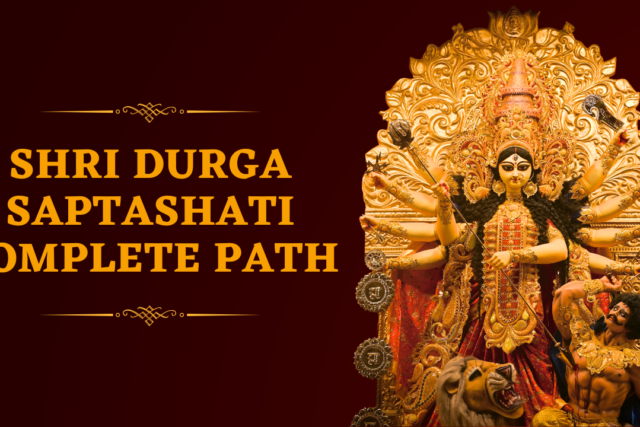
Om Jai Ambe Gauri is the most widely sung aarti of Goddess Durga. Its closing verse names Shivanand Swami, the same composer traditionally credited with the Shiva aarti Om Jai Shiv Omkara. The aarti praises Durga’s beauty and her victories over the demons described in the Durga Saptashati — Mahishasura, Shumbha and Nishumbha, Chanda and Munda, Raktabija, and Madhu and Kaitabha. Read more about Maa Durga.
Why Do Devotees Sing the Durga Aarti?
Devotees describe many benefits from the aarti. These come from devotional tradition and personal experience rather than scientific claims:
- Spiritual upliftment: The aarti deepens devotion and the sense of connection with the divine Mother.
- Protection: Devotees believe Durga, the destroyer of evil, protects them from negative forces.
- Strength and courage: Durga’s warrior aspect inspires devotees to face life’s challenges with resilience.
- Peace of mind: Many find the rhythm of the aarti calming.
- Emotional balance: Devotees look to Durga as a nurturing mother as well as a protector.
- Light over darkness: The aarti lamp symbolises the dispelling of ignorance.
- Prosperity: Devotees seek her blessings for abundance, as the aarti’s own verses describe.
- Community: Sung together in homes and pandals, the aarti strengthens shared devotion. Many also recite the Durga Chalisa alongside it, and temple resources offer further versions.
Durga Maa Aarti with Meaning
“ॐ जय अम्बे गौरी” — line-by-line meaning:
Jai Ambe Gauri, Maiya Jai Shyama Gauri.
Glory to Mother Ambe Gauri; glory to Mother Shyama Gauri.
Tumko Nishdin Dhyavat, Hari Brahma Shivri.
Vishnu, Brahma and Shiva meditate on you day and night.
Maang Sindoor Virajat, Teeko Mrigmad Ko.
Vermilion shines in the parting of your hair, and a mark of musk (mrigmad) graces your forehead.
Ujjwal Se Dou Naina, Chandravadan Neeko.
Your two eyes are radiant, and your face is lovely as the moon.
Kanak Samaan Kalewar, Raktambar Raajai.
Your body glows like gold, and you are dressed in red.
Raktapushp Gal Mala, Kanthan Par Saajai.
A garland of red flowers adorns your neck.
Keheri Vahan Rajat, Khadg Khappar Dhaari.
You ride the lion, holding a sword and a skull-bowl (khappar).
Sur-Nar-Munijan Sevat, Tinke Dukhhari.
Gods, humans and sages serve you, and you remove their sorrows.
Kanan Kundal Shobhit, Nasagre Moti.
Earrings adorn your ears, and a pearl graces your nose.
Kotik Chandra Divakar, Sam Rajat Jyoti.
Your radiance equals that of millions of moons and suns.
Shumbh-Nishumbh Bidare, Mahishasur Ghati.
You tore apart Shumbha and Nishumbha and slew Mahishasura.
Dhoomra Vilochan Naina, Nishdin Madmaati.
Your smoke-dark eyes are ever filled with divine rapture.
Chand-Mund Sanhare, Shonit Beej Hare.
You destroyed Chanda and Munda, and slew Raktabija — the demon whose every drop of blood (shonita) sprang up as a new demon.
Madhu-Kaitabh Dou Maare, Sur Bhayheen Kare.
You killed Madhu and Kaitabha and freed the gods from fear.
Brahmani, Rudrani, Tum Kamala Rani.
You are Brahmani, the power of Brahma; Rudrani, the power of Shiva; and Kamala, Lakshmi.
Agam Nigam Bakhani, Tum Shiv Patrani.
The scriptures proclaim your glory; you are the consort of Shiva.
Chaunsath Yogini Mangal Gaavat, Nritya Karat Bhairon.
The sixty-four yoginis sing auspicious songs, and Bhairava dances.
Bajat Taal Mridanga, Aru Bajat Damru.
Cymbals and mridanga drums play, and the damaru resounds.
Tum Hi Jag Ki Mata, Tum Hi Ho Bharta.
You are the Mother of the world, and you sustain it.
Bhaktan Ki Dukh Harta, Sukh Sampatti Karta.
You remove your devotees’ sorrows and grant them happiness and prosperity.
Bhuja Chaar Ati Shobhit, Khadg Khappar Dhaari.
Your four arms are resplendent, holding the sword and skull-bowl.
Manvaanchhit Phal Paavat, Sevat Nar Naari.
Men and women who serve you attain their heart’s desires.
Kanchan Thaal Virajat, Agar Kapoor Bati.
On a golden plate burn lamps of agarwood and camphor.
Shri Malketu Mein Rajat, Koti Ratan Jyoti.
You shine with the light of millions of jewels.
Shri Ambeji Ki Aarati, Jo Koi Nar Gaave. Kahat Shivanand Swami, Sukh-Sampatti Paave.
Whoever sings this aarti of Mother Ambe, says Shivanand Swami, attains happiness and prosperity.
Watch Durga Maa Aarti | Listen Durga Aarti | Durga Aarti with Lyrics By Anuradha Paudwal
Devi Durga Maa Video Gallery | दुर्गा माँ की आरतियाँ, मंत्र, चालीसा और भजन वीडियो
[youtube-feed feed=2]
Frequently Asked Questions About the Durga Aarti
-
What is the most famous Durga aarti?
The most famous Durga aarti is Om Jai Ambe Gauri, sung in homes, temples and Navratri pandals across North India. It praises Durga’s beauty and her victories over demons including Mahishasura, Shumbha and Nishumbha, Chanda and Munda, Raktabija, and Madhu and Kaitabha.
-
Who wrote Om Jai Ambe Gauri?
Om Jai Ambe Gauri is traditionally attributed to Shivanand Swami, who is named in its closing verse: Kahat Shivanand Swami, sukh-sampatti paave. The same composer is traditionally credited with the Shiva aarti Om Jai Shiv Omkara, though little is known of him historically.
-
Which demons are named in the Durga aarti?
The Durga aarti names the demons Durga defeated in the Devi Mahatmya, or Durga Saptashati: Mahishasura, the buffalo demon; Shumbha and Nishumbha; their generals Chanda and Munda; Raktabija, whose every drop of blood became a new demon; and Madhu and Kaitabha, slain at the beginning of creation.
-
When is the Durga aarti sung?
The Durga aarti is sung daily in the morning and evening in Durga temples and homes, and above all during the nine nights of Navratri and during Durga Puja. Tuesdays and Fridays are also considered especially auspicious days for worshipping the goddess.
-
Is the Durga aarti only sung during Navratri?
No. The Durga aarti can be sung on any day, and many families sing it every morning and evening. It is especially important during Navratri, when it is often sung after each day’s worship of one of the nine forms of Durga, the Navadurga.
-
What items are needed for the Durga aarti?
The Durga aarti needs a ghee lamp or camphor, incense, red flowers such as hibiscus, vermilion (sindoor), a red cloth or chunri, and prasad such as fruit, halwa or sweets. The lamp is waved in clockwise circles before the goddess while singing, with a bell.
-
Can the Durga aarti be performed at home?
Yes. The Durga aarti can be performed at home before a picture or idol of the goddess, after bathing and offering flowers and incense. No priest is required, and many families sing it together daily, especially through the nine nights of Navratri.
-
What are the benefits of the Durga aarti?
Devotees traditionally sing the Durga aarti for protection, courage, peace of mind and prosperity, seeking the blessings of the goddess who destroys evil. These are devotional benefits drawn from faith and tradition rather than medical or scientific claims.