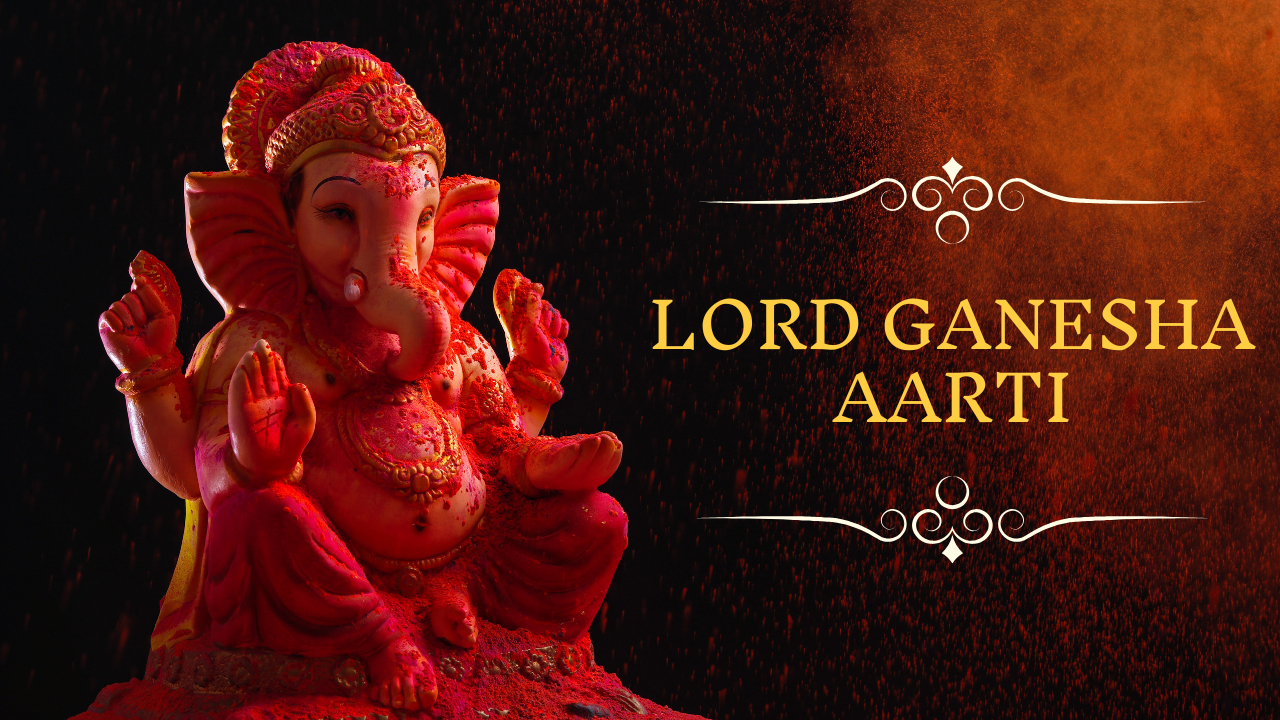
The complete lyrics of the Ganesha aarti Jai Ganesh Jai Ganesh Deva, with the meaning of every verse, who is traditionally credited with it, and how and when to perform it.
Jai Ganesh Jai Ganesh Deva is the most widely sung Hindi aarti of Lord Ganesha. Its closing verse contains the line “Soor Shyam sharan aaye” — “Soor Shyam” is the signature (chhap) of the 16th-century poet-saint Surdas, to whom the aarti is traditionally attributed. In Maharashtra, the best-known Ganesha aarti is a different one, the Marathi Sukhakarta Dukhaharta, attributed to Samarth Ramdas. Read more about the spiritual significance of Lord Ganesha.
Why Do Devotees Perform the Ganesha Aarti?
Devotees describe many benefits from the aarti. These come from devotional tradition and personal experience rather than scientific claims:
- Removal of obstacles: Ganesha is revered as Vighnaharta, the remover of obstacles, and devotees seek his help with difficulties.
- Wisdom: As the deity of wisdom, Ganesha is invoked for clear thinking and understanding.
- Auspicious beginnings: The aarti is sung before new ventures and at the start of festivals.
- Peace of mind: Many devotees find singing it calming at the start or end of the day.
- Deeper devotion: Regular aarti strengthens faith and the bond with Ganesha.
- A devotional atmosphere: Singing together fills the home with devotion and brings the family together.
- Prayers for family: The aarti’s own verses pray for sight for the blind, children for the childless and wealth for the poor, and devotees bring such prayers to Ganesha.
Ganpati Aarti | Ganesha Aarti | Shri Ganesh Aarti in English
Jai Ganesh Aarti lyrics in English
Jai Ganesh Jai Ganesh,
Jai Ganesh Deva.
Mata Jaki Parvati,
Pita Mahadeva.
Ek Dant Dayavant,
Char Bhujadhari.
Mathe Sindur Sohe,
Moose Ki Savari.
Jai Ganesh Jai Ganesh,
Jai Ganesh Deva.
Mata Jaki Parvati,
Pita Mahadeva.
Paan Chade Phal Chade,
Aur Chade Mewa.
Laddoon Ka Bhog Lage,
Sant Karen Seva.
Jai Ganesh Jai Ganesh,
Jai Ganesh Deva.
Mata Jaki Parvati,
Pita Mahadeva.
Andhan Ko Aankh Det,
Kodhin Ko Kaya.
Banjhan Ko Putra Det,
Nirdhan Ko Maya.
Jai Ganesh Jai Ganesh,
Jai Ganesh Deva.
Mata Jaki Parvati,
Pita Mahadeva.
‘Soor’ Shyam Sharan Aaye,
Safal Kije Seva.
Mata Jaki Parvati,
Pita Mahadeva.
Jai Ganesh Jai Ganesh,
Jai Ganesh Deva.
Mata Jaki Parvati,
Pita Mahadeva.
—– Additional —–
Deenan Ki Laj Rakho,
Shambhu Sutkari.
Kamna Ko Purn Karo,
Jaoon Balihari.
Jai Ganesh Jai Ganesh,
Jai Ganesh Deva.
Mata Jaki Parvati,
Pita Mahadeva.
Ganesh Aarti in English with Meaning
Jaya Ganesha Jaya Ganesha, Jaya Ganesha Deva. Mata Jaaki Parvati, Pita Mahadeva.
Meaning: Victory to Ganesha, victory to the Lord Ganesha, whose mother is Parvati and whose father is Mahadeva (Shiva).
Ek Dant Dayavant, Chaar Bhujā Dhāri. Mathe Sindoor Sohe, Moose Ki Sawaari.
Meaning: The one-tusked, compassionate Lord with four arms; vermilion adorns his forehead, and he rides a mouse.
Paan Chade Phal Chade, Aur Chade Meva. Ladduan Ka Bhog Lage, Sant Karen Seva.
Meaning: Betel leaves, fruits and dry fruits are offered to him; laddus are presented as bhog, and saints serve him.
Andhan Ko Aankh Det, Kodhin Ko Kaya. Banjhan Ko Putra Det, Nirdhan Ko Maya.
Meaning: He gives sight to the blind and a sound body to the afflicted; he blesses the childless with children and the poor with wealth.
‘Sur’ Shyam Sharan Aaye, Safal Kije Seva. Mata Jaaki Parvati, Pita Mahadeva.
Meaning: Soor Shyam — the poet Surdas — has come to your refuge; make his service fruitful. “Soor Shyam” is the poet’s signature, identifying him as the traditional author.
Additional Verse
Deenan Ki Laaj Rakho, Shambhu Sutkari. Kamna Ko Poorn Karo, Jaaoon Balihari.
Meaning: Protect the honour of the humble, O son of Shambhu (Shiva). Fulfil our wishes; I offer myself to you.
How Do You Perform the Ganesha Aarti?
- Bathe and wear clean clothes.
- Place an idol or picture of Ganesha on a clean altar; offer red flowers, durva grass and modak or laddus.
- Light a ghee lamp and incense, and chant Vakratunda Mahakaya or Om Gam Ganapataye Namah.
- Sing the aarti while waving the lamp in clockwise circles, ringing a bell.
- Pass your hands over the flame, touch your eyes, and distribute prasad.
Watch Ganesh Aarti | Listen Ganesh Aarti | Ganesh Aarti Lyrics By Anuradha Paudwal
Frequently Asked Questions About the Ganesha Aarti
-
What is the Ganesha Aarti?
The Ganesha Aarti, Jai Ganesh Jai Ganesh Deva, is the most widely sung Hindi aarti of Lord Ganesha, sung while waving a lamp before his image. It praises Ganesha as the son of Parvati and Mahadeva, one-tusked and four-armed, riding a mouse, and ends with a prayer for his grace.
-
Who wrote Jai Ganesh Jai Ganesh Deva?
Jai Ganesh Jai Ganesh Deva is traditionally attributed to Surdas, the 16th-century poet-saint of the Bhakti movement, because its closing verse contains his signature, Soor Shyam sharan aaye. As with many devotional songs, wording varies slightly between households and recordings.
-
What is the difference between Jai Ganesh Deva and Sukhakarta Dukhaharta?
Jai Ganesh Jai Ganesh Deva is a Hindi aarti traditionally attributed to Surdas and sung across North India, while Sukhakarta Dukhaharta is a Marathi aarti attributed to the 17th-century saint Samarth Ramdas and sung above all in Maharashtra, especially during Ganeshotsav. Both are sung in Ganesha worship.
-
When should the Ganesha Aarti be performed?
The Ganesha Aarti is traditionally performed in the morning and evening, and above all during the ten days of Ganesh Chaturthi. It is also sung on Sankashti Chaturthi, on Wednesdays, considered Ganesha’s day in North India, and on Tuesdays, when Ganesha temples in Maharashtra such as Siddhivinayak draw large crowds.
-
How is the Ganesha Aarti performed?
To perform the Ganesha Aarti, offer red flowers, durva grass and modak or laddus before an idol or picture of Ganesha, light a ghee lamp and incense, then sing the aarti while waving the lamp in clockwise circles and ringing a bell. Finally, pass your hands over the flame, touch your eyes and distribute prasad.
-
What is offered to Ganesha during the aarti?
Ganesha is traditionally offered modak or laddus, red flowers such as hibiscus, durva grass, betel leaves, fruits and dry fruits during the aarti, as the aarti itself describes. Durva grass and modak are considered especially dear to him.
-
What are the benefits of the Ganesha Aarti?
Devotees traditionally sing the Ganesha Aarti for the removal of obstacles, wisdom, auspicious beginnings and peace of mind, and many find that singing it together brings the family into shared devotion. These are devotional benefits drawn from faith and tradition rather than medical or scientific claims.
-
Can the Ganesha Aarti solve all problems?
No aarti is a guaranteed solution to every problem. Devotees sing the Ganesha Aarti seeking strength, clarity and the removal of obstacles, and many find it a source of comfort and confidence, but it is a devotional practice that supports effort, not a substitute for medical, financial or other practical help.