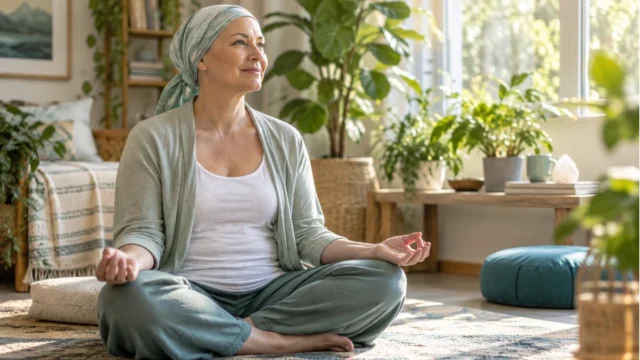


Mindful living means bringing full attention to the present moment — to your breath, your body, your emotions and what you are doing. This guide explains how it reduces stress and shares simple practices for everyday life.
Mindfulness is the practice of paying attention to the present moment, on purpose and without judgement. Mindful living extends that attention beyond formal meditation into eating, walking, working and talking with others. Like exercise for the body, it grows stronger with regular practice: ten minutes a day of meditation or mindful breathing is a good start, and even a ten-second pause to notice your breath helps.
How Does Mindfulness Reduce Stress?
Much stress comes not from the present moment itself but from replaying the past or worrying about the future. Mindfulness interrupts that cycle by bringing attention back to what is happening now. It also creates a pause between a stressful event and your reaction, so you can respond rather than react. Research supports this: a 2015 study by Atanes and colleagues found that higher mindfulness was associated with lower perceived stress among primary-care health professionals, and many trials of mindfulness programmes report reduced stress and anxiety.
How Do You Focus on the Present?
Being present means noticing your thoughts, feelings and surroundings as they are right now. For example, while eating something you love, the mind easily drifts to earlier events or tomorrow’s tasks. Mindfulness means noticing that drift and gently returning to the taste, texture and smell in front of you. Doing this through the day — while washing dishes, walking to work or drinking tea — builds calm and focus.
My Sleep Game-Changer: Kyore Nutrition Melatonin Sleep Gummies
I’ve been through 6 months of tossing & turning … until I tried Kyore Nutrition Melatonin Sleep Gummies. Now I fall asleep in just 15–20 minutes. No more staring at the ceiling, no more restless nights.
What’s Inside & Why It Helps
- Restfull Sleep: Each gummy is packed with 7mg of Melatonin, a hormone that regulates your sleep-wake cycle, helping you fall asleep faster and stay asleep longer.
- Enhanced Sleep Quality: L-Theanine, a natural amino acid, promotes relaxation without causing drowsiness, ensuring a peaceful night’s rest without any grogginess upon waking.
- 3. Wake Up Fresh: With all natural ingredients, Kyore Nutritions Melatonin Gummies enhances your sleep quality and helps to control your sleep wake cycle.


4. Stress Relief: an adaptogenic herb, works wonders in reducing stress and anxiety, allowing your body and mind to relax before bedtime.
5. Best Price: 30 gummies at just Rs. 399/-

6. 4.5 Star Ratings by more than 550 people
🚀 Try It Yourself
If you’re in the same boat — tired, stressed, unable to sleep — this might be the helping hand you need.
Disclaimer:
This review is purely based on my personal experience with the product. I am not making any medical claims, and results may vary for different individuals. Please consult a qualified healthcare professional before starting any new supplement.
How Can You Be Present With Your Emotions?
Awareness of emotions is the first step to managing them. When you feel anxious, try noticing where the tension sits in your body — the chest, the shoulders, the stomach. Some people find it helps to imagine the feeling as a colour or shape. Breathe slowly into that area and let it soften. Observing emotions without judgement, rather than suppressing them or being swept away, builds self-compassion and resilience.
How Do You Use the Breath?
Under stress, the body’s fight-or-flight response raises the heart rate and blood pressure. Slow breathing activates the opposite, rest-and-digest response. Two simple patterns:
- 4-7-8 breathing: breathe in for four counts, hold for seven, breathe out for eight.
- Box breathing: breathe in for four, hold for four, breathe out for four, hold for four.
Practise for five to ten minutes a day; when your attention wanders, simply return to the breath. For more methods, see our pranayama guide.
Take a mindful pause: try this calming 10-minute guided meditation.
How Do You Walk Mindfully?
Mindful walking can be done anywhere — a garden, a park or a city street. Walk a little more slowly than usual and pay attention to each step: the heel meeting the ground, the shift of weight, the rhythm of your breath. A short mantra can help anchor attention, such as Om in the Hindu and Buddhist traditions or the Jesus Prayer in Christianity.
How Does Meditation Help?
Formal meditation trains you to observe thoughts and emotions without getting caught in them. Many practitioners find it improves focus, emotional steadiness and sleep, and some brain-imaging studies suggest that regular practice is associated with reduced reactivity in the amygdala, a region involved in the stress response. Start with five to ten minutes and build gradually; apps or a sticky note can remind you. See the power of meditation for the main types and techniques.
How Does Gratitude Support Mindfulness?
Gratitude shifts attention from what is wrong to what is going well. Notice small things — the quiet of the house before others wake, the warmth of a cup of tea in your hands — before reaching for your phone in the morning. Many people keep a gratitude journal, writing down three good things each evening.
Changing your routine also helps: walk without headphones, or meet a friend for tea instead of texting. Breaking autopilot makes it easier to notice the present.
How Do You Take a Mindful Break?
Recognise your personal warning signs of overwhelm — a tight jaw, shallow breathing, irritability — and take a short break when you notice them. The kind of break matters: scrolling a phone rarely refreshes the mind, whereas a few minutes of slow breathing, stepping outside or single-tasking — doing one simple thing, such as eating an apple, with full attention — often does.
Mindfulness can also support healthier habits, such as noticing hunger and fullness cues during meals. Over time, it becomes part of everyday life rather than a separate task. For practical techniques, see our 10 simple meditation techniques and 10 practical stress-management techniques, and for work, how meditation enhances creativity and productivity.
If stress is persistent or overwhelming, please speak to a doctor or counsellor. In India, the free Tele-MANAS mental-health helpline is available on 14416.
My Sleep Game-Changer: Kyore Nutrition Melatonin Sleep Gummies
I’ve been through 6 months of tossing & turning … until I tried Kyore Nutrition Melatonin Sleep Gummies. Now I fall asleep in just 15–20 minutes. No more staring at the ceiling, no more restless nights.
What’s Inside & Why It Helps
- Restfull Sleep: Each gummy is packed with 7mg of Melatonin, a hormone that regulates your sleep-wake cycle, helping you fall asleep faster and stay asleep longer.
- Enhanced Sleep Quality: L-Theanine, a natural amino acid, promotes relaxation without causing drowsiness, ensuring a peaceful night’s rest without any grogginess upon waking.
- 3. Wake Up Fresh: With all natural ingredients, Kyore Nutritions Melatonin Gummies enhances your sleep quality and helps to control your sleep wake cycle.
4. Stress Relief: an adaptogenic herb, works wonders in reducing stress and anxiety, allowing your body and mind to relax before bedtime.
5. Best Price: 30 gummies at just Rs. 399/-
6. 4.5 Star Ratings by more than 550 people
🚀 Try It Yourself
If you’re in the same boat — tired, stressed, unable to sleep — this might be the helping hand you need.
Disclaimer:
This review is purely based on my personal experience with the product. I am not making any medical claims, and results may vary for different individuals. Please consult a qualified healthcare professional before starting any new supplement.
Frequently Asked Questions
-
What is mindfulness?
Mindfulness is the practice of paying attention to the present moment, on purpose and without judgement — noticing your breath, body, thoughts, emotions and surroundings as they are right now. It can be practised in formal meditation or in everyday activities such as eating, walking and listening.
-
How does mindfulness reduce stress?
Mindfulness reduces stress by bringing attention back from worry about the future or rumination about the past to the present moment, and by creating a pause in which you can respond rather than react. A 2015 study by Atanes and colleagues found higher mindfulness was associated with lower perceived stress in health professionals.
-
Can mindfulness help with overthinking?
Yes, for many people. Mindfulness trains you to notice when the mind has started looping on a worry and to gently return attention to the breath or the present task. Regular practice makes it easier to step out of overthinking, though persistent anxiety should be discussed with a professional.
-
Is mindfulness the same as meditation?
Not exactly. Meditation is a formal practice done for a set time, while mindfulness is a quality of attention that can be brought to any activity, from eating to walking to talking with others. Mindfulness meditation is one of the most common ways to train that attention.
-
What is the difference between box breathing and 4-7-8 breathing?
Box breathing uses four equal counts: breathe in for four, hold for four, breathe out for four and hold for four. The 4-7-8 breath uses a longer hold and exhale: breathe in for four, hold for seven and breathe out for eight. Both slow the breath and help activate the body’s relaxation response.
-
How long should I practise mindfulness each day?
Five to ten minutes of mindfulness practice a day is enough to begin, and consistency matters more than length. Short moments of mindful attention during the day, such as three slow breaths before a meeting, also count.
-
Can mindfulness improve relationships?
Mindfulness can improve relationships by helping you listen fully, notice your own reactions before speaking, and respond more thoughtfully. Many couples and families find that being more present during conversations reduces misunderstandings and conflict.
-
How can I practise mindfulness in everyday life?
You can practise mindfulness in everyday life by doing one thing at a time with full attention — eating a meal without screens, walking while noticing each step, washing dishes while feeling the water — and by pausing for a few slow breaths when you notice stress. A daily gratitude journal also helps.