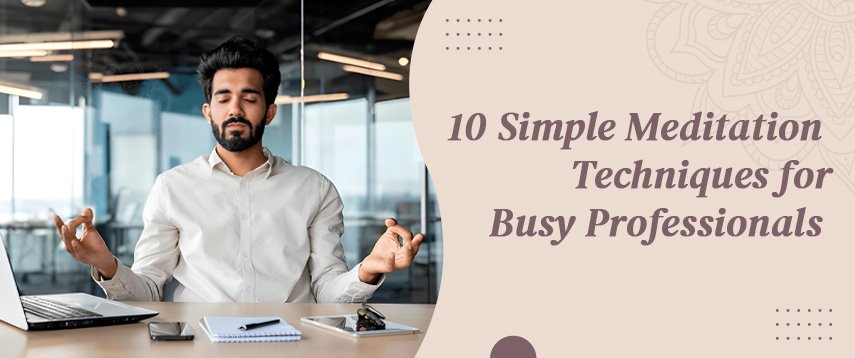
Ten simple meditation techniques that fit into a working day — each takes between one and ten minutes, needs no equipment, and can be done at a desk, on a walk or at home.
Meditation does not require an hour on a cushion. For busy professionals, the most useful practices are short ones that can be repeated through the day: a minute of slow breathing before a meeting, a mindful walk at lunch, a body scan before sleep. Practised regularly, these small pauses help many people stay calmer, more focused and more present.
Key Takeaways
- Short, frequent practice is easier to sustain than long, occasional sessions.
- Slow breathing with a longer exhale is the quickest way to encourage calm.
- Everyday activities — walking, eating, listening — can become meditation.
Why Does Meditation Help Busy Professionals?
Meditation trains attention: each time the mind wanders and is brought back, the skill of focus is practised. Many studies of mindfulness-based programmes have found reductions in reported stress, and practitioners commonly describe clearer thinking and calmer responses under pressure. For professionals, the benefit is less about escaping work than about meeting it with a steadier mind. Research on meditation and creative thinking is covered in our article on how meditation enhances creativity and productivity.
What Are 10 Simple Meditation Techniques for a Busy Day?
1. Slow Breathing (1–3 minutes)
Sit or stand comfortably. Breathe in through the nose for a count of four, pause briefly, then breathe out slowly for a count of six. A longer exhale than inhale encourages the body’s relaxation response. Repeat five to ten times. This is the quickest reset before a meeting or difficult call.
2. Box Breathing (2 minutes)
Breathe in for four counts, hold for four, breathe out for four, hold for four — tracing the sides of a square. The even rhythm gives the mind something simple to follow and is widely used to steady nerves under pressure. If holding the breath is uncomfortable, skip the holds.
3. Five-Minute Body Scan
Sit or lie down. Starting at the feet, move attention slowly up through the legs, torso, arms, shoulders and face, noticing any tension and letting it soften. The body scan connects mind and body and is especially useful at the end of the working day.
4. Mindful Walking (5–10 minutes)
Walk a little more slowly than usual and pay attention to each step: the heel touching the ground, the shift of weight, the rhythm of breathing. Notice sounds and the air on your skin. It can be done in a corridor, a car park or on the way to a meeting.
5. Mindful Eating (one meal)
Eat one meal, or even the first few bites, without a phone or screen. Notice colour, smell, texture and taste, and chew slowly. Beyond the calm it brings, eating attentively makes it easier to notice when you are full.
6. Mindful Listening (any conversation)
In your next conversation, give the speaker your full attention: their words, tone and body language. Notice when you start planning your reply and return to listening. This improves both meetings and relationships.

7. The STOP Practice (1 minute)
A one-minute pause for stressful moments: Stop what you are doing; Take a slow breath; Observe your thoughts, feelings and body; Proceed with what you were doing, more deliberately. It can be used between emails or before replying to a difficult message.
8. Loving-Kindness Meditation (5 minutes)
Silently repeat phrases of goodwill — “May I be well; may I be at ease” — first for yourself, then for a colleague, someone you find difficult, and finally everyone. Known as metta in the Buddhist tradition, this practice is valued for building patience and compassion.
9. Mantra Repetition (5 minutes)
Choose a word or phrase — a traditional mantra such as Om or Om Namah Shivaya, or a neutral word like “calm” — and repeat it silently, returning to it whenever the mind wanders. Counting on a mala of 108 beads, as in traditional japa, helps keep the rhythm.
10. Desk Yoga Stretches (3–5 minutes)
Combine gentle movement with breath: seated shoulder rolls, a seated twist, neck stretches, and a forward fold from the chair. Move slowly and breathe with each movement. For more breathing methods, see our guide to pranayama breathing techniques.

How Does Meditation Build Resilience?
A non-judgemental attitude is central to meditation: observing thoughts without labelling them good or bad. Over time, many practitioners find this makes setbacks feel more manageable and reduces harsh self-criticism. Loving-kindness practice extends the same attitude to others, which many find improves working relationships.
How Do You Build a Consistent Habit?

- Anchor it to an existing habit — a minute of slow breathing after your morning tea, or before opening email.
- Start with one or two techniques rather than all ten.
- Keep it short — five minutes done daily is better than thirty done rarely.
- Use reminders or guided apps such as Headspace or Calm if they help.
An evening routine can also improve rest; see our guide to yoga and sleep.
Meditation supports wellbeing but is not a treatment for anxiety, depression or other conditions. If stress is persistent or overwhelming, please speak to a qualified professional.
Frequently Asked Questions
-
What meditation can I do quickly at my desk?
The quickest desk meditation is slow breathing: breathe in through the nose for four counts and out for six, repeated five to ten times, which takes under two minutes. The one-minute STOP practice, stopping, taking a breath, observing and proceeding, is another option between emails or meetings.
-
Which meditation techniques are backed by research for stress?
Mindfulness-based practices, including breath awareness and the body scan used in Mindfulness-Based Stress Reduction, have been studied most and are associated in many trials with reduced reported stress. Slow breathing with a longer exhale is also widely used to encourage the body’s relaxation response.
-
How long should a busy professional meditate each day?
Five to ten minutes a day is a realistic and useful target for a busy professional, and several one-minute pauses through the day also count. Consistency matters more than length: a short daily practice is more beneficial than an occasional long session.
-
What is box breathing?
Box breathing is a technique in which you breathe in for four counts, hold for four, breathe out for four and hold for four, tracing the four sides of a square. Its even rhythm helps steady the mind under pressure. People who find breath-holding uncomfortable can simply skip the holds.
-
How can I meditate consistently with a hectic schedule?
The most reliable way to meditate consistently with a hectic schedule is to attach a short practice to something you already do daily, such as a minute of slow breathing after morning tea or before opening email. Starting with one technique and keeping sessions to five minutes also makes the habit easier to keep.
-
Can meditation improve focus at work?
Many people find it does. Focused-attention meditation practises noticing when the mind has wandered and bringing it back, a skill that often carries over into work, and some studies have found improvements on attention tasks after meditation training.
-
What is loving-kindness meditation?
Loving-kindness meditation, known as metta in the Buddhist tradition, involves silently repeating phrases of goodwill such as may I be well, first for yourself and then for others, including difficult people. It is valued for building patience, compassion and better relationships.
-
Are there apps for meditation?
Yes. Apps such as Headspace and Calm offer short guided meditations, reminders and courses for beginners, which many busy professionals find helpful for building a habit. Guided recordings on YouTube, such as those on this page, are a free alternative.