

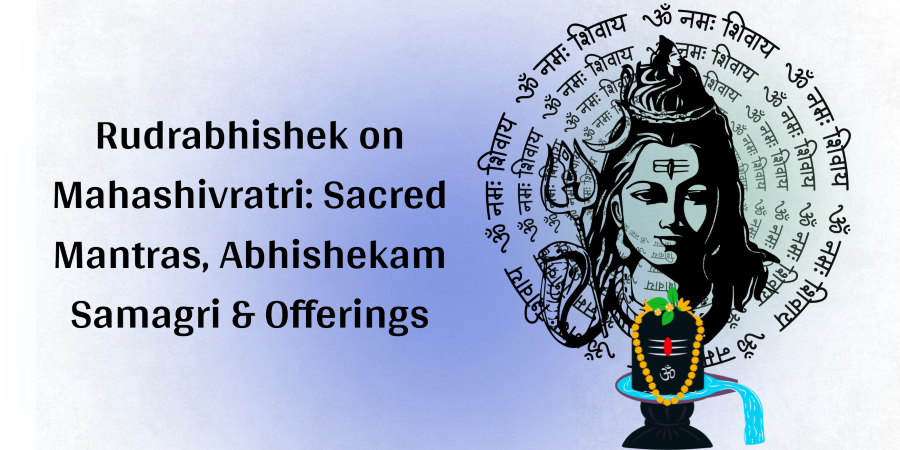
This blog explains the significance of Rudrabhishek on Mahashivratri, highlighting sacred mantras, abhishekam samagri, and traditional offerings made to Lord Shiva. It helps devotees understand the ritual, its spiritual meaning, and how it brings peace, purification, and divine blessings.
Rudrabhishek is one of the most sacred and powerful rituals dedicated to Lord Shiva. Among all Shiva worship practices, rudraabhishek holds a special spiritual place, especially when performed on the auspicious night of Maha Shivratri.
This divine ritual combines Abhishekam (ritual bathing of the Shiva Lingam), Vedic chanting, and symbolic offerings to invoke Lord Shiva’s blessings for peace, health, prosperity, and spiritual awakening.
On Maha Shivratri, performing rudraabhishek is believed to multiply spiritual benefits, as this night represents the union of cosmic energies and the highest state of consciousness. Through correct rudra abhishek samagri, powerful mantras, and proper ritual steps, devotees can connect deeply with Lord Shiva’s divine presence.
What Is Rudrabhishek?
Rudrabhishek is a sacred Vedic ritual in which the Shiva Lingam is bathed with holy substances like water, milk, honey, curd, and ghee while chanting powerful mantras. The word “Rudra” refers to Lord Shiva in his fierce yet compassionate form, and “Abhishek” means ceremonial bathing.
This ritual is especially recommended during Maha Shivratri, Mondays, Pradosh Vrat, and during times of personal or spiritual difficulty. Performing rudraabhishek helps cleanse negative karma, remove obstacles, and bring mental clarity and inner peace.
Spiritual Importance of Rudrabhishek on Maha Shivratri
Maha Shivratri is the most auspicious night devoted to Lord Shiva. It is believed that during this sacred night, Lord Shiva performed the cosmic dance of creation, preservation, and destruction. Performing rudraabhishek on this night allows devotees to align themselves with these divine energies.
Chanting a powerful Mahashivratri Mantra along with Abhishekam offerings helps deepen devotion and enhances the spiritual impact of the ritual. Even a simple rudraabhishek performed with faith is said to bring divine grace and protection.
Keeping Vrat on Mahashivratri holds deep spiritual importance, as it helps devotees practice self-discipline, purity, and focus during Rudrabhishek. Fasting with devotion is believed to amplify the blessings of Lord Shiva and bring inner peace.
Abhishekam Items (Puja Samagri)
To perform rudraabhishek properly, arranging the correct rudra abhishek samagri is essential. Each item used during Abhishekam carries deep spiritual symbolism and represents a specific blessing from Lord Shiva.
These sacred offerings are not just ritual materials but expressions of devotion, purity, and surrender. When used in the prescribed manner, Abhishekam items help purify the mind and surroundings, strengthen spiritual focus, and invoke Lord Shiva’s divine presence, making the ritual more meaningful and spiritually rewarding.
Liquids Used for Abhishekam
These sacred liquids are poured over the Shiva Lingam during rudraabhishek to purify the mind, body, and soul.
- Milk symbolizes purity, peace, and divine nourishment.
- Curd (Yogurt) represents good health and longevity.
- Honey brings sweetness, harmony, and prosperity.
- Ghee removes negativity and supports spiritual growth.
- Sugarcane juice symbolizes joy, respect in society, and removal of sorrow.
- Ganga Jal (holy water) represents ultimate purification and divine blessings.
These liquids together form the sacred Abhishekam flow and are an essential part of the rudra abhishek samagri.
Dry Items for Worship
Dry offerings enhance devotion and increase the spiritual vibration of the ritual. These sacred items symbolize purity, discipline, and inner detachment, helping devotees focus their mind and energy during rudraabhishek.
- Sugar is offered for happiness and harmony.
- Vibhuti (sacred ash) symbolizes detachment, purity, and truth.
- Sandalwood paste (Chandan) is applied for peace of mind and prosperity.
- Unbroken rice (Akshat) represents completeness and abundance.
Flowers and Sacred Leaves
Offering flowers and leaves during rudraabhishek is considered highly pleasing to Lord Shiva.
- Bel Patra (wood apple leaves) are most sacred and dear to Lord Shiva.
- Dhatura flowers symbolize renunciation and divine power.
- White flowers (Kaner) represent purity and peace.
- Garlands are used to adorn the Shiva Lingam with devotion.

Other Sacred Offerings
These offerings complete the ritual and create a spiritually charged atmosphere.
- Incense sticks (Dhoop)
- Camphor
- Ghee lamp (Diya)
- Coconut
- Fruits, especially bananas
- Sweets
- Betel leaves and betel nut
- Rudraksha beads (optional)
Required Utensils
Clean and dedicated utensils help maintain the sanctity of rudraabhishek and ensure that the ritual is performed with purity and devotion. Using separate utensils reserved only for worship prevents negative energies and preserves the spiritual vibration of the ceremony.
- Shiva Lingam
- Copper or brass vessel for Abhishek
- Puja Thali
- Bell
Key Mantras for Chanting During Rudrabhishek
- Mantra chanting is the soul of rudraabhishek and connects the devotee directly with Lord Shiva’s cosmic energy.
- Om Namah Shivaya is the Panchakshari shiva mantra chanted repeatedly during Abhishekam for purification, devotion, and inner peace.
- The Mahamrityunjaya Mantra is one of the most powerful Mahashivratri Mantra and is chanted for health, longevity, fearlessness, and protection from untimely death.
“Om Tryambakam Yajamahe…” - Shiva Gayatri Mantra is chanted to awaken higher consciousness and seek divine wisdom and protection.
“Om Tatpurushaya Vidmahe Mahadevaya Dhimahi Tanno Rudrah Prachodayat” - Rudra Mantra invokes Lord Shiva in His fierce yet protective form, helping remove negative energies and obstacles.
“Om Namo Bhagavate Rudraya” - Shiv Panchakshara Stotra is chanted to deepen devotion and surrender to Lord Shiva during the ritual.
“Nagendra Haraya Trilochanaya…”
Rudra Mantras from the Vedas, especially the Rudram Chamakam, are traditionally chanted during a complete rudraabhishek to invoke Lord Shiva’s fierce yet compassionate form.
Ritual Steps and Offerings for Rudrabhishek
Following a proper sequence ensures that rudraabhishek is performed with devotion, purity, and spiritual discipline.
The worship area should be cleansed thoroughly. The Shiva Lingam is placed on a clean cloth over a wooden plank (Chowki). Abhishekam begins with pure water or Ganga Jal, followed by each ingredient of the Panchamrit milk, curd, honey, ghee, and sugar, offered one by one. After each offering, the Lingam is gently cleansed with water.
Sandalwood paste is then applied, and Bel Patra and flowers are offered. Devotees chant Om Namah Shivaya or another shiva mantra 108 times with full concentration. Ghee lamps, incense sticks, and camphor are lit to purify the surroundings.
Shiva Aarti is performed, heartfelt prayers are offered, and fruits and sweets are finally presented and distributed as Prasad.
Benefits of Performing Rudrabhishek
Rudrabhishek removes negative karma and obstacles from one’s life, creating a clear path for spiritual and material progress. This sacred ritual brings deep mental peace and emotional stability, helping devotees overcome stress, fear, and inner restlessness.
Regular performance of rudrabhishek is believed to improve physical health and strengthen spiritual energy, allowing devotees to feel balanced and protected. It also helps reduce planetary doshas and unfavorable astrological influences, making it highly beneficial during challenging life phases.
Most importantly, rudrabhishek enhances devotion and inner awareness, guiding the mind toward higher consciousness. By sincerely performing this ritual, devotees invite Lord Shiva’s divine grace, blessings, and constant protection into their lives 🔱.
Conclusion
Rudrabhishek is not just a ritual; it is a powerful spiritual experience that allows devotees to surrender completely to Lord Shiva. When performed on Maha Shivratri with proper rudra abhishek samagri, sacred mantras, and sincere devotion, rudraabhishek transforms the mind, purifies the soul, and opens the path to divine blessings.🔱
Whether performed at home or in a temple, this sacred Abhishekam reminds us of the eternal truth that surrender, faith, and devotion are the true offerings to Lord Shiva.
Frequently Asked Questions
What is Rudrabhishek and why is it important?
Rudrabhishek is a sacred Shiva ritual where the Shivling is bathed with holy substances while chanting Vedic mantras. It is believed to remove negative energies, purify karma, and bring peace, prosperity, and spiritual growth.
Why is Rudrabhishek especially powerful on Mahashivratri?
Mahashivratri is the most auspicious night dedicated to Lord Shiva. Performing rudraabhishek on this day multiplies its spiritual benefits, as divine energies are believed to be at their peak.
What are the main benefits of performing Rudrabhishek?
Rudrabhishek helps reduce stress, remove doshas, improve mental clarity, strengthen devotion, and attract Lord Shiva’s blessings for health, stability, and inner peace.
What items are required for Rudra Abhishek Samagri?
Essential rudra abhishek samagri includes water, milk, honey, curd, ghee, Gangajal, bilva leaves, flowers, sandalwood paste, incense, and a diya.
Can Rudrabhishek be performed at home?
Yes, rudraabhishek can be performed at home with proper cleanliness, devotion, and correct rudra abhishek samagri. A calm mind and sincere faith are more important than elaborate arrangements.
Which mantras are chanted during Rudrabhishek?
During Rudrabhishek, devotees chant the Mahamrityunjaya mantra, other Vedic hymns, and a powerful mahashivratri mantra to invoke Lord Shiva’s blessings.
What is the best time to perform Rudrabhishek on Mahashivratri?
The most auspicious time is Nishita Kaal (midnight). Performing rudraabhishek during this time is believed to bring maximum spiritual and divine benefits.
Is fasting necessary while performing Rudrabhishek?
Fasting is not mandatory but highly recommended. Observing a vrat with rudraabhishek helps increase focus, purity, and spiritual connection with Lord Shiva.
Can Rudrabhishek remove planetary doshas?
Yes, rudraabhishek is often performed to reduce the effects of planetary doshas like Kaal Sarp Dosha and other astrological imbalances when done with proper rituals and mantras.
What is the spiritual meaning behind Rudrabhishek offerings?
Each offering in rudraabhishek symbolizes surrender water for purity, milk for peace, honey for sweetness, and bilva leaves for devotion representing the devotee’s complete offering to Lord Shiva.


