Yoga for back pain: what the evidence shows, when to see a doctor first, gentle poses to relieve and strengthen the back — with step-by-step instructions — which poses to avoid, and a simple 15-minute routine.
Most people experience back pain at some point in their lives. For long-lasting (chronic) low back pain in particular, gentle, regular yoga is one of the better-supported non-drug approaches: it stretches tight muscles, strengthens the muscles that support the spine, and reduces the stress that often adds to pain.
Key Takeaways
- The American College of Physicians’ 2017 guideline includes yoga among recommended non-drug treatments for chronic low back pain.
- Start gently, move slowly and never push into pain.
- Some symptoms need a doctor urgently, not yoga — check the list below first.
When Should You See a Doctor Before Doing Yoga?
Seek urgent medical help — do not practise yoga — if back pain comes with any of these:
- Loss of control of your bladder or bowels, or difficulty passing urine.
- Numbness around the groin, buttocks or inner thighs.
- Weakness in the legs that is getting worse, or numbness in both legs.
- Pain after a fall, accident or injury.
- Fever, unexplained weight loss, a history of cancer, or severe pain at night that does not ease with rest.
These can be signs of a serious condition, such as nerve compression that needs emergency treatment. If you have a diagnosed disc herniation, osteoporosis, spinal stenosis or recent surgery, or pain that spreads down the leg, ask your doctor or physiotherapist which movements are safe before starting.
What Causes Back Pain?
Most back pain is “non-specific” — caused by strained muscles, stiff joints or poor posture rather than a serious problem. Other causes include disc problems, where a bulging or herniated disc may press on a nerve and cause pain radiating down the leg (sciatica). Long hours of sitting, weak core and back muscles, lifting badly and stress all contribute. Symptoms range from a dull ache and stiffness to sharp or radiating pain.
What Does the Evidence Say About Yoga for Back Pain?
In a 2011 trial published in Archives of Internal Medicine, Karen Sherman and colleagues found that both yoga classes and conventional stretching classes improved function and reduced symptoms in people with chronic low back pain more than a self-care book did. In 2017, the American College of Physicians included yoga among the non-drug treatments it recommends for chronic low back pain. Gentle movement, strengthening and relaxation all appear to play a part.
How Should You Practise Yoga Safely With Back Pain?
- Move slowly and stay within a comfortable range. Mild stretching sensations are fine; sharp, shooting or increasing pain means stop.
- Breathe steadily — slow breathing helps muscles relax. Never hold the breath while straining.
- Use props — blocks, cushions, a folded blanket or a chair make poses gentler.
- Learn from a qualified teacher, ideally one experienced with back pain, and tell them about your condition.
Which Yoga Poses Help Relieve Back Pain?
Gentle Mobility and Relief
Cat–Cow (Marjaryasana–Bitilasana): on hands and knees, gently arch the back as you breathe in and round it as you breathe out, five to ten times. It loosens the whole spine.
Child’s Pose (Balasana): kneel, sit back towards your heels and fold forward, forehead on the mat or a cushion. Rest for one to three minutes. Widen the knees if more comfortable.
Knees-to-Chest (Apanasana): lie on your back and hug both knees gently towards the chest, rocking slightly side to side to massage the lower back.
Supine Twist: lying on your back with knees bent, let both knees fall slowly to one side while the shoulders stay on the floor. Hold for five breaths, then change sides.
Gentle Backbends
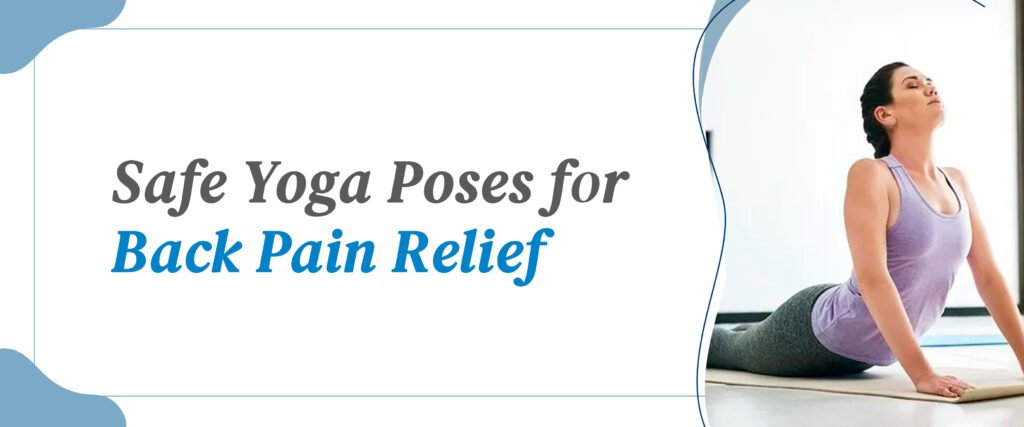
Sphinx Pose: lie on your front with elbows under your shoulders and forearms on the mat, and lift the chest gently. Hold for five to ten breaths. It is a gentler alternative to Cobra.
Cobra (Bhujangasana): lie on your front, hands under the shoulders, and lift the chest a little, keeping the hips on the floor and the elbows bent. Lift only as high as is comfortable.
Strengthening
Bridge (Setu Bandhasana): lie on your back, knees bent and feet hip-width apart. Press through the feet and lift the hips, then lower slowly. Repeat five to eight times to strengthen the glutes and lower back.
Bird-Dog: on hands and knees, extend the right arm forward and the left leg back, keeping the back level. Hold for a few breaths, then change sides. It builds core stability safely.
Locust (Salabhasana): lie on your front and lift one leg at a time a few inches, then progress to lifting the chest and both legs. Keep the neck long.
Rest
Legs-Up-the-Wall (Viparita Karani): lie on your back with your legs resting up a wall, or with calves on a chair. It relaxes the lower back and is a restful way to end a session.
Which Poses Should You Avoid or Modify?
- Deep standing forward bends with straight legs, such as Uttanasana — forward bending often aggravates disc problems. If you do fold forward, bend the knees generously and support the hands on blocks or a chair.
- Deep backbends such as Wheel, and deep twists.
- Full sit-ups and Boat Pose, which strain the lower back.
- Any pose that causes sharp, shooting or radiating pain, or tingling down the leg.
What Is a Simple 15-Minute Routine for Back Pain?
- Knees-to-Chest — 1 minute
- Supine Twist — 1 minute each side
- Cat–Cow — 2 minutes
- Bird-Dog — 2 minutes
- Sphinx — 1–2 minutes
- Bridge — 2 minutes
- Child’s Pose — 2 minutes
- Legs-Up-the-Wall — 3 minutes
Practise three to five times a week. Improvement usually comes gradually over several weeks; keep a simple note of how you feel after each session. For more poses, see our 10 yoga poses for body awareness, and for relaxation, our pranayama guide.
How Can You Prevent Back Pain in Daily Life?

- Keep moving: stand up and walk around every 30–45 minutes when sitting for long periods. Regular walking is one of the best habits for a healthy back.
- Sit well: support the lower back, keep feet flat and the screen at eye level.
- Lift safely: bend the knees, keep the load close to the body and avoid twisting while lifting.
- Stay active in varied ways: swimming, cycling and walking complement yoga, and a healthy lifestyle and weight reduce strain on the back.
- Consider physiotherapy: a physiotherapist can prescribe exercises tailored to your back.
Conclusion
Practised gently and consistently, yoga can ease back pain, build the strength that protects the spine and reduce the stress that makes pain worse. Check the red-flag symptoms first, start slowly, modify freely, and use yoga alongside — not instead of — medical advice.
Frequently Asked Questions
-
Does yoga help with back pain?
Yes, for many people with chronic low back pain. A 2011 trial by Sherman and colleagues found yoga and stretching classes both improved function and symptoms more than a self-care book, and in 2017 the American College of Physicians included yoga among recommended non-drug treatments for chronic low back pain.
-
What are the best yoga poses for lower back pain?
The best yoga poses for lower back pain are gentle ones: Cat–Cow, Child’s Pose, Knees-to-Chest, a supine twist and Sphinx Pose for relief, and Bridge and Bird-Dog for strengthening. Move slowly, stay within a comfortable range and stop any pose that causes sharp or radiating pain.
-
Which yoga poses should I avoid with back pain?
With back pain, avoid or modify deep standing forward bends with straight legs, which often aggravate disc problems, deep backbends such as Wheel, deep twists, full sit-ups and Boat Pose, and any pose that causes sharp, shooting or radiating pain or tingling down the leg.
-
Is yoga safe with a herniated disc?
Gentle yoga can be safe with a herniated disc, but only with your doctor’s or physiotherapist’s advice. Forward bending often aggravates disc problems, so poses such as standing forward folds are usually avoided, while gentle extension such as Sphinx and stabilising exercises such as Bird-Dog may be recommended.
-
When should back pain be checked by a doctor?
See a doctor urgently if back pain comes with loss of bladder or bowel control, numbness around the groin or inner thighs, worsening leg weakness, pain after a fall or accident, fever, unexplained weight loss or a history of cancer. These can signal a serious condition needing emergency treatment.
-
How often should I do yoga for back pain?
Practising gentle yoga for back pain three to five times a week, for about 15 to 30 minutes, usually brings gradual improvement over several weeks. Consistency matters more than intensity, and walking and moving regularly through the day also help.
-
Can yoga replace physiotherapy for back pain?
No. Yoga can be a very helpful part of managing back pain, but it should complement, not replace, advice from a doctor or physiotherapist, especially for disc problems, sciatica, spinal stenosis or pain after injury. A physiotherapist can tailor exercises to your specific condition.
-
Do I need equipment for yoga for back pain?
No special equipment is needed. A mat or folded blanket is enough to begin, and a cushion, yoga block or chair can make poses such as Child’s Pose, forward folds and Legs-Up-the-Wall gentler and more supported.