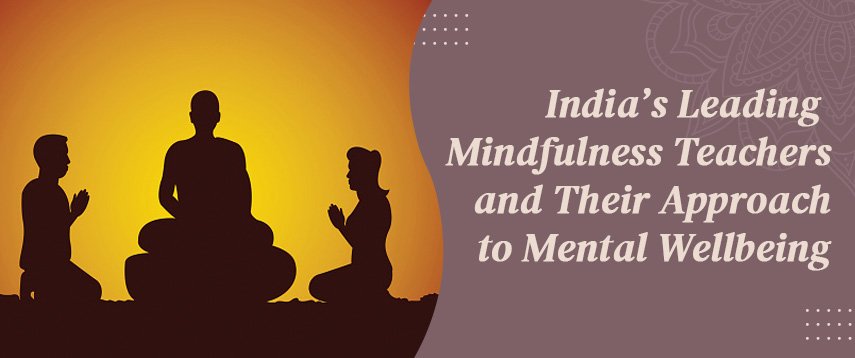
Explore how leading teachers have shaped mindfulness practice, drawing on both ancient tradition and modern presentation. This article outlines their methods, their organisations, and what to consider before joining any programme.
Mindfulness — focusing on the present moment and observing thoughts and sensations without judgement — is rooted in meditation traditions that are thousands of years old in India. In the modern era, a number of teachers and organisations have brought these practices to a wide audience.
What follows is an introduction to several of them, offered as information rather than endorsement. Some are Indian, some are not; some are living, some are not. Each is identified accordingly.
The Indian Lineage
Sri Ramakrishna Paramahamsa (1836–1886) practised at Dakshineswar in Bengal and taught that different paths lead to the same goal. His disciple Swami Vivekananda (1863–1902) explained Patanjali’s Yoga Sutras to a modern readership in his book Raja Yoga — which is largely how Indian meditation technique first reached the West.
Most later movements connect to this background in one way or another.
Teachers Practising Today
1. Sadhguru Jaggi Vasudev — Isha Foundation

Founder of the Isha Foundation, based near Coimbatore. His principal programme, Inner Engineering, teaches Shambhavi Mahamudra Kriya — a set sequence combining breath and attention.
If you are starting from scratch, our guide to starting a meditation practice covers the basics without requiring any programme.
2. Sri Sri Ravi Shankar — Art of Living

Founder of the Art of Living Foundation. At the centre of his method is Sudarshan Kriya, a specific sequence of rhythmic breathing. The organisation runs workshops internationally.
3. BK Shivani — Rajyoga

A teacher with the Brahma Kumaris. Her talks focus on the relationship between thought patterns and mental energy — recognising habitual negative thinking and changing it. Her sessions are widely watched on television and online.
Note: the Brahma Kumaris’ Rajyoga is distinct from Patanjali’s Raja Yoga. The name is shared; the method is not.
4. Gaur Gopal Das

A monk with ISKCON who studied engineering and worked briefly as an engineer before joining the monastic ashram. His talks address everyday concerns — relationships, work pressure, decision-making — usually through stories and humour rather than formal instruction.
5. Dr Deepak Chopra

An Indian-born physician and author based in the United States. He presents meditation and Ayurveda in contemporary language, and teaches Primordial Sound Meditation, a mantra-based practice.
Some of his claims about science have drawn criticism from researchers. Readers may wish to be aware of that.
6. Eckhart Tolle
A German-born author living in Canada; not Indian, though widely read in India. His book The Power of Now brought the idea of present-moment awareness to a large general readership. His central argument is that much mental suffering comes from dwelling on past regret or future anxiety.
Teachers Who Have Died, Whose Influence Remains
7. S. N. Goenka (1924–2013)
A Burmese-born teacher of Indian descent who, from 1969, taught Vipassana (insight meditation) in India in the tradition of his teacher Sayagyi U Ba Khin. His ten-day silent residential courses are offered free of charge, funded by donations from past students, at centres around the world; the main centre, Dhamma Giri, is at Igatpuri in Maharashtra. He died in Mumbai in 2013.
8. Thich Nhat Hanh (1926–2022)

A Vietnamese Buddhist monk — not Indian, but widely read in India. He taught that mindfulness belongs in ordinary activity rather than only in formal sitting: walking meditation and mindful eating were central to his method. He was one of the most influential figures in bringing mindfulness to the West, alongside others such as Jon Kabat-Zinn, founder of Mindfulness-Based Stress Reduction.
He died in January 2022 at Tu Hieu Temple in Hue, Vietnam.
9. Osho (1931–1990)

He introduced Dynamic Meditation, which differs from conventional practice: rapid breathing and physical movement first, silence afterwards. His argument was that modern people are generally too restless to sit still straight away.
There is substantial controversy surrounding his life and his organisations, particularly the events at his ashram in Oregon in the 1980s. Anyone drawn to his methods should be aware of that background.
Before Choosing a Teacher or Programme
- You do not need to join a programme to begin. Attention on the breath is enough to start with, and costs nothing.
- Be cautious of financial pressure, demands for total obedience, or any attempt to separate you from family. These are warning signs regardless of the tradition.
- Be wary of claims to cure illness. Meditation may support wellbeing; it is not a substitute for medical treatment.
- You may learn from more than one tradition. There is no requirement to commit to a single path.
For practices you can begin today, see the power of meditation and our step-by-step mindfulness guide.
This article is informational and is not an endorsement of any individual or organisation. For mental health concerns, please consult a doctor or qualified professional.
Frequently Asked Questions
-
Who are some widely known meditation and mindfulness teachers?
Teachers practising today include Sadhguru, Sri Sri Ravi Shankar, BK Shivani, Gaur Gopal Das and Deepak Chopra. Eckhart Tolle is a German-born author based in Canada. S. N. Goenka (1924–2013), Thich Nhat Hanh (1926–2022) and Osho (1931–1990) are no longer living but remain influential.
-
What is the Indian lineage behind modern meditation teaching?
Sri Ramakrishna Paramahamsa (1836–1886) and Swami Vivekananda (1863–1902) are central. Vivekananda’s book Raja Yoga explained Patanjali’s Yoga Sutras to a modern readership and is largely how Indian meditation technique reached the West.
-
Where can I learn Vipassana meditation in India?
Vipassana in the tradition of S. N. Goenka is taught in free ten-day silent residential courses, funded by donations from past students, at centres across India and the world. The main centre, Dhamma Giri, is at Igatpuri in Maharashtra, and courses are booked through the official dhamma.org website.
-
Which techniques are commonly taught?
Breath awareness, Sudarshan Kriya, Shambhavi Mahamudra Kriya, Rajyoga meditation, Vipassana, mantra-based practice, walking meditation and mindful eating.
-
Do I need to join a programme to start?
No. Attention on the breath is enough to begin with and requires no course, equipment or fee. Structured kriyas and vigorous pranayama are better learned with an experienced teacher.
-
Do these practices treat anxiety or depression?
No. Meditation may support wellbeing and some approaches have been studied for stress reduction, but no programme is a substitute for medical treatment. For a mental health condition, consult a doctor or qualified professional.
-
Are these teachings religious?
It varies. Some teach within a specific tradition, others use secular language. It is worth checking before joining anything.
-
Is the Brahma Kumaris’ Rajyoga the same as Patanjali’s Raja Yoga?
No. The name is shared but the method and philosophy differ.
-
How long before I notice a difference?
Many people report some change in attention or calm after a few weeks of regular practice of ten to fifteen minutes a day. This varies between individuals.
-
What should I watch out for before joining an organisation?
Financial pressure, expectations of total obedience, attempts to separate you from family, and promises to cure illness are all reasons for caution.